
Grewal's Automotive

Rear Axle Seal Leak Symptoms and When to Schedule Service

Rear Axle Seal Leak Symptoms and When to Schedule Service

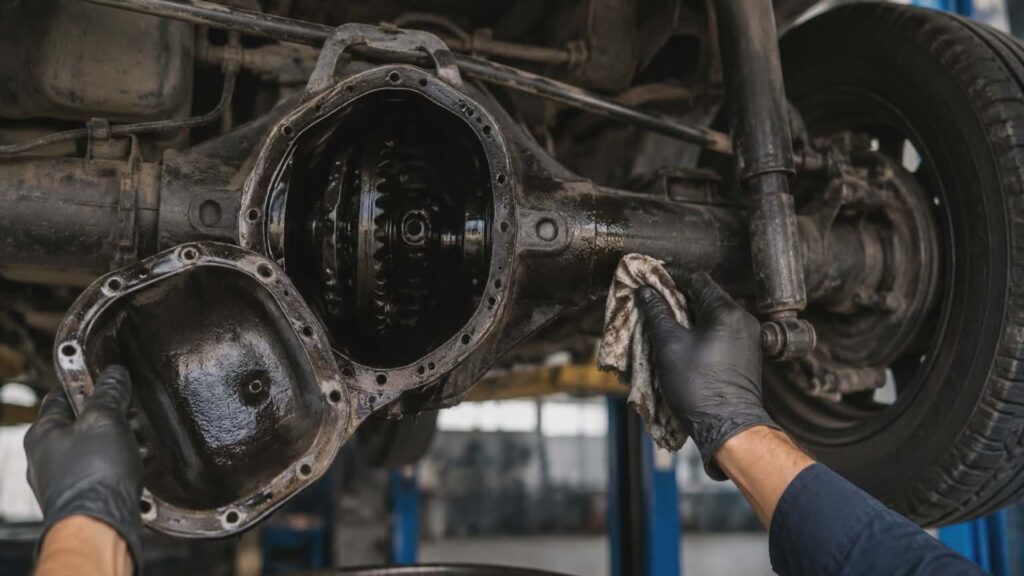
If you have noticed fluid under the rear of your vehicle or greasy residue near a rear wheel, you may be dealing with a rear axle seal leak. While a small leak may seem easy to ignore, it can lead to additional repairs if fluid levels drop or leaking oil reaches nearby brake components. Here is what a rear axle seal does, which warning signs to watch for, and when to schedule a professional inspection. What Does a Rear Axle Seal Do? The rear axle seal helps keep gear oil contained inside the axle housing or differential. This fluid lubricates moving components, including gears and bearings, while the seal also helps keep dirt and moisture from entering the assembly. Over time, an axle seal may wear out because of age, mileage, damage, pressure buildup, or wear in nearby axle components. When the seal no longer forms a proper barrier, gear oil may begin leaking from the rear axle assembly. Common Rear Axle Seal Leak Symptoms Fluid Under the Rear of Your Vehicle One of the most noticeable warning signs is a puddle or drip beneath the rear portion of your car or truck. Gear oil is often thicker than engine oil and may have a strong, distinct odor. If you notice oily fluid near a rear wheel or around the axle area, schedule an inspection to determine where the leak is coming from. Greasy Residue Around a Rear Wheel A damaged axle seal may allow fluid to spread around the inside of a rear wheel, axle shaft, or brake backing plate. You may notice wet, greasy buildup rather than a puddle on the ground. Because other components can also leak in this area, visible residue does not confirm the cause on its own. A technician can inspect the axle seal, differential, bearing, and nearby parts to locate the source accurately. Whining Noise or Vibration While Driving If a leak becomes significant and fluid levels drop, the differential and related moving components may not receive the lubrication they need. This can contribute to unusual whining, humming, or grinding noises from the rear of the vehicle. Vibration while driving may also indicate a related axle, bearing, tire, or suspension problem. Any new or worsening noise should be inspected before additional wear occurs. Brake Contamination On some vehicles, leaking axle fluid can reach nearby rear brake components. When brake shoes or other friction surfaces become contaminated with oil, braking performance may be affected. If you notice unusual braking behavior, pulling, grabbing, reduced braking performance, or visible fluid near the rear brakes, have the vehicle inspected promptly. Strong Gear Oil Odor Gear oil often has a strong, noticeable smell. If you detect an unusual oily odor near the rear of your vehicle, especially after driving, leaking axle or differential fluid may be the cause. An inspection can determine whether the odor is coming from an axle seal, differential cover, pinion seal, or another component. What Can Cause a Rear Axle Seal Leak? Rear axle seals may fail gradually as the rubber material ages and loses its ability to maintain a tight seal. Other possible contributors include: High mileage or repeated heavy-load driving Damage to the seal during previous repairs Wear in the axle shaft or nearby bearing Excess pressure inside the axle housing Dirt, moisture, or debris affecting the sealing surface Because a leaking seal can sometimes be connected to wear elsewhere in the axle assembly, replacing the seal alone may not always address the full problem. Can You Repair an Axle Seal Yourself? Replacing a rear axle seal may be possible for someone with automotive repair experience, but it often requires specialized tools and careful installation. Depending on the vehicle, the repair may involve removing axle components, inspecting the bearing, cleaning leaked fluid, and checking nearby brakes. Incorrect installation can cause the leak to return or damage nearby components. A professional technician can identify the source of the leak, inspect related parts, and recommend the appropriate repair. When Should You Schedule an Inspection? Schedule service if you notice fluid near a rear wheel, gear oil odor, unusual noises from the rear of the vehicle, or changes in braking performance. Early inspection may help prevent a manageable seal repair from turning into damage involving the differential, bearing, or brake components. If braking performance appears affected, avoid delaying an inspection. Schedule Rear Axle Seal Repair in Indianapolis A rear axle seal leak may start as a small drip, but it should not be ignored. If fluid is escaping from the axle assembly, your vehicle may need a seal replacement or additional inspection of nearby components. The team at Grewal’s Automotive in Indianapolis can inspect your vehicle, identify the source of the leak, and recommend the right repair. Call 317-886-7501 or stop by to schedule an inspection and keep your vehicle road-ready.

Rear Axle Seal Leak Symptoms and When to Schedule Service Read More »
What CV Joint Clicking Means and When to Schedule Repairs

What CV Joint Clicking Means and When to Schedule Repairs

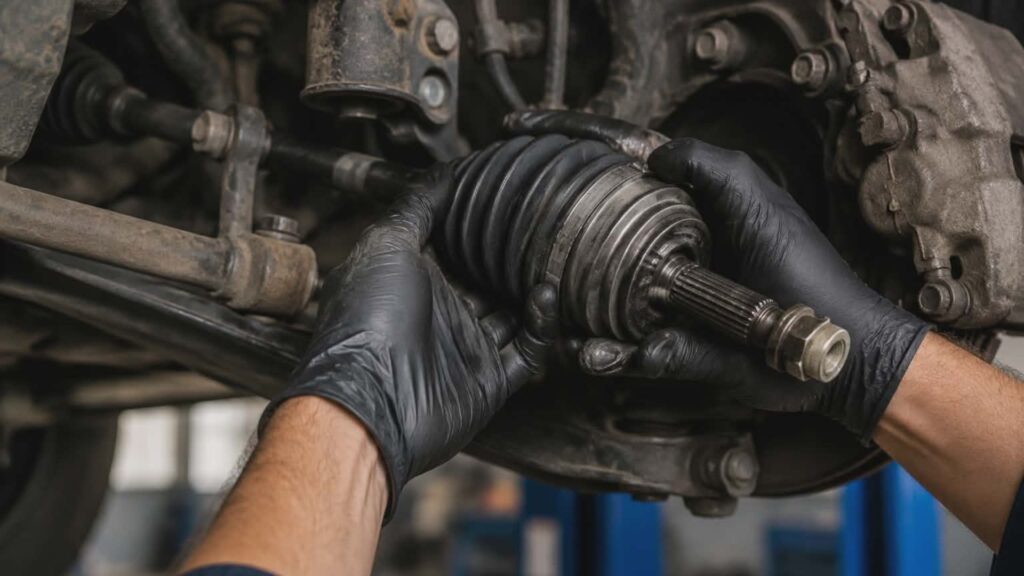
That clicking sound when you turn your steering wheel can be difficult to ignore. It may start subtly, perhaps only during sharp turns, before becoming louder or more frequent over time. When this happens, your vehicle may be showing a sign of CV joint wear. Here is what that sound may mean, what can cause it, and when it is time to schedule an inspection. What Is a CV Joint and What Does It Do? CV stands for constant velocity. A CV joint is part of the axle assembly that helps transfer power from the transmission to the wheels while allowing the wheels to move with steering and suspension changes. CV joints are commonly found in front-wheel-drive and all-wheel-drive vehicles. Because these joints constantly move as you steer and drive over uneven roads, they can wear over time. Why Do You Hear Clicking When Turning? A worn outer CV joint is a common cause of clicking or popping sounds during turns. The outer joint sits closest to the wheel and handles significant movement as the vehicle changes direction. As the joint wears, the internal components may no longer move smoothly. During a sharp turn, the added angle and pressure can cause worn parts to make a noticeable clicking or popping sound. Although clicking during turns is commonly associated with CV joint wear, other front-end components can also cause unusual noises. A proper inspection is the best way to identify the source. Why Can the Sound Get Worse During Sharp Turns? During a sharp turn, the outer CV joint operates at a greater angle than it does while driving straight. If the joint already has wear or excess play, that additional movement can make the sound more noticeable. You may hear little or no noise while driving on a straight road, but the clicking may become clear when making a tight turn, pulling into a parking space, or turning at low speeds. The Role of the CV Boot One common cause of CV joint wear is loss of lubrication. The CV boot is a rubber cover that keeps grease inside the joint while helping prevent dirt, moisture, and debris from entering. When the boot tears or cracks, grease can leak out, and contaminants can enter the joint. You may notice grease around the wheel well or along the axle shaft, which may indicate a damaged boot. A torn boot does not necessarily mean the joint has already failed. However, the joint may wear more quickly if the boot is not repaired promptly. If clicking has already developed, the joint itself may have sustained damage. Signs of a Bad CV Axle You Should Not Ignore Clicking during turns is one of the most recognizable signs of CV joint wear, but a failing CV axle may cause other symptoms as well. Vibration during acceleration: A damaged axle or inner CV joint may cause noticeable vibration as the vehicle accelerates. Clunking or knocking when accelerating from a stop: This may point to wear in an inner CV joint or another drivetrain component. Clicking during low-speed turns: Repetitive clicking while turning may indicate outer CV joint wear. Grease around the inside of the wheel: This may indicate that the CV boot is torn or leaking. If you notice one or more of these signs, schedule an inspection rather than continuing to drive without knowing the cause. A failing CV axle can eventually affect drivability and may leave you unable to safely operate the vehicle. Is It a CV Joint or Something Else? Not every sound during a turn comes from a CV joint. A worn wheel bearing may create a humming, growling, or grinding sound that changes while driving. Brake components, suspension parts, and steering components can also cause unusual noises. Online videos and parts-store research may help you understand possible causes, but they cannot replace a hands-on inspection. A trained mechanic can examine the axle, CV joints, boots, wheel bearings, brakes, and nearby components to determine what is actually causing the noise. At Grewal’s Automotive in Indianapolis, the team can inspect your vehicle and recommend repairs based on the condition of the affected parts. When Should You Replace the CV Axle? If a CV boot is damaged but the joint has not developed noise or wear, repairing the boot may be an option in some cases. However, once the joint begins clicking during turns, installing a new boot may not solve the problem because the internal components may already be worn. When significant CV joint wear is present, replacing the CV axle assembly is often the practical repair option. A professional technician can explain the condition of the axle and help you choose suitable replacement parts for your vehicle and budget. Schedule CV Axle Repair in Indianapolis A clicking sound while turning should not be ignored. It may indicate a worn CV joint, damaged boot, or another front-end problem that requires attention. The earlier the issue is inspected, the better your chances of preventing additional wear and unexpected repair costs. If you are in Indianapolis and hear clicking or popping when turning, bring your vehicle to Grewal’s Automotive for a thorough inspection. Call 317-886-7501 to have your vehicle checked without disrupting your schedule.

What CV Joint Clicking Means and When to Schedule Repairs Read More »

What Causes a Cylinder Misfire? Signs and Repair Options

What Causes a Cylinder Misfire? Signs and Repair Options

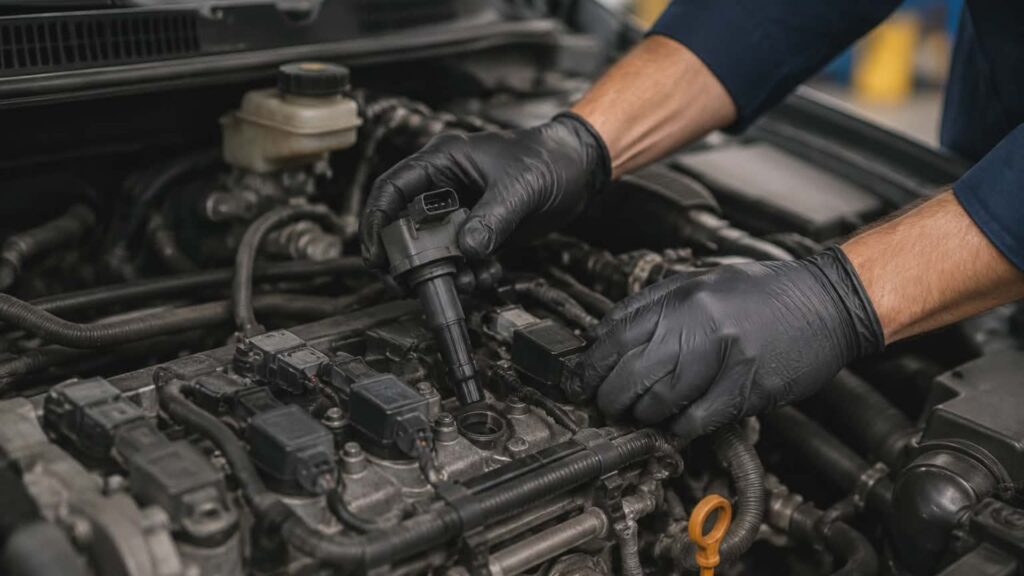
If your car has ever shuddered, stumbled, or briefly lost power while driving, you may have experienced a cylinder misfire. It is a common engine problem that can range from a minor inconvenience to a sign of a more serious issue under the hood. This guide explains what causes an engine misfire, how to recognize the warning signs, and what to do before the problem becomes more expensive to repair. What Is a Cylinder Misfire? An engine misfire happens when one or more cylinders fail to complete a proper combustion cycle. In a healthy engine, each cylinder fires in a precise sequence: fuel and air mix together, the spark plug ignites the air-fuel mixture, and the piston moves downward to generate power. When a cylinder does not complete that process properly, the engine produces uneven power. You can often feel the result while driving or when the engine is idling. What Does a Misfire Feel Like? Many drivers describe a misfire as a sudden jerk, stumble, or hesitation, especially during acceleration or while idling at a stoplight. A misfire can make the vehicle feel as though it briefly loses power before the engine catches itself again. You may also notice rough idling, reduced fuel economy, or an illuminated check engine light. In more severe cases, you may smell unburned fuel from the exhaust, experience reduced performance, or notice that the engine runs rough consistently rather than occasionally. An intermittent problem can still be serious, especially when it becomes more frequent over time. Common Causes of an Engine Misfire Understanding the possible causes of a misfire can help you determine when your vehicle needs professional attention. Some of the most common causes include the following. Worn or Faulty Spark Plugs Spark plugs ignite the air-fuel mixture inside each cylinder. Over time, they can wear out, become fouled with deposits, or fail to produce a reliable spark. When a spark plug cannot ignite the mixture properly, the affected cylinder may not fire as intended. Replacing worn spark plugs is often one of the simplest and most affordable repairs when they are the source of the problem. Bad Ignition Coil or Coil Pack The ignition coil converts battery voltage into the high-voltage spark needed by the spark plug. When a coil fails, the spark plug it supplies may not fire correctly. Many modern vehicles use an individual ignition coil for each cylinder. As a result, one failed coil can cause one cylinder to run poorly while the others continue operating normally. Clogged or Faulty Fuel Injector A fuel injector delivers a precise amount of fuel into the engine. If an injector becomes clogged or develops an electrical problem, the affected cylinder may not receive the fuel it needs for proper combustion. Because one damaged injector may affect only one cylinder, diagnostic codes often help identify the area that needs inspection. Fuel delivery problems can also reduce fuel economy over time. Vacuum Leaks Vacuum leaks can be difficult to identify without proper diagnostic equipment. When a vacuum hose cracks or an intake manifold gasket fails, unmetered air may enter the engine and disrupt the air-fuel mixture. The engine control unit may try to compensate, but a significant leak can still lead to rough running, hesitation, or cylinder misfires. Low Compression Each cylinder needs adequate compression to support proper combustion. If compression is low because of worn piston rings, a damaged valve, or a blown head gasket, the cylinder may not fire correctly. Compression-related problems are often more serious because they may indicate internal engine wear or damage. Repairs involving valves, piston rings, or head gaskets can be more involved than replacing ignition components. Sensor and Airflow Issues Modern engines rely on sensors, including the mass airflow (MAF) sensor and oxygen sensors, to help manage the air-fuel mixture. When a sensor provides inaccurate information, the engine may receive an incorrect mixture, which can contribute to poor performance or misfires. A dirty air filter may also restrict airflow and affect engine operation. These components are worth inspecting during routine maintenance or diagnostic service. Why You Should Not Ignore a Misfire A continuing misfire can lead to more expensive vehicle problems. When fuel is not burned properly inside the engine, it may enter the exhaust system and damage the catalytic converter over time. Replacing a catalytic converter can be much more costly than repairing the original cause of the misfire. Driving with an active problem may also place additional stress on engine components. The longer the issue continues, the greater the risk that a minor repair could develop into a more extensive engine problem. A misfire may also cause your vehicle to fail an emissions inspection where testing is required. If your check engine light is on and the onboard diagnostics system has stored active misfire codes, your vehicle should be inspected before the issue worsens. How to Diagnose and Fix an Engine Misfire Diagnosing a misfire usually begins by reading the diagnostic trouble codes stored in the vehicle’s computer. Misfire-related codes, commonly in the P0300 to P0312 range, can help identify whether the problem affects a specific cylinder or multiple cylinders. From there, a technician may inspect the ignition system, examine the spark plug in the affected cylinder, test the ignition coil, and evaluate fuel delivery. If the cause is not immediately clear, additional testing may include checking for vacuum leaks, evaluating compression, or inspecting the fuel system. The correct repair depends on the results of the diagnosis. In some cases, replacing a worn spark plug or failed ignition coil may solve the problem. In other cases, the cause may be a deeper fuel delivery, airflow, or internal engine issue that requires professional repair. When to Seek Professional Help If your check engine light is on and your vehicle is idling roughly, hesitating, or losing power, schedule a professional inspection. Trying to diagnose the issue without the right tools can lead to unnecessary parts replacement and added expense. A qualified repair shop can use diagnostic

What Causes a Cylinder Misfire? Signs and Repair Options Read More »

Blue Smoke From Exhaust? What It Means and How to Fix It Fast

Blue Smoke From Exhaust? What It Means and How to Fix It Fast

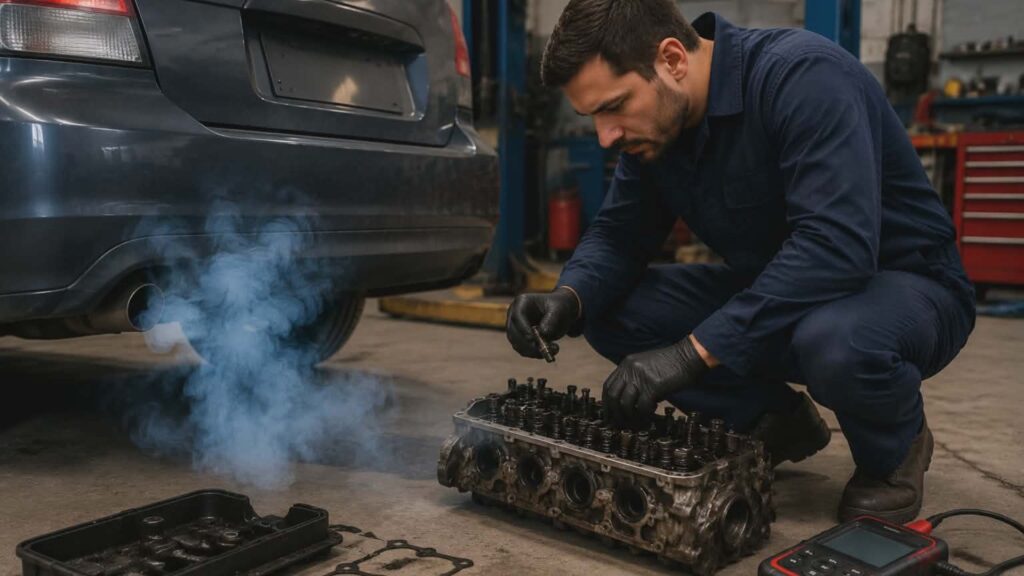
You’re driving along, you glance in your rearview mirror, and notice blue smoke coming from the exhaust pipe behind your car. It’s not the kind of thing you can ignore. Unlike the thin white smoke that might appear on a cold day from water vapor burning off, blue exhaust smoke is a real warning sign – one that usually means your engine is burning oil it shouldn’t be. If you’re seeing blue smoke from the exhaust, here’s what’s actually going on and what you should do about it. What Blue Smoke From the Exhaust Actually Means Blue smoke emitting from your tailpipe almost always signals that engine oil is making its way into the combustion chamber. When oil seeps into the cylinder and mixes with the air-fuel mixture during combustion, the oil burns and produces the distinctive bluish haze from your exhaust. This kind of smoke is different from black smoke, which typically points to a rich fuel mixture, or white smoke coming from coolant leaking into the engine. Blue smoke is specifically an oil-burning issue, and it means your engine needs attention sooner rather than later. The smoke may appear constantly while driving, or it might only show up when you first start the car. Either way, it’s a symptom worth taking seriously. Common Causes of Blue Smoke Coming From the Exhaust Understanding the cause of blue smoke is the first step toward fixing it. There are several possible causes, and they range from minor wear to more serious engine damage. Worn Piston Rings One of the most common causes of blue smoke coming from the exhaust is worn piston rings. Piston rings sit between the piston and the cylinder walls, creating a seal that keeps oil in the crankcase and combustion gases where they belong. When these rings wear down, oil can slip past the cylinder walls, seep into the combustion chamber, and burn along with the fuel – resulting in blue smoke out of your tailpipe. A compression test can help confirm whether worn piston rings are to blame. If compression is low in one or more cylinders, that’s a strong indicator. Valve Seal or Valve Guide Failure Another leading cause of blue smoke is a failing valve seal or worn valve guide. Valves – specifically poppet valves – control the flow of the fuel and air mixture into the combustion chamber and exhaust gases out. The valve stem is protected by oil seals that keep engine oil from leaking into the intake manifold or exhaust ports. When a valve seal wears out, it allows oil to seep past and seep into the combustion chamber, where it burns and produces blue smoke. This type of oil seal failure often causes blue smoke that’s more noticeable on startup or when decelerating, rather than at steady speeds. A Faulty PCV Valve The PCV valve – short for positive crankcase ventilation – is a small but important part of the crankcase ventilation system. Its job is to redirect pressure and gases from the crankcase back into the intake for combustion. When the PCV valve fails or clogs, crankcase pressure can force oil into the intake or exhaust, causing blue smoke. Replacing a faulty PCV valve is usually one of the simpler and more affordable fixes on this list. Turbocharger Seal Leaks If your vehicle has a turbocharger, a failing turbo seal is another potential cause of blue smoke. The turbocharger uses engine oil for lubrication, and when its internal seals wear, it allows oil to leak into the exhaust stream. You may notice blue smoke coming from the exhaust under acceleration if the turbocharger is the culprit. Blown Head Gasket A blown head gasket is a more severe issue. The head gasket seals the engine block and cylinder head, separating oil and coolant passages from the combustion chambers. When it fails, it can cause oil – or coolant – to enter the cylinder.  While coolant leaks more commonly produce white smoke, a blown head gasket can also contribute to oil burning and blue exhaust smoke, depending on where the breach occurs. If you’re also noticing symptoms like overheating or seeing white smoke coming from the exhaust, take it to a garage as soon as possible. Why You Shouldn’t Ignore Blue Smoke From Your Exhaust Consistent blue smoke from your exhaust signals that oil consumption is higher than it should be. Left unchecked, this leads to low oil levels, which can cause serious engine damage quickly. It can also foul your spark plugs, hurt engine performance, and eventually leave you stranded. If you’re wondering why your car is leaking oil when parked, that problem and blue smoke often share the same root causes – failing engine seals, worn gaskets, or faulty engine components. Getting advanced computer diagnostics done early helps pinpoint the faulty engine component that has started causing trouble before it becomes a much bigger repair. How to Fix Blue Smoke From the Exhaust The fix depends on the cause of the problem. A mechanic will typically start with a full inspection, checking oil consumption levels, running a compression test, and examining the PCV valve, valve seals, piston rings, and turbocharger. From there, the repair might involve: Replacing worn piston rings to restore the seal between the piston and cylinder walls Swapping out a damaged valve seal or valve guide Installing a new PCV valve if the crankcase ventilation system is the issue Repairing or replacing the turbocharger if its oil seal has failed Addressing a blown head gasket if the engine block and cylinder head have lost their seal For anything beyond a PCV valve swap, you’ll want a qualified mechanic handling the work. These repairs often require engine disassembly, and doing it wrong can lead to further engine damage. Grewal’s Automotive offers professional engine repair services and complete auto repair services to handle exactly these kinds of issues. If you’re also dealing with misfires alongside blue smoke, it’s worth reading up on the common causes of engine

Blue Smoke From Exhaust? What It Means and How to Fix It Fast Read More »

Engine Knocking Sound? What It Means and How to Fix It Fast

Engine Knocking Sound? What It Means and How to Fix It Fast

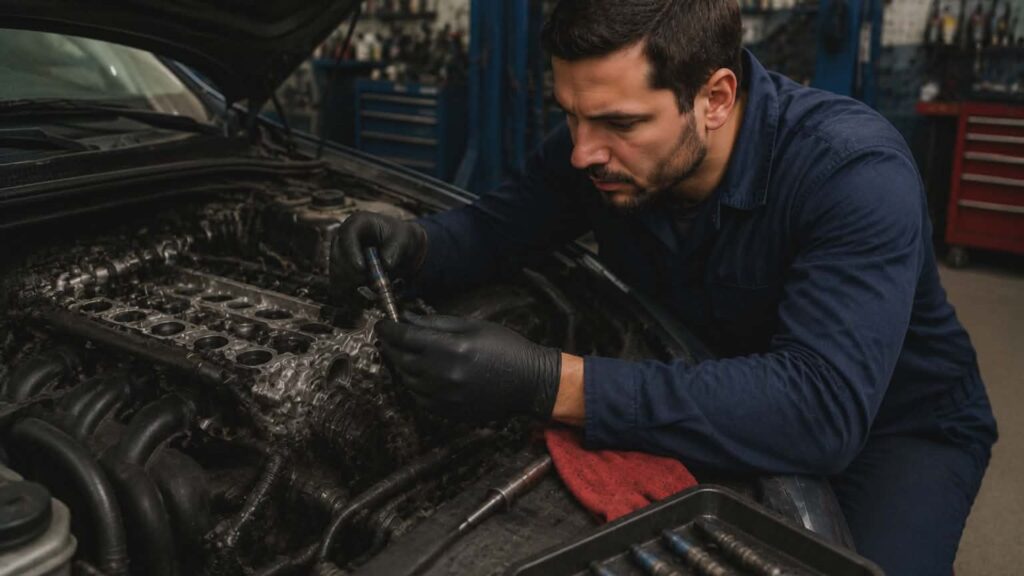
That strange knocking sound coming from under your hood is hard to ignore – and for good reason. Engine knock is one of those warning signs your car should never keep quiet about. Understanding what it means can save you from expensive repairs down the road. What Is Engine Knock? Engine knock is a rattling or pinging noise that comes from the engine when combustion does not happen as it should. Instead of a single, controlled ignition, the air-fuel mixture inside the cylinder ignites unevenly or at the wrong moment. That abnormal combustion creates a knocking or tapping sound you can usually hear while driving, especially when you accelerate or climb hills. It is sometimes called “pinging” or “detonation,” but whatever you call it, it means the combustion process inside your engine is off. Common Causes of Engine Knock There is no single culprit behind engine knock sounds. Several issues can trigger it, and knowing the common causes helps you act faster. Wrong Fuel Type Using low-octane fuel in an engine that requires higher-octane gasoline is one of the most frequent causes of engine knock. The octane rating of fuel determines how well it resists igniting prematurely. When you fill up with regular fuel in a vehicle that needs high-octane fuel, the mix of air and fuel can ignite before the spark plug fires – causing that familiar ping. Always check your owner’s manual for the correct fuel type for your make and model. Faulty Spark Plugs A worn or faulty spark plug can misfire or fail to ignite the air-fuel mixture at the right time. This disrupts combustion in the chamber, producing engine knock and reducing engine performance. Spark plug replacement is a simple fix, but it makes a significant difference. You can learn more about the signs of a bad spark plug to catch problems early. Carbon Deposits and Carbon Buildup Over time, carbon deposits collect on the piston, valve, and cylinder walls. This carbon buildup reduces the space inside the combustion chamber, which increases compression and can cause the fuel to ignite prematurely. Regular oil changes and fuel system cleaning help prevent carbon buildup from getting out of hand. Incorrect Ignition Timing Ignition timing can cause engine knock when the spark fires too early or too late in the cycle. Incorrect ignition timing throws off the entire combustion process, putting stress on engine components and causing the knocking noise to worsen. A sensor malfunction or a timing system issue is often responsible. Low Oil and Oil Pressure Problems Low oil or poor oil pressure can affect the valve train and lifter operation. Without proper lubrication, metal parts tap and knock against each other. If your engine is making a knocking sound at idle or under load, low oil should be one of the first things you inspect. How to Fix Engine Knock The right fix depends on the root cause. Here are the most effective solutions: Use the correct octane fuel – Switch to high-octane fuel if your vehicle calls for it. Replace a faulty spark plug – A worn spark plug is a straightforward repair that can stop the ping fast. Clean carbon deposits – A fuel system additive or professional cleaning can remove carbon buildup and restore the engine’s performance. Correct the ignition timing – This typically requires a technician to inspect the ignition system using advanced engine computer diagnostics. Check oil levels – Topping off oil or addressing an oil pressure problem can protect the engine’s cylinders and prevent costly engine damage. If you are unsure what is causing the knock, it is worth having a mechanic run a full diagnostic before engine problems escalate. You should also check for common causes of engine misfires, since misfires and knocks often go hand in hand. If the ignition system is involved, reviewing the symptoms of a failing ignition coil can help you narrow things down. For more serious issues, professional engine repair services may be needed to restore safe operation. How to Prevent Engine Knock Regular maintenance is your best defense. Stick to your vehicle’s recommended service schedule, use the right fuel type, and do not skip spark plug inspections. Addressing low oil and keeping the fuel system clean are simple habits that prevent engine knock before it starts. Conclusion Engine knock is not just an annoying noise – it is your car telling you something is wrong. Whether it is a faulty spark plug, carbon deposits, or incorrect ignition timing, catching the problem early matters. Letting it go can lead to serious engine damage and costly repairs. If your engine is knocking and you are not sure why, the team at Grewal’s Automotive in Indianapolis is ready to help. Call us at 317-886-7501 or stop by – we will get to the bottom of it fast.

Engine Knocking Sound? What It Means and How to Fix It Fast Read More »

10 Bad Mass Air Flow Sensor Symptoms You Shouldn't Ignore

10 Bad Mass Air Flow Sensor Symptoms You Shouldn’t Ignore

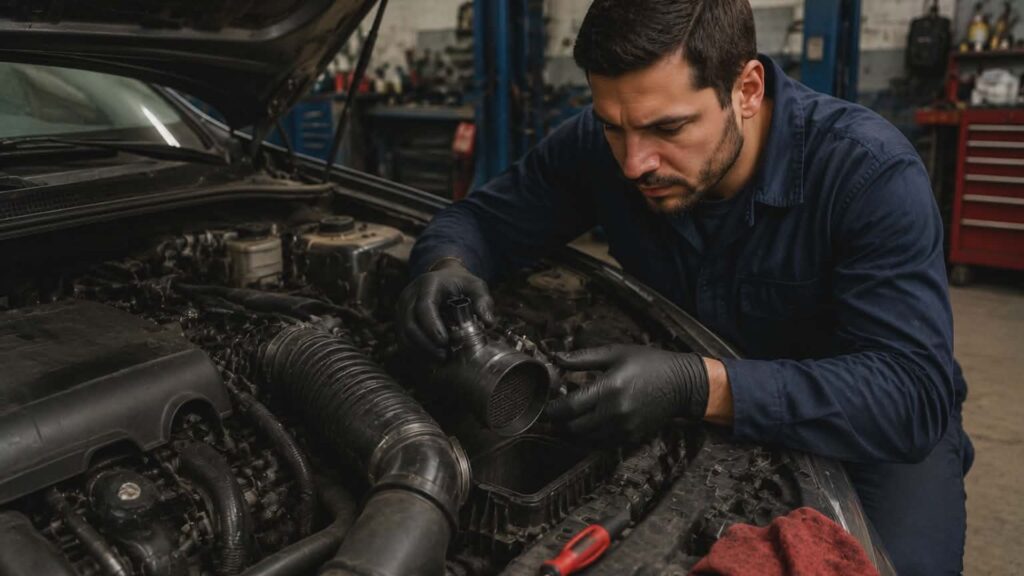
Your car depends on a precise balance of air and fuel to run properly. At the center of that balance is a small but critical component called the mass air flow sensor, or MAF sensor. When it starts to fail, your engine can behave in all kinds of frustrating ways – and most drivers have no idea what’s causing it. If your vehicle has been acting strange lately, a failing MAF sensor might be the root of the problem. Here are 10 common symptoms of a bad mass air flow sensor you should never brush off. What Does a Mass Air Flow Sensor Do? The mass air flow sensor measures the amount of air entering the engine so the engine control module (ECM) knows how much fuel to inject. Accurate airflow data is essential because the ECM uses it to maintain the correct air-fuel ratio for efficient combustion. When the MAF sensor sends inaccurate data to the ECM, the engine receives either too much or too little fuel. That mismatch can cause a wide range of drivability and performance problems throughout the vehicle. 10 Common Symptoms of a Bad MAF Sensor Check Engine Light Turns On One of the first signs that something is wrong is a check engine light (CEL) on your dashboard. When the MAF sensor fails or sends bad data, the engine control unit logs diagnostic trouble codes related to airflow measurement. A CEL alone does not always point to a MAF sensor, which is why professional engine computer diagnostics are so important. A trained technician can pull the codes and confirm whether the MAF is causing trouble. Rough Idling If your engine shakes or sputters when sitting at stoplights or in a parking lot, a bad MAF sensor could be responsible. When the sensor causes the ECM to miscalculate the fuel mixture, the engine struggles to maintain a smooth idle. This issue is often confused with spark plug problems or a vacuum leak. If you want to understand more, check out this guide on the common causes of a rough idle and see how airflow issues fit into the picture. Hesitation During Acceleration Engine hesitation is a classic sign of MAF sensor problems. You press the gas pedal, and the car seems to pause, stumble, or jerk before responding. That hesitation during acceleration happens because the sensor is not accurately measuring the airflow, so the ECM cannot deliver the correct amount of fuel fast enough. This is especially noticeable when merging onto a highway or pulling out of an intersection. If your car feels sluggish, a failing MAF sensor might be why. Engine Stalling A bad MAF sensor can cause your engine to stall, especially at low speeds or right after starting. When the sensor fails to measure airflow accurately, the combustion chamber does not get the fuel balance it needs to keep running. Stalling at idle or right after startup is a red flag worth investigating immediately. Letting it go unchecked can lead to costly repairs down the road. Poor Fuel Economy If you are filling up your tank more often than usual, your MAF sensor may be going bad. When the sensor sends inaccurate readings, the ECM may inject too much fuel to compensate, which tanks your fuel economy and wastes gas. Poor fuel efficiency is easy to ignore since it creeps up gradually. But if your fuel costs have gone up without any changes to your driving habits, your airflow sensor deserves a closer look. Difficulty Starting the Engine Difficulty starting is another symptom of a bad mass air flow sensor. If the ECM does not know how much air is entering the engine, it cannot calculate the right amount of fuel to inject during startup. This can lead to a car that cranks without starting, or one that takes several attempts to turn over. Cold mornings can make this even worse. Engine Misfires A faulty MAF sensor can throw off the air-fuel mixture enough to cause misfires. When the combustion process is disrupted by incorrect airflow data, some cylinders may not fire properly. Misfires can feel like a shudder, vibration, or sudden power loss. Understanding what causes an engine misfire can help you connect the dots between a bad MAF and what you feel behind the wheel. Car Shakes at Idle When MAF sensor problems affect the air-fuel ratio at low RPMs, you might notice your car vibrating or shaking while sitting still. This is related to rough idling but tends to be more pronounced and uncomfortable. If you have been wondering why your car shakes at idle, a bad MAF sensor is one of the more common culprits worth checking early. Sluggish Performance Under Load A faulty MAF sensor can cause noticeable power loss when your vehicle is under stress – like when you tow something heavy or push hard on the highway. The engine needs accurate airflow data to deliver the right power during highway or towing conditions. When the sensor is bad, the ECM cannot optimize combustion for the extra demand. The result is a vehicle that struggles where it should perform with confidence. Black Smoke from the Exhaust Black smoke from your exhaust is a sign that the engine is burning too much fuel. This happens when the MAF sensor sends inaccurate readings that lead the ECM to over-fuel the engine, disrupting the air-fuel mixture. Burning too much fuel is not just bad for engine performance; it can also hurt your emissions test results and damage other components over time. What Causes MAF Sensor Failure? Understanding the causes of MAF sensor problems can help you prevent them. The most common culprits include: Contaminants like dirt, dust, or oil coating the sensor wire Connection issues such as damaged wiring or corroded connectors A clogged air filter that restricts the amount of airflow reaching the sensor Debris from a torn intake boot is entering the airflow path Cleaning the MAF sensor with a dedicated spray cleaner can temporarily improve

10 Bad Mass Air Flow Sensor Symptoms You Shouldn’t Ignore Read More »

Bad Oxygen Sensor Symptoms: 7 Warning Signs You Shouldn't Ignore

Bad Oxygen Sensor Symptoms: 7 Warning Signs You Shouldn’t Ignore

Your car talks to you. Most of the time, it whispers through small changes in performance or fuel efficiency. But when your oxygen sensor starts failing, those whispers can quickly turn into expensive problems if you ignore them long enough. If you’ve been noticing odd behavior from your engine or a dashboard warning light, this guide will help you learn what an oxygen (O2) sensor does, why it matters, and exactly what symptoms of a failing oxygen sensor look like before they lead to costly repairs. How an Oxygen Sensor Works The oxygen sensor is one of the most critical components in your vehicle’s emissions and fuel system. It sits within the exhaust pipe, typically upstream, located before the catalytic converter, and monitors the amount of oxygen in the exhaust gases leaving the engine. Once the sensor detects the oxygen levels, it sends a voltage signal to the powertrain control module (PCM). That signal typically ranges from 0.1 to 0.9 volts. When the reading is around 0.45 volts, the air-fuel mixture is considered balanced. A reading above 0.45 means the fuel is burning rich, and below it means the engine is burning lean. The PCM uses this data to know how much fuel to inject into the engine and to adjust the air-fuel mixture in real time. Without a working oxygen sensor, the engine can’t regulate the air-fuel ratio properly, and everything downstream starts to suffer. 7 Bad Oxygen Sensor Symptoms You Should Know Understanding the bad oxygen sensor symptoms early can save you from larger, more expensive problems later. Here’s what to watch for. The Check Engine Light Comes On This is one of the most common ways a bad O2 sensor announces itself. The check engine light comes on when the PCM detects a problem with the sensor’s signal or voltage output. A diagnostic scan can quickly confirm whether an O2 sensor fault code is stored in the system. Don’t assume a check engine light is minor. It’s worth having a technician run advanced engine computer diagnostics to pinpoint the exact issue before it snowballs. Poor Fuel Economy When an oxygen sensor goes bad, the PCM loses accurate data and may inject more or less fuel than the engine actually needs. This often leads to the engine burning too much fuel to compensate, which means more trips to the gas station. Poor fuel economy is a frustrating symptom because it builds gradually. You might not notice the change in mileage right away, but over time, the extra cost at the pump adds up fast. Rough Idling and Engine Hesitation A faulty oxygen sensor disrupts the air-fuel mixture, which can cause your car to idle unevenly or hesitate when you press the throttle. Rough idling often feels like a shake or vibration when the car is stopped at a light. If you’re experiencing this, it’s worth reading up on the common causes of a rough engine idle to understand whether the sensor is the root cause or if something else is involved. Engine Misfire Without accurate feedback from the O2 sensor, combustion inside the cylinder can become inconsistent. This leads to a misfire, which feels like a jolt or stumble while accelerating. A misfire not only affects your driving experience but can also damage the catalytic converter over time if left unchecked. To better understand this issue, take a look at what causes an engine misfire – because a bad O2 sensor is often one of the contributing factors. Poor Acceleration and Loss of Engine Power A failing oxygen sensor can cause your car’s throttle response to feel sluggish. You press the gas, and the car hesitates or struggles to pick up speed. This poor acceleration happens because the PCM is working with bad data, making it difficult to inject the right amount of fuel into the engine at the right time. Loss of engine power is a safety concern, especially in highway driving or merging situations.  Don’t write it off as normal wear without having the sensor checked. Failed Emissions Test The O2 sensor plays a direct role in controlling harmful emissions from your tailpipe. When the sensor fails, the catalytic converter can’t do its job properly, which means the exhaust gases leaving the vehicle may contain higher levels of pollutants. If your vehicle fails an emissions test, a bad oxygen sensor is one of the first things a technician should diagnose. Sensor problems at this stage directly cause harmful emission levels that push your vehicle out of compliance. The Smell of Rotten Eggs from the Exhaust When too much unburned fuel passes through the exhaust system and reaches the catalytic converter, it can produce a sulfur-like smell similar to rotten eggs. This odor often means the engine is running rich or that the catalytic converter is being damaged by poor combustion. A bad O2 sensor is often the reason the air-fuel mixture is off in the first place. If you’re smelling this from the tailpipe, have it checked right away. Can You Drive with a Bad Oxygen Sensor? Technically, you can drive with a bad oxygen sensor for a short time, but it’s not recommended. Driving with a bad sensor long-term will hurt your fuel economy, damage your catalytic converter, and can lead to engine performance issues that are far more expensive to fix. The longer you drive with a bad oxygen sensor, the more likely you are to need professional engine repair services on top of the sensor replacement itself. It’s always smarter to replace an oxygen sensor as soon as symptoms appear. How Long Do Oxygen Sensors Last? Most oxygen sensors last anywhere from 60,000 to 100,000 miles and should be replaced according to your vehicle’s maintenance schedule. Older vehicles with non-heated sensors may need replacement sooner. Your car runs better and cleaner with a new sensor in place, and regular maintenance helps avoid unpleasant surprises. If you’re not sure whether your oxygen sensors are due for inspection, the technicians at Grewal’s Automotive can

Bad Oxygen Sensor Symptoms: 7 Warning Signs You Shouldn’t Ignore Read More »

7 Bad Fuel Injector Symptoms You Shouldn't Ignore

7 Bad Fuel Injector Symptoms You Shouldn’t Ignore

Your car depends on a precise balance of fuel and air to run properly. Fuel injectors are the parts responsible for delivering that fuel, spraying a fine mist of fuel directly into the combustion chamber or intake manifold at exactly the right moment. When they work correctly, you never think about them. When they don’t, your engine lets you know in a hurry. The tricky part is that fuel injector problems don’t always show up in obvious ways. Some symptoms look like other issues entirely. Knowing the common symptoms of a bad fuel injector can save you from misdiagnosis, unnecessary repairs, and bigger problems down the road. What Do Fuel Injectors Actually Do? In a modern gasoline or diesel engine, fuel injectors deliver pressurized fuel into each cylinder at a precise time and in the correct amount for combustion. The engine control unit controls this process, telling each injector when to open and how long to stay open. If an injector fails to spray the right volume of fuel or deliver fuel at the correct time, the entire air-fuel ratio gets thrown off. Dirty fuel injectors, a clogged fuel injector, or a faulty fuel injector can each disrupt this balance. And once the balance is off, you’ll start noticing symptoms of bad fuel injectors across the entire vehicle. 7 Common Symptoms of a Bad Fuel Injector Rough Idle or Engine Stalling A rough idle is one of the most telling signs of a bad fuel injector. When an injector isn’t delivering the correct amount of fuel to its cylinder, that cylinder can’t fire correctly. The result is an uneven idle – your RPM may fluctuate, the car may shake at a stop, or the engine stalls entirely. If this sounds familiar, it’s worth reading about the common causes of a rough engine idle to understand what else might be contributing to the problem. Engine Misfire A malfunctioning fuel injector can cause the engine to misfire. When a cylinder receives too much or too little fuel, combustion doesn’t happen properly. You’ll feel this as a stumble, jerk, or hesitation – especially during acceleration or when the engine is under load. An engine misfire isn’t always an injector problem. Spark plugs, ignition coils, and other engine components can cause similar symptoms. To get a clearer picture, check out what causes an engine misfire and compare your symptoms. Poor Fuel Economy If your gas mileage has dropped without any obvious reason, a faulty injector may be to blame. A defective fuel injector that stays partially open can allow fuel to drip into the cylinder even when it shouldn’t, burning more fuel than necessary and reducing fuel efficiency. Fuel injector issues can lead to the engine consuming significantly more fuel to maintain normal performance. Poor fuel economy combined with any other symptom on this list is a strong sign to get your fuel injection system inspected. Check Engine Light Comes On A faulty fuel injector will often trigger the check engine light on your dashboard. The engine control unit monitors fuel pressure, RPM, and combustion data. When something is off – like an injector that isn’t delivering the right volume of fuel – the system flags it and stores a diagnostic code. This is where comprehensive computer diagnostics for your vehicle come in. Pulling that code tells a technician exactly which injector or fuel system component is causing the issue, rather than guessing. Engine Hesitation or Surging Engine hesitation is another common sign. You press the gas pedal, and the car hesitates before accelerating, or it surges forward unexpectedly. This happens when fuel injectors deliver an inconsistent fuel mixture to the cylinders, disrupting the air and fuel balance needed for smooth combustion. Surging at certain RPM levels or hesitation under load often points directly to clogged injectors or a clogged fuel injector struggling to spray a proper mist of fuel. The engine can’t maintain consistent power when it’s not receiving a consistent fuel flow. Fuel Smell or Visible Fuel Leak If you smell raw gasoline near your engine or notice a fuel leak, take it seriously. A damaged or faulty injector can allow pressurized fuel to escape outside the combustion chamber. In some cases, a failing injector allows fuel to pool on engine components rather than atomizing into the fine mist of fuel it should produce. This is not a wait-and-see situation. A fuel leak near hot engine parts is a safety risk. Have the vehicle inspected right away. Failed Emissions Test Fuel injectors that get dirty or become clogged can cause incomplete combustion, which pushes more unburned hydrocarbons into the exhaust. If your vehicle fails an emissions test, clogged fuel injectors might be the culprit, not just the catalytic converter or air filter. The symptoms of fuel injector problems show up in emission readings because the combustion process relies on proper fuel and air ratios. If injectors deliver fuel unevenly across cylinders, the exhaust output reflects it. What Causes Fuel Injectors to Go Bad? Fuel injectors can become clogged over time from carbon buildup, sediment, contaminated fuel, or moisture in the fuel tank. Dirty fuel from a filling station, debris that bypasses the fuel filter, or low fuel quality can all shorten injector life. Even the solenoid inside the injector can wear out with high mileage. In some cases, a fuel additive or fuel injector cleaner added to the fuel tank can help maintain clean injectors. But when an injector is already failing, a fuel additive alone won’t fix it. How to Diagnose a Bad Fuel Injector The best way to diagnose a bad fuel injector is with a professional scan tool and fuel pressure test. A technician can check live data from the engine control unit, listen for injector clicking with a stethoscope, or perform a balance test across all cylinders. Bad injector symptoms sometimes overlap with issues like bad spark plugs – you can learn more about those here. Proper diagnosis makes sure the right part gets replaced. How to

7 Bad Fuel Injector Symptoms You Shouldn’t Ignore Read More »

Car Running Rich Symptoms: Warning Signs You Shouldn't Ignore

Car Running Rich Symptoms: Warning Signs You Shouldn’t Ignore

Your car has been feeling off lately. Maybe fuel economy has dropped, or there’s a strange smell coming from the exhaust. These could be signs your car is running rich – and if you ignore them, small problems can turn into expensive repairs fast. Understanding what running rich means, why it happens, and what to look for can save you time, money, and frustration. What Does “Running Rich” Actually Mean? When your engine is running rich, it means the air-fuel mixture inside the combustion chamber has too much fuel and not enough air. Instead of burning cleanly and efficiently, excess fuel gets pushed through the engine’s combustion process partially unburned. The ideal air-to-fuel ratio for most vehicles is 14.7:1 – meaning 14.7 parts air to 1 part fuel. When that balance tips and your engine starts receiving too much fuel relative to air, performance drops and problems stack up. Running Rich vs Lean: What’s the Difference? It helps to understand both ends of the spectrum. Running rich or lean both hurt your engine, just in different ways. A rich fuel mixture means too much fuel and too little air. The opposite of running rich is running lean – where the engine gets too much air and not enough fuel. Lean-running engines tend to overheat and can cause serious internal damage, like warping or cracking. Rich-running engines waste fuel and choke the combustion process with carbon buildup. Both conditions signal that something in your fuel delivery or sensor system needs attention. Common Car Running Rich Symptoms Knowing the running rich symptoms early gives you a chance to fix things before they escalate. Here’s what to watch for. Drop in Fuel Efficiency One of the first things most drivers notice is a sudden drop in miles per gallon. When your engine is burning excess fuel just to run, fuel efficiency takes a direct hit. If you’re filling up more often without driving more, that’s a red flag. Strong, Pungent Smell from the Exhaust A pungent smell – often described as rotten eggs or raw fuel – coming from your tailpipe is a classic sign. This foul odor happens because unburned fuel passes through the exhaust system and reacts with the catalytic converter. A healthy catalytic converter neutralizes harmful gases, but a rich condition can overwhelm it and lead to catalytic converter problems over time. Black Smoke from the Tailpipe Black smoke coming from the tailpipe is hard to miss. It’s caused by unburned fuel and black carbon being pushed out through the exhaust. You may also notice sooty or dry soot deposits around the exhaust tip. Rough Idle or Fluctuating RPMs If your engine stumbles or shakes at idle, a rich condition could be to blame. Too much fuel in the combustion chamber disrupts the combustion process, causing an uneven burn. This often shows up as rough idling, surging RPMs on the tachometer, or a general feeling of instability at low speeds. Learn more about the common causes of a rough idle to narrow down what’s happening. Engine Misfire When fuel in the combustion chamber doesn’t ignite properly, you get a misfire. This feels like a stumble or hesitation while driving, especially under load. A misfire can also trigger the check engine light. If you’re curious about what causes an engine misfire, it often links back to a rich condition affecting ignition timing and spark quality. Fouled Spark Plugs Spark plugs are a window into your engine’s health. Pull them out and look for black, sooty, or wet deposits. These are signs of a rich-running engine. Fouled spark plug tips can’t fire reliably, which worsens misfires and overall engine performance. Review the warning signs of bad spark plugs if you suspect this is part of the issue. Check Engine Light On A rich condition almost always triggers the check engine light. The oxygen sensor (also called the O2 sensor) monitors exhaust gas and feeds data back to the engine control unit. When it detects that the fuel mixture is too rich, it flags the problem. Getting professional computer diagnostics services with an OBDII scanner will pinpoint the exact fault code. What Causes a Car Engine to Run Rich? Several components can cause a rich condition when they malfunction. A faulty MAF sensor (mass airflow sensor, which measures incoming air volume) gives the engine incorrect data, causing it to inject too much fuel. A bad oxygen sensor does the same – it misreads exhaust gas composition and throws off the fuel-to-air calculations. A faulty fuel pressure regulator can spike fuel pressure beyond normal limits, flooding the system. Clogged or leaking fuel injectors – whether a clog or a stuck-open injector – dump bad fuel at the wrong rate. A dirty air filter restricts airflow, tipping the air and fuel balance toward richness. Even a vacuum leak or MAP sensor fault can confuse the engine control unit and trigger a rich condition. Why You Shouldn’t Wait to Fix It Driving with an engine running rich damages the catalytic converter, fouls spark plugs, increases carbon monoxide emissions, and can cause the engine to fail an emissions test. The longer it runs this way, the more systems get affected. Getting comprehensive engine repair services at the first sign of trouble is always cheaper than waiting until multiple components fail. Frequently Asked Questions Can a car run rich at WOT (wide open throttle) but not at idle? Yes. Some vehicles are tuned to run slightly rich at WOT for protection, but if it’s noticeable at idle or cruise, that’s a problem worth diagnosing. Is running rich or lean worse for my engine? Both are harmful. Running lean can cause more immediate heat-related engine damage, while running rich long-term leads to carbon buildup, sensor damage, and catalytic converter failure. How does a mechanic diagnose a rich condition? A mechanic will typically use an OBDII scanner, check live sensor data, inspect spark plugs, and review fuel pressure readings. Understanding what causes an engine misfire is often part of

Car Running Rich Symptoms: Warning Signs You Shouldn’t Ignore Read More »

Car Running Lean Symptoms: Warning Signs You Shouldn't Ignore

Car Running Lean Symptoms: Warning Signs You Shouldn’t Ignore

Your car has been acting up lately – rough idling, strange smells, or maybe a check engine light that just won’t go away. Before you panic, it helps to understand what might actually be going on under the hood. One of the most overlooked issues is an engine running lean, and knowing the symptoms can save you from a costly repair down the road. What Does “Running Lean” Actually Mean? Every engine needs a precise air-fuel mixture to run properly. The ideal ratio is roughly 14.7 parts air to 1 part fuel – this is called the stoichiometric ratio. When your car is running lean, it means the engine is getting too much air and not enough fuel to maintain proper combustion. Think of it as the opposite of running rich. A rich-running engine burns excess fuel, which leads to black exhaust smoke and poor fuel efficiency. A lean-running engine, on the other hand, runs hotter and can cause serious internal damage if ignored long enough. Common Symptoms of a Lean-Running Engine Recognizing a lean condition early makes all the difference. Here are the most telling signs: Rough Idle or Hesitation – If your engine stumbles at low RPM or hesitates when you press the gas pedal, that’s a classic symptom. A lean mixture disrupts the smooth firing of each piston during every stroke, which directly affects engine performance. Engine Knocking or Pinging – A lean-running engine runs hotter inside the combustion chamber. This excess heat can trigger engine knocking or ping – a metallic rattling sound that usually gets worse under acceleration. Left unchecked, this can damage spark plugs and even the piston over time. Check Engine Light and Fault Codes – Your vehicle’s oxygen sensor and MAF (mass airflow) sensor are constantly monitoring the air-fuel mixture. When the engine is running lean, the engine computer (ECU) may set fault codes based on oxygen sensor or MAF readings. A scan with an advanced diagnostic tool will often pull a code like P0171 or P0174, pointing to a lean condition on one or both engine banks. Running an advanced diagnostic scan can pinpoint the source of the problem. Poor Fuel Economy and Weak Performance – Ironically, a lean engine doesn’t always mean you’re saving gas. The engine works harder to compensate, reducing overall efficiency and power output. What Causes a Car to Run Lean? Understanding the difference between running rich vs lean starts with knowing what disrupts the air-fuel mixture. Common causes include: A vacuum leak – a cracked hose or damaged intake manifold gasket lets unmetered air into the engine A faulty MAF sensor – the mass flow sensor misreads incoming airflow Clogged fuel injectors – dirty or blocked fuel injectors can’t deliver enough fuel Low fuel pressure – a failing fuel pump or faulty fuel pressure regulator reduces fuel delivery A faulty oxygen sensor or O2 sensor is giving the engine incorrect feedback A dirty fuel filter is restricting flow to the injectors A temperature sensor or MAP sensor that is sending inaccurate data If you’ve also noticed misfires, check out what causes an engine misfire – it’s often connected to the same root issues. Similarly, if your car is also idling roughly, reviewing common causes of a rough idle may help clarify whether the lean condition is part of a bigger problem. Running Rich or Lean – Which Is Worse? Both conditions harm your engine, but running lean or rich in the long term creates different kinds of damage. When the car is running rich, you risk carbon buildup, a clogged catalytic converter, and fouled spark plugs – learn more about the signs of bad spark plugs. When the car is running lean, the danger is heat. Excessive combustion temperatures can warp exhaust valves, damage the catalytic converter, and eventually burn through engine components entirely. If you’re unsure whether your engine is running rich or lean, an exhaust gas analyzer or professional engine repair services can provide a clear diagnosis. Conclusion A lean condition is not something to put off. The symptoms – from engine knocking to poor performance and fault codes – are your vehicle telling you something is wrong. Whether it’s a vacuum leak, a faulty fuel pressure regulator, or a bad oxygen sensor, early diagnosis prevents serious damage. If you’re in Indianapolis and your check engine light is on, contact Grewal’s Automotive at 317-886-7501. Their team will get to the root of the problem and explain every step clearly.

Car Running Lean Symptoms: Warning Signs You Shouldn’t Ignore Read More »