

If you have been told you might have a head gasket issue, you are probably wondering two things: how serious is it, and how long can I keep driving?
The truth is, a head gasket problem is not something to ignore. This small but critical component keeps your vehicle’s engine sealed and stable. When a gasket fails, it can trigger overheating engine trouble, fluid contamination, and major engine damage.
Let’s walk through what a Head gasket does, the most common head gasket symptoms, and what to do if you suspect a blown head gasket in Indianapolis, IN.
What Does a Head Gasket Actually Do?
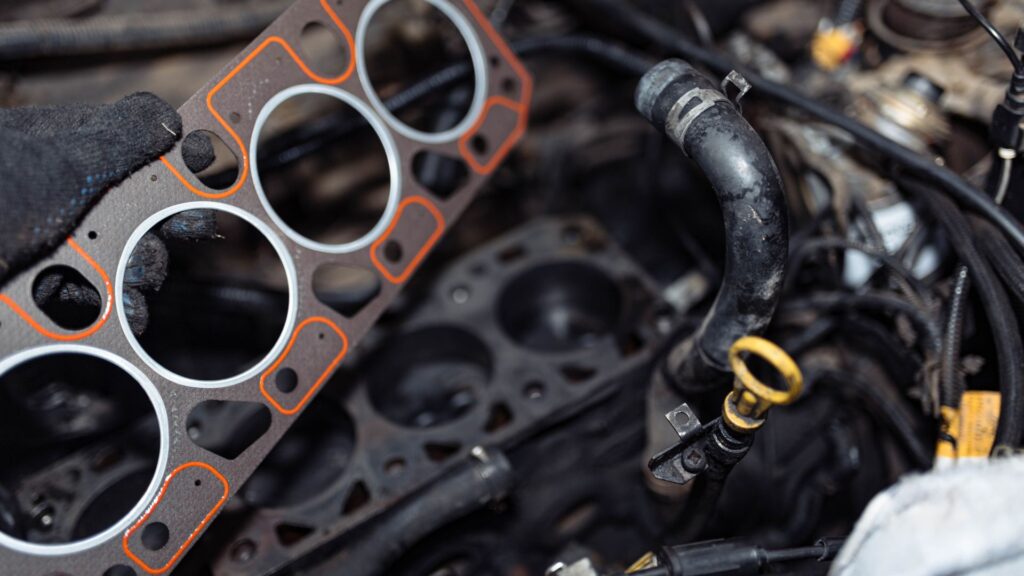
Inside your internal combustion engine cooling and combustion system, the head gasket sits between the engine block and cylinder head. Its job is simple but vital. It seals the combustion chamber so gas and compression stay where they belong, and it keeps coolant and oil flowing separately through their own coolant passages.
The head gasket seals the block and the cylinder head so pressure, heat, and fluids do not mix.
It must withstand extreme temperature swings, constant pressure changes, and combustion forces every time the engine is running. If the gasket can cause coolant to mix with oil, or allow coolant to leak into the combustion chamber, serious problems can develop quickly.
When the head gasket fails, you get what people call a blown head gasket. That is when things begin to escalate.
Overheating Engine That Comes Back Again and Again
One of the earliest and most common symptoms is an overheating engine.
If your temperature gauge climbs higher than normal or your car continues to overheat even after adding engine coolant, there may be more happening within the engine. A blown head gasket can cause coolant to leak into the cylinders or out of the cooling system, reducing its ability to control heat.
If you have already checked the thermostat and radiator and the issue persists, it may be time to review the common causes of car overheating by reading this guide on common causes of car overheating.
Sometimes drivers ask why your car is overheating even though the coolant is full. In many cases, a hidden gasket leak is to blame. You can explore this further here: why your car is overheating even though the coolant is full.
A persistent overheat is often an early warning sign of head gasket failure.
White Smoke From the Exhaust
Seeing white smoke from the exhaust is one clear sign of a blown head.
When a head gasket leak allows coolant to leak into the combustion chamber, it burns along with the air-fuel mixture. That produces thick white smoke from the exhaust system. This is not to be confused with small condensation clouds in cold weather.
If the smoke continues after the engine is warm and you notice coolant loss with no visible external leak, the head gasket is blown.
This type of failure causes coolant to enter the cylinder during combustion, which can increase engine heat and deteriorate engine components quickly.
Milky Oil or Milky Residue on the Oil Cap
Another major red flag is milky oil. If you remove the oil cap and see a milky, milkshake-like mixture underneath, that may indicate coolant in the oil. A blown head gasket can cause coolant and oil to mix, creating a thick, tan sludge.
Motor oil should be smooth and amber to dark brown. When oil and coolant mix, lubrication drops dramatically. That can lead to worn engine parts, corrosion, and system failure.
Sometimes short drives in cold weather create minor condensation, but heavy milky oil is a serious concern. If you notice milky oil or coolant in the oil, have it checked immediately.
Unexplained Coolant Loss
Are you frequently topping off your coolant reservoir with antifreeze or water?
If there is no visible coolant leak under your car and the radiator or coolant reservoir level keeps dropping, the gasket may allow coolant to leak internally. This coolant leak may send fluid into the combustion chamber, engine block, and cylinder.
A head gasket can cause coolant to escape without obvious drips under the vehicle. That hidden leak often shows up as overheating, white smoke, or contaminated fluids.
Monitoring your coolant level can help catch failure early before major engine problems start.
Bubbles in the Radiator or Coolant Tank
When combustion gas escapes past a failed head gasket, it can enter the cooling system. This creates air bubbles in the radiator or coolant tank while the engine is running.
If you open the radiator cap when the engine is warm, you may see continuous bubbling. This happens because combustion pressure is forcing gas into the coolant system.
The head gasket also helps maintain proper compression inside each cylinder. When it fails, pressure leaks into places it does not belong, disrupting internal combustion engine cooling efficiency.
This issue can increase engine temperatures rapidly and cause radiator overflow.
Rough Running or Engine Misfire
A damaged cylinder head gasket can also affect how your engine performs. If coolant is leaking into the cylinders, it can interfere with combustion. That may lead to a misfire, hesitation, or poor engine performance. A cylinder may not build proper compression, and the engine consumes fuel unevenly.
If you are not sure whether your issue is related to spark plugs, poppet valve sealing, or something else, you can learn more about what causes an engine misfire.
However, combined with other symptoms of a blown head, a persistent misfire can strongly suggest a head gasket problem.
External Oil or Coolant Leak
Not every gasket leak is internal. Sometimes a head gasket leak appears as an oil leak or coolant leak along the seam between the cylinder head and engine block.
If you see fluid near where the block and the cylinder head meet, the head gasket blows outward rather than inward. This kind of leak can sometimes be mistaken for valve cover or bad head issues.
If you are unsure, this resource explains common reasons your car is leaking oil when parked.
An external gasket leak may seem minor at first, but it can still cause coolant loss and eventual overheating.
What Causes a Blown Head Gasket?
Many drivers ask what causes a blown head gasket in the first place.
The most common causes include:
- Repeated overheating that warps a warped cylinder head
- Severe pressure spikes in the combustion chamber
- Corrosion within the cooling system
- Old age and wear
- Failure to maintain proper engine temperatures
In most cases, excessive heat is the trigger. When the engine block and cylinder head expand unevenly due to high temperature, the gasket seal weakens.
Over time, that stress leads to head gasket failure. Some failure causes happen suddenly, but most develop slowly through neglected coolant system maintenance.
Can You Drive With a Blown Head?
Technically, you can drive with a blown head gasket for a short time. But it is extremely risky.
Continuing to drive with a blown head gasket can cause engine damage to pistons, cylinder walls, and bearings. If coolant keeps leaking into the cylinders or oil passages, you risk destroying the engine block and cylinder head entirely.
In the worst cases, you may need a new engine instead of a head gasket replacement.
If you suspect a blown head gasket, it is safer to stop driving and seek professional engine repair services.
How Do Mechanics Test for a Blown Head?
At Grewal’s Automotive in Indianapolis, IN, technicians can test for a blown head using several methods:
- Checking compression levels in each cylinder
- Performing a chemical block test to detect combustion gas in the coolant
- Inspecting for coolant and oil contamination
- Pressure testing the cooling system
A proper diagnosis ensures that you replace the gasket only when necessary and confirms whether the head gasket is blown or another issue is causing similar symptoms.
What About Head Gasket Repair Cost?
Head gasket repair cost depends on how much damage has already occurred.
If caught early, technicians may resurface the cylinder head, replace the gasket with a new gasket, and restore proper sealing between the engine block and the cylinder. If severe overheating warped a head or engine block, the repair becomes more involved.
Addressing the issue early is always less expensive than waiting for catastrophic failure.
How to Prevent a Blown Head Gasket
While no gasket lasts forever, you can prevent a blown head gasket with simple maintenance:
- Keep your radiator and cooling system clean
- Maintain proper engine coolant and antifreeze levels
- Address overheating immediately
- Replace worn thermostats
- Fix small leaks before they become major
Prevent coolant contamination and monitor oil consumption regularly. A healthy cooling system protects your engine components and keeps temperatures stable.
When to Call Grewal’s Automotive
Head gasket symptoms can feel overwhelming. White smoke, coolant loss, poor engine performance, rough idle – it adds up quickly.
At Grewal’s Automotive in Indianapolis, IN, our team understands how critical this seal is within the engine. If you notice blown head gasket symptoms or suspect a blown head gasket, our technicians can inspect your vehicle’s engine, identify the failure, and provide clear next steps.
Learn more about our professional engine repair services.
Conclusion
A head gasket may be a small component, but when it fails, the consequences are serious. Recognizing early warning signs like white smoke, coolant loss, milky oil, or an overheating engine can save you from major engine repairs. If you notice anything unusual, do not wait.
Contact Grewal’s Automotive in Indianapolis, IN, for an accurate diagnosis and honest guidance.
Acting quickly can protect your engine, your wallet, and your peace of mind.