
If you have ever been told your car might need a timing belt replacement, you probably felt your stomach drop. It is not a small expense. Then someone else tells you that timing chains last forever, and now you are wondering why every vehicle does not just use one.
So what is the real story in the timing belt vs timing chain debate? Which option actually saves you more money and stress over the life of your vehicle?
At Grewal’s Automotive in Indianapolis, IN, we get these questions all the time. Let’s slow things down and learn the difference so you can make the smartest decision for your car and your budget.
What’s the Difference Between a Timing Belt and a Timing Chain?
Let’s start simple. The difference between a timing belt and a timing chain comes down to materials, design, and service life.
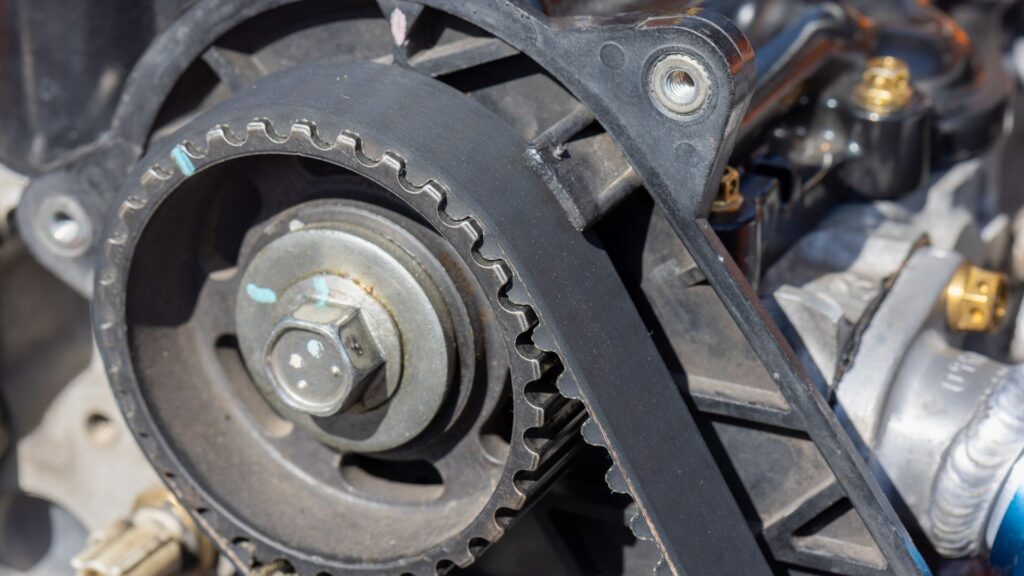
A timing belt is a belt (mechanical) made of reinforced rubber, often with fibers for strength.
Many are made of reinforced rubber combined with synthetic materials, similar in concept to natural rubber but engineered for durability. Belts are quieter and lighter.
A timing chain looks like a bicycle chain and is made of metal. It runs inside the engine and is lubricated by engine oil. A chain drive system is stronger but heavier.
Both parts are critical to your engine timing. They connect the camshaft and crankshaft so that they rotate in sync. The crankshaft moves the pistons up and down, while the camshaft controls the opening and closing of each poppet valve. When this happens at the correct moment, fuel and air ignite properly during combustion in a four-stroke engine.
If that timing is even slightly off, your engine performance suffers. If it fails completely, serious engine damage can happen.
How the Timing System Works Inside Your Engine
Your engine relies on a precise timing system. Whether it has belts and chains, the goal is the same: to maintain proper timing between internal components.
Here is a simplified view:
- The crankshaft moves the pistons.
- The camshaft controls the valves and pistons working together.
- The timing belt or timing chain keeps them synchronized.
- A tensioner keeps proper pressure on the belt or chain.
- Idler pulleys or an idler wheel guide movement.
- Some engines also drive the water pump, driven by the timing belt.
In some cases, these timing components also spin a pulley connected to other accessories. If the belt failure occurs, those related components may stop working as well.
That is why replacing a timing belt on schedule is so critical.
Timing Belt: Lower Upfront Cost, Higher Maintenance Planning
A timing belt is commonly found in many compact car engines, crossover SUV models, and even some pickup truck designs. Manufacturers chose them because belts are quieter and cost less to produce.
However, timing belts typically last between 60k and 100k miles. Many manufacturers recommend a replacement interval of around 100k. Your owner’s manual will give the specific mileage guidance.
Here is the key reality: timing belts need to be replaced as preventive maintenance. If you wait until they break, you risk catastrophic damage. In “interference” engine designs, the valves and pistons can collide during a belt failure. That can bend a valve, damage a piston, and lead to major engine repair.
In non-interference setups, a broken belt may only stall the car. But you cannot assume which type you have without checking.
Timing belt replacement may cost several hundred to over a thousand dollars, depending on the vehicle. Labor costs can be high because accessing the belt often requires removing covers, idler pulleys, and sometimes the water pump. Many technicians recommended replacing the pump at the same time to save future labor.
This is where routine preventative maintenance services from an experienced shop really matter. Planning a timing belt service is far less expensive than emergency repairs.
For complex timing belt or camshaft-related issues, you can explore professional engine repair services at Grewal’s Automotive.
Timing Chain: Longer Lasting but Not Maintenance-Free
Now let’s talk about the timing chain vs. the timing belt from a durability perspective.
Timing chains are generally considered longer-lasting. In many newer vehicles, the timing chain can last a long time, often the life of the engine. Timing chains often do not have a fixed replacement interval.
But this does not mean they last forever.
Chains stretch over time. A stretched chain can throw off engine timing, cause rough running, or trigger dashboard warning lights. Chains stretch gradually, and if the chain connects poorly due to wear or tensioner failure, it can jump teeth on a gear. That can cause severe engine damage.
Unlike a rubber belt, a chain drive depends heavily on lubrication. Regular oil changes are critical to keep the chain lubricated properly. Dirty oil accelerates wear on chain guides, plastic components, and the tensioner.
Motor oil quality directly impacts how long timing chains last. With proper maintenance and regular oil changes, timing chains last much longer than belts. Neglecting oil change intervals, the chain could wear out prematurely.
If you suspect issues, advanced testing, such as advanced computer diagnostics testing, can help pinpoint timing system faults before they become disasters.
Timing Belt vs Timing Chain: What About Cost Over Time?
This is where people get confused. With a timing belt, you have predictable maintenance costs. You know the belt service is coming. You budget for it. Replace it on schedule and move on.
With a timing chain, there is usually no standard replacement interval. In theory, chains last the life of the vehicle. In practice, if they fail, repairs may cost more because internal engine disassembly is often required.
Here is the trade-off:
- Timing belt or chain choice affects long-term cost planning.
- Belt replacement is planned and predictable.
- Chain repairs are less common but can be expensive if neglected.
- Labor costs for a major chain repair may cost more than a standard belt job.
So what saves more money? It depends on how well you maintain your vehicle.
Vehicle Examples and Real-World Applications
Many modern SUV and crossover SUV models, like the Toyota Highlander or Chevrolet Traverse, use chains in certain engine configurations. Some Ford Motor Company designs, including certain Ford F-Series and even the Ford Maverick (2022), use chains because manufacturers prioritise durability.
Older gasoline engines frequently used belts, especially in compact car designs. Diesel engines almost always use chains due to higher compression demands.
The automotive industry has shifted toward timing chains and timing belts, both being engineered for better longevity, but chains are more common in newer vehicles today.
If you are unsure whether your engine uses a belt or a chain, ask. The difference between timing systems is not always obvious without checking your records or performing diagnostics.
What Are the Warning Signs of Trouble?
Regardless of timing belt or chain, you should watch for warning signs:
- Rattling noise from the front of the engine
- Misfires
- Hard starting
- Check engine light
- Rough idle
If your vehicle is struggling, it may be related to proper timing issues. Many symptoms overlap with the common causes of engine misfires, which you can learn more about here: common causes of engine misfires.
Catching wear early prevents full failure.
Interference vs Non-Interference Engines
This part matters more than most drivers realize. In an interference engine, there is minimal clearance between components. If a timing belt breaks or a chain breaks, valves and pistons can collide. That almost always results in significant engine damage.
In a non-interference engine, that collision does not occur. The engine simply stops running.
Knowing which design your car uses changes how aggressively you should follow replacement recommendations.
Maintenance Is the Real Money Saver
Whether your engine uses timing belts and chains or a single style, maintenance is the deciding factor.
For timing belts:
- Follow the recommended replacement interval.
- Replace the associated pulley, tensioner, and water pump when appropriate.
For timing chains:
- Keep the chain clean with high-quality engine oil.
- Never skip regular oil changes.
- Address stretched chain symptoms early.
If you are unsure about service history, schedule routine preventative maintenance services to review your maintenance records and inspect timing components.
When bigger issues arise, Grewal’s Automotive provides complete auto repair services to keep Indianapolis drivers safely on the road.
So, Which One Saves You More Headaches?
Here is the honest answer.
A timing chain is generally longer-lasting and may reduce routine replacement costs. But it relies heavily on proper lubrication and consistent maintenance. A timing belt has a fixed service life and will absolutely need to be replaced. But it offers predictability. You plan it, replace it, and avoid surprises.
In the timing chain or belt decision, the real winner is maintenance. Ignoring either system is what becomes expensive.
If you want clarity about your own vehicle, do not guess. A quick inspection and conversation with a trained technician can answer what the difference is in your specific engine and what it means for your wallet.
Conclusion
When it comes to timing belt vs timing chain, there is no universal winner. Belts require scheduled replacement, while chains are longer-lasting but depend heavily on oil quality and upkeep. The real key to saving money is understanding your vehicle’s timing system and staying ahead of wear before failure happens. If you are in Indianapolis, IN and unsure whether your car has a timing belt or timing chain, call Grewal’s Automotive at 317-886-7501. A simple inspection today can prevent major engine damage tomorrow and keep you confidently on the road.