

Blog

Your blog category

What Is a Diagnostic Test on a Car and Why Does It Matter

What Is a Diagnostic Test on a Car and Why Does It Matter

You notice your check engine light flickering on the dashboard. Maybe the car feels off: sluggish acceleration, a rough idle, or an unusual smell from the exhaust. Something is clearly wrong, but you have no idea what. This is exactly where a car diagnostic test becomes your best tool for getting real answers fast. Think of it like a medical diagnosis for your vehicle. Just as a doctor runs tests before prescribing treatment, a mechanic uses diagnostic tests to figure out what is actually happening inside your car before touching a single bolt. What Is a Car Diagnostic Test? A car diagnostic test is a process where a technician connects a specialized scanner to your vehicle’s onboard computer to read error codes stored by the car’s computer system. Modern vehicles are built with an onboard diagnostic system – commonly known as OBD – that continuously monitors hundreds of components and systems to check for issues. When something goes wrong, the vehicle’s computer system logs diagnostic trouble codes and often triggers a warning light. The diagnostic equipment reads these trouble codes and gives the mechanic a starting point for identifying any issues with the engine, transmission, exhaust system, ignition system, brakes, and more. Car diagnostic tests scan nearly every major system in your vehicle, including: Engine performance and fuel injection Transmission function Anti-lock braking system (ABS) and brake performance Exhaust and emissions (including the catalytic converter and oxygen sensor) Ignition coils and ignition timing Airbag and safety systems Throttle response and powertrain function Cooling system, coolant levels, and air conditioning Steering and car suspension This gives the technician a clear overview of your car’s condition without guesswork. How Does a Vehicle Diagnostic Test Actually Work? When you bring your car in, the technician plugs a scanner into the OBD port – usually located under the dashboard on the driver’s side. This scanner communicates with the vehicle’s onboard computer and pulls any stored diagnostic trouble codes. From there, the mechanic interprets what those codes mean. A code might point to a fuel injector issue, a misfiring ignition coil, a failing sensor, or problems with the exhaust gas recirculation system. The diagnostic codes do not always pinpoint the exact part that needs replacing, which is why a skilled technician’s knowledge matters so much. They use the data as a guide to diagnose the root cause accurately. Can You Perform a Car Diagnostic Test at Home? Yes, it is possible to perform a car diagnostic test at home using a basic OBD-II scanner purchased from an auto parts store. These devices can read error codes and give you a general idea of what the onboard computer system has flagged. However, there is a catch. Reading code is not the same as understanding it. A generic code might say “engine misfire,” but it won’t tell you whether it is the spark plugs, ignition coils, a fuel delivery problem, or something else entirely. For anything beyond a simple check, professional car diagnostics at a trusted auto shop give you far more accurate results. If your check engine light comes on and stays on, that is a signal to get a professional inspection done right away. Why Regular Diagnostic Tests Matter for Your Car Skipping diagnostic tests might seem like saving money in the short term, but it often leads to costly repairs down the road. A vehicle diagnostic test helps catch errors before they become catastrophic – especially with systems like the transmission, brake lines, or exhaust system, where a small malfunction can quickly become a major safety issue. Regular diagnostic tests also help maintain fuel efficiency, protect your engine, and extend the overall life of your vehicle. They are an essential part of routine preventative maintenance services that keep your car running the way it should. A test helps catch issues quickly – whether it’s an engine problem, a brake malfunction, or another performance issue you haven’t noticed. How Much Does It Cost? How much does it cost to get a vehicle diagnostic? Diagnostic costs typically range from $50 to $150 at most auto repair shops. Some shops provide free diagnostic services as part of a promotion or bundled with other work. Keep in mind that the diagnostic service fee is separate from any repair costs that follow. It is worth asking upfront about pricing. At Grewal’s Automotive, estimates are always explained clearly before any work begins. What Grewal’s Automotive Offers At Grewal’s Automotive in Indianapolis, IN, the team provides advanced computer diagnostics services using state-of-the-art diagnostic equipment to give you an accurate picture of what your vehicle needs. Whether your check engine light is on or you simply want peace of mind, their technicians are ready to help with everything from engine diagnostic work to professional auto repair services. They also offer expert engine repair solutions for deeper mechanical issues and can walk you through common causes of a rough idle. Every car care visit is handled with transparency – no surprises, no fine print. Conclusion A car diagnostic test is one of the smartest investments you can make in your vehicle’s health. It gives you and your mechanic real data to work with, helps prevent bigger problems, and keeps car diagnostics from becoming a guessing game.  If your dashboard is sending signals or something feels off, do not wait. Schedule a diagnostic test on your vehicle at Grewal’s Automotive today by calling 317-886-7501 or visiting grewalsautomotive.com.

What Is a Diagnostic Test on a Car and Why Does It Matter Read More »

How Long Can You Drive With Check Engine Light On Without Risking Major Damage?

How Long Can You Drive With the Check Engine Light On Without Risking Major Damage?

That little amber glow on your dashboard can send your stomach straight to the floor. The dreaded check engine light has a way of showing up at the worst possible moment – right before a long drive, during a busy week, or when your budget is already stretched thin. So naturally, the first question most drivers ask is: how long can you drive before something goes seriously wrong? The honest answer depends on what triggered the light in the first place. Not every warning light means your engine is about to fail, but ignoring it entirely is never a smart move. Let’s break down what you actually need to know. What the Check Engine Light Is Telling You The check engine light is part of your car’s onboard diagnostics system, often referred to as OBD-II. It signals that the onboard computer has detected something outside of its normal operating range. That could be something minor, or it could indicate a more serious problem developing under the hood. When the check engine light illuminates, your vehicle’s computer stores a fault code. A mechanic can use an OBD-II scanner to pull that code and identify exactly what triggered it.  Steady vs. Flashing: Why the Difference Matters Not all check engine lights are created equal. The way the light behaves tells you a lot about how urgently you need to act. What a Steady Check Engine Light Means A steady check engine light is generally less alarming. A steady light indicates a less urgent issue that still needs attention but typically allows you to continue driving for a short period without immediate risk. Common causes include a loose gas cap, a faulty oxygen sensor, worn spark plugs, or a failing mass airflow sensor. A loose or damaged gas cap, for example, can cause your car to fail an emissions test and reduce fuel efficiency – but it won’t leave you stranded. A faulty oxygen sensor or mass airflow sensor can affect engine performance over time, but the car will still run. Addressing the issue sooner rather than later prevents small problems from turning into costly repairs. What a Flashing Check Engine Light Means A flashing check engine light is a different story. A flashing check engine light indicates an active engine misfire, which means unburned fuel is being pushed into the exhaust system. This can cause damage to the catalytic converter very quickly, and converter replacement is one of the more expensive repairs a car owner can face. If the light is flashing, it’s not recommended that you keep driving normally. Pull over as soon as possible to avoid making things worse. Continuing to drive with a flashing light for too long can turn a manageable repair into a much larger one, especially when catalytic converter problems are involved. You can learn more about what triggers these events by reading about the common causes of engine misfires. How Long Can You Drive With the Check Engine Light On? This is the big question, and the answer is not a specific number of miles or days – it really depends on what’s causing the light to come on. If the car feels completely normal – no rough idling, no vibration, no strange smells, no smoke, no issues with acceleration – and you have a steady check engine light, you can likely drive it for a short time while you arrange an appointment. A few days to a week is reasonable, as long as driving conditions don’t worsen. If the car feels like something is off – loss of power, rough shifts, shaking, or temperature warning signs appearing – treat it as a more urgent situation. Get the car checked as soon as possible to avoid engine damage that compounds the original issue. Here is a simple way to think about it: Steady light, car drives normally – schedule an appointment within a few days Steady light, car feels sluggish or rough – get it looked at right away Flashing light under any conditions – stop driving and call a mechanic Common Reasons the Check Engine Light Comes On Understanding what might have triggered the check engine light helps you assess your situation more clearly. Some of the most frequent culprits include: A loose gas cap (easy fix, no major risk) A faulty oxygen sensor (affects fuel economy over time) Worn spark plugs (can lead to engine misfire if ignored) A failing mass airflow sensor (impacts engine performance and airflow readings) Catalytic converter problems (often triggered by other unresolved issues) Signs of a failing ignition coil – read more about signs of a failing ignition coil Many engine problems that seem small at first can snowball. A misfiring engine, for instance, can cause damage to the catalytic converter if left unaddressed. That is why catching issues early can prevent far more expensive work down the road. You can also review symptoms of bad spark plugs to see if that might be the source. The Risks of Ignoring the Check Engine Light Ignoring the check engine light might save you the inconvenience of a shop visit in the short term, but it rarely saves you money. Driving with the light on when there is an underlying issue can lead to more severe and expensive failures. A check engine light could lead to cascading problems. For example, a misfiring engine can cause unburned fuel to reach the catalytic converter, overheating it and destroying the cat entirely. Oxygen sensor failure, if left alone, can reduce fuel efficiency and eventually stress other components. Ignoring the check engine light is one of those decisions that feels harmless until it suddenly isn’t. The goal is to prevent further damage and ensure your vehicle stays safe and reliable – not to see how long you can stretch it before something breaks. When You Need Professional Diagnostics If you are unsure what is causing the light to come on, getting a professional diagnosis is the smartest first step. Rather than guessing based

How Long Can You Drive With the Check Engine Light On Without Risking Major Damage? Read More »

Oil Leak Valve Cover Gasket: Signs, Causes, And How To Fix It Fast

Oil Leak Valve Cover Gasket: Signs, Causes, And How To Fix It Fast

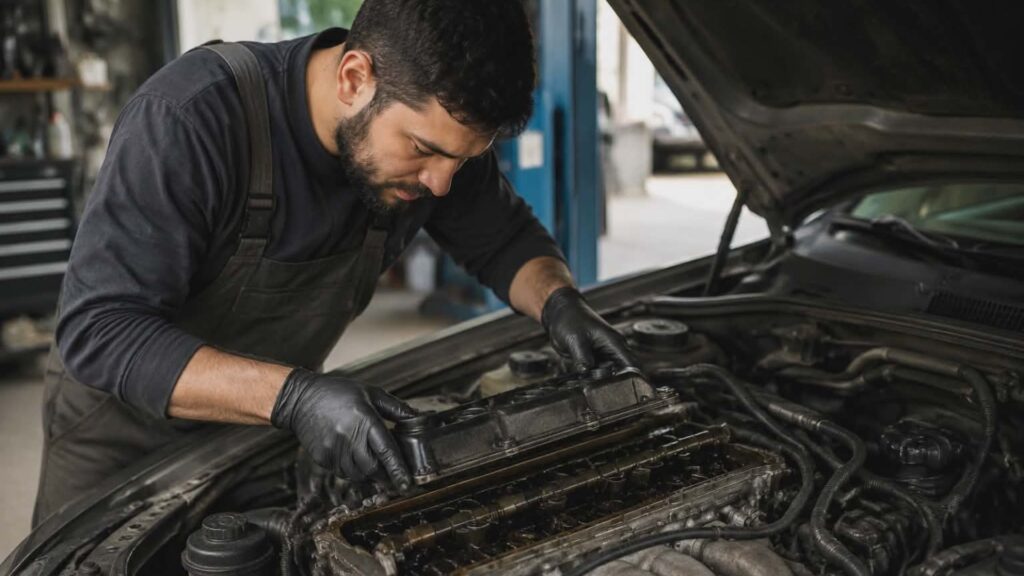
You notice a faint burning smell after parking. Maybe there is a small puddle forming under your car, or your engine oil is dropping faster than usual. These are not things to ignore. In many cases, the culprit is a failing valve cover gasket, and catching it early can save you from a much bigger repair bill. What Is a Valve Cover Gasket and Why Does It Matter? The valve cover sits on top of your engine, protecting internal components like the camshaft, rocker arms, and poppet valves that control the flow of intake and exhaust gases. The gasket acts as a seal between the valve cover and the cylinder head, keeping engine oil contained while preventing debris from getting in. When that gasket starts to fail, oil can escape. It may drip down the side of the engine block, pool near the exhaust manifold, or find its way to other components. Left unchecked, a valve cover leak can lead to low oil levels, engine damage, and even fire risk if oil contacts a hot surface. Common Signs of a Valve Cover Gasket Leak You do not always need to look under the hood first. Some signs are easy to spot from the outside. Burning smell from the engine bay. If oil can leak onto the exhaust manifold or nearby hot components, it will burn off and produce a noticeable fume. This is often the first clue that something is wrong. Visible oil around the valve covers. Take a look at the top of your engine. If you see oil pooling or streaking along the perimeter of the valve cover, that is a strong indicator of a gasket problem. Low engine oil between changes. If you are topping off your oil more frequently than expected or noticing a drop before your next oil change, a slow leak from the gasket could be to blame. This is also worth reading about if you are wondering why your car is leaking oil when parked. Oil on the spark plug. A leaking gasket can allow oil to seep into the spark plug tubes. This can cause misfires, rough idling, and poor performance. If you are already dealing with those symptoms, check out the common causes of engine misfires and possible causes of a rough idle. Visible cracks or deterioration. If you visually inspect the gasket and see it is cracked, rotten, or that the rubber appears dry and brittle, replacement is overdue. What Causes a Valve Cover Gasket to Fail? Gaskets do not last forever. The most common reasons they fail include: Age and heat exposure. Over time, the rubber material hardens, shrinks, and loses its ability to seal properly. The gasket could be shrunken from years of heat cycling. Improper installation. If the valve cover bolts were not torqued to spec during a previous repair, the gasket may not compress evenly. An unevenly compressed gasket can cause slow leaks. Over-tightened or stripped bolts. Using too much force without a torque wrench can crack the cover or damage the groove where the gasket sits. Crankcase ventilation system issues. A blocked crankcase ventilation system builds pressure inside the engine, which can force oil past seals and cause a leak at weak points like the valve cover gasket. How to Fix a Valve Cover Gasket Leak Step 1 – Assess the Situation Start with a valve cover inspection. Wipe the area clean with brake cleaner and a clean rag, then run the engine briefly and recheck. This helps you confirm where the oil is actually coming from, since it can migrate and look like it is coming from the oil pan or oil filter area. Step 2 – Gather Your Tools and Parts You will need a new gasket, a torque wrench, basic hand tools, and access to your service manual. Some jobs also call for a silicone sealer or gasket maker at specific points, especially near the cam towers or where the intake meets the cylinder. Step 3 – Remove and Replace Remove the valve covers carefully after disconnecting any hoses connected to the throttle body or crankcase ventilation system. Clean the engine head surface thoroughly before you install the new valve cover gasket. Any old residue left behind can cause a new leak almost immediately. Step 4 – Reinstall Correctly Use a torque wrench and follow the factory-recommended setting in your service manual. Torque the bolts in a cross pattern to distribute pressure evenly, working on one valve cover at a time. Do not rely on feeling alone. Overtightening is a common mistake that cracks covers. Should You Use an Oil Leak Sealant? Products like oil stop-leak additives or oil-leak sealants can slow the problem in the short term, but they are not a permanent fix. If your vehicle is still leaking after using a spray or additive, the underlying issue needs to be addressed. At that point, proper replacement is the only reliable solution. For anything beyond a basic DIY fix, getting professional engine repair services or comprehensive auto repair services from a trained mechanic is the smarter move. Conclusion A failing valve cover gasket is one of the more common engine oil issues drivers face, but it does not have to turn into a major problem. Spot the signs early, understand what is causing the leak, and take action before it gets worse. If you are in Indianapolis and not sure where to start, the team at Grewal’s Automotive is ready to help. Call 317-886-7501 or schedule a visit today.

Oil Leak Valve Cover Gasket: Signs, Causes, And How To Fix It Fast Read More »

7 Causes of What Can Damage a Car Engine and How to Avoid Them

7 Causes of What Can Damage a Car Engine and How to Avoid Them

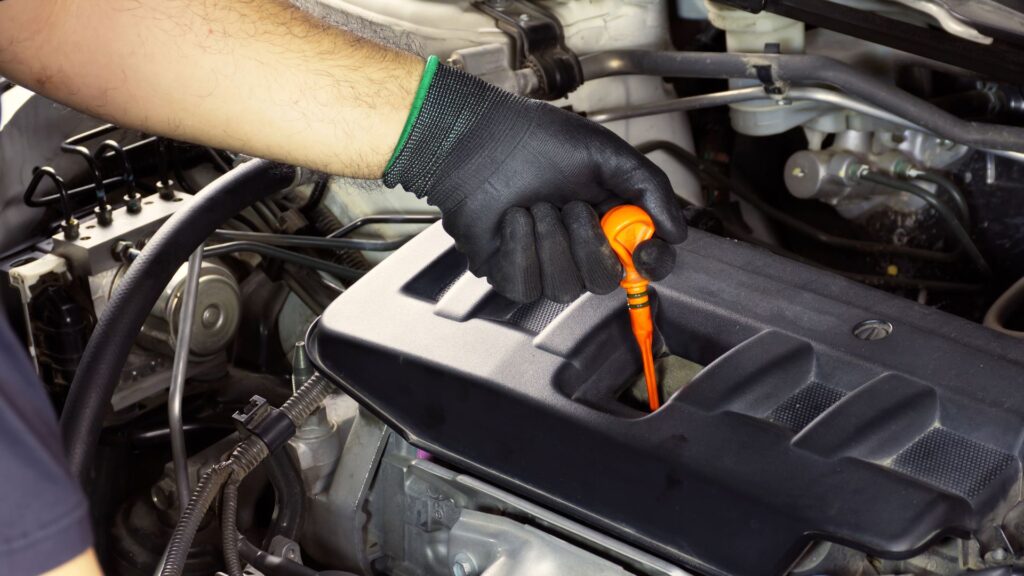
Your engine is the heart of your vehicle. When it starts failing, everything else follows. The good news is that most serious engine problems are preventable if you know what to watch for and take car care seriously before small issues become major ones. Here is a clear breakdown of what can damage a car engine and what you can do to stay ahead of it. Low or Dirty Engine Oil Is One of the Biggest Threats Motor oil keeps the moving parts of the engine lubricated and cool. Without proper lubrication, metal parts grind against each other, generating heat and friction that can destroy engine components in a short amount of time. Skipping oil changes or running on old, dirty engine oil is one of the fastest ways to cause engine damage. The oil loses its viscosity over time and stops protecting the engine the way it should. Make it a habit to check your oil level regularly and follow the manufacturer’s recommended oil change schedule. If you notice burning oil or blue smoke from your exhaust, that is a signal that something is already wrong. Overheating Can Warp and Destroy Engine Parts Engine overheating is not just an inconvenience, it can permanently damage critical components. When the temperature gauge climbs into the red zone, your engine may experience warped cylinder heads, a blown head gasket, or even a cracked engine block. The cooling system, including the radiator, coolant, hoses, and water pump, works together to regulate engine temperature. A clog, leak, or low coolant level can cause the entire system to fail. Understanding the common causes of car overheating can help you catch warning signs early. If the temperature gauge spikes and you cannot safely pull over and refill the coolant, tow the vehicle rather than risk permanent damage. Make sure to schedule coolant flushes as part of your regular preventative maintenance routine to keep the cooling system working properly. A Clogged or Dirty Air Filter Starves the Engine The engine needs a clean mix of air and fuel for proper combustion. A clogged air filter restricts airflow into the combustion chamber, throwing off the air-to-fuel ratio and forcing the engine to work harder than it should. Over time, this leads to poor fuel economy, a rough idle, and even a misfire. Replacing a dirty air filter is one of the simplest and most affordable car care steps you can take. Fuel System Problems That Lead to Engine Trouble The fuel system, including the fuel pump, fuel filter, and fuel injector, plays a direct role in how well your engine runs. A failing fuel pump or a clogged fuel filter can starve the engine of gasoline, leading to hard starts, poor performance, and drivability issues. A dirty injector can disrupt the combustion process and cause misfires that put unnecessary stress on engine components. To learn more about what causes an engine misfire, it is worth reading up on the symptoms early. Replacing the fuel filter at recommended intervals is a small investment that protects your entire fuel system and keeps your car running smoothly. Oil Leaks Left Unaddressed Cause Serious Harm An oil leak might start as just a small spot in your driveway, but ignoring it can lead to serious mechanical damage down the road. Worn-out gaskets, damaged valve seals, and deteriorating seal components are common culprits. When oil leaks out, the engine loses the lubrication it needs to protect the piston, cylinder walls, and other engine parts from heat and friction. Worn piston rings and a damaged head gasket often follow. Check out the reasons your car is leaking oil when parked to understand what might be happening under your hood. Catching a leak early prevents a costly repair later. A Worn or Broken Timing Belt The timing belt controls the precise movement of the camshaft and keeps the combustion cycle in sync. In an interference engine, if the timing belt snaps while the engine runs, the piston can collide with the valve, causing catastrophic internal damage. Modern cars do not always give obvious warning signs before a timing belt fails. That is why following the replacement interval in your maintenance schedule is so important for the vehicle’s engine lifespan. Driving Habits That Quietly Damage Your Engine Your driving habits matter more than most car owners realize. Revving a cold engine before it is properly warmed up, ignoring the check engine warning light, running on a near-empty fuel tank, and skipping regular oil changes all add up to engine problems over time. Even transmission fluid levels affect how the transmission and engine work together under load. Small, neglected details add up and put your engine at risk. When to Call a Professional If you notice engine knocking, a check engine light, blue smoke, or a drop in compression, do not wait. These are signs that your engine needs attention from a skilled auto mechanic. Grewal’s Automotive offers professional engine repair services and regular preventative maintenance to help Indianapolis drivers avoid engine trouble before it gets serious. Their team can inspect your vehicle and walk you through exactly what components would need attention. Conclusion Avoiding engine damage comes down to consistent vehicle maintenance and paying attention to warning signs early. From clean oil and a healthy cooling system to a fresh fuel filter and a functioning timing belt, every small step protects your engine for the long haul.  If something feels off, do not ignore it. Reach out to Grewal’s Automotive at 317-886-7501 or visit grewalsautomotive.com to schedule a service today. Your engine will thank you.

7 Causes of What Can Damage a Car Engine and How to Avoid Them Read More »

Car Won't Start, But Battery Is Good: 7 Likely Causes and Quick Fixes

Car Won’t Start, But Battery Is Good: 7 Likely Causes and Quick Fixes

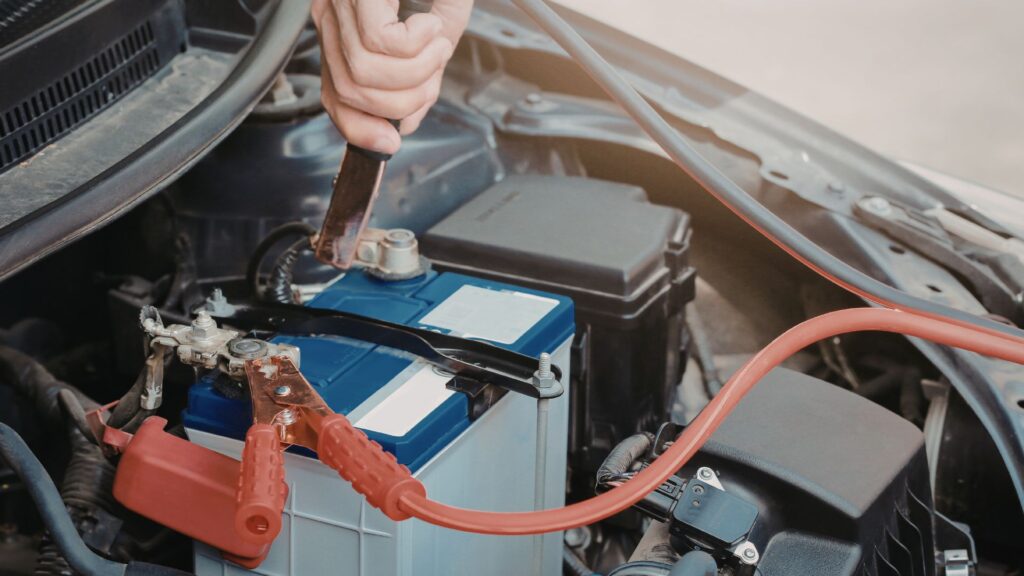
You turned the key. Nothing happened. Or maybe you heard a click, saw the dashboard lights flicker, and sat there wondering what went wrong. If your battery is good but the car won’t start, it’s easy to feel stuck, literally and figuratively. Here’s the thing: a working battery is just one piece of the puzzle. There are several other reasons why your car won’t turn over, and once you understand them, you’ll have a much better idea of what to do next. Why Your Car Won’t Start Even With a Good Battery A lot of drivers assume a dead battery is always the culprit. But when you’ve already confirmed the battery is good and the lights come on, you’re dealing with a different set of problems. Let’s walk through the 7 most common reasons why your car refuses to cooperate, and what you can actually do about it. A Faulty Starter Motor The starter is the component that cranks the engine when you turn the key. If it fails, the engine simply won’t turn over, no matter how charged your battery is. A bad starter often announces itself with a loud click or a series of rapid clicking noises when you try to start the car. Sometimes the car makes a grinding or whirring sound instead. If you hear a single click when you try, that’s a strong signal pointing to a faulty starter motor or a failed starter solenoid. A mechanic can test the starter directly using a multimeter to measure voltage at the starter terminals. Replacing a bad starter is one of the more common repairs shops handle. Problems With the Starter Relay or Solenoid The starter relay acts as a signal bridge between your ignition switch and the starter motor. When it fails, the starter never gets the command to fire up. The starter solenoid, which is often built into the starter itself, can also fail independently. When either of these components goes bad, you may get no response at all or just a faint clicking sound when you turn the key. If you’re comfortable under the hood, you can check the fuse box for a blown fuse related to the starter circuit. Otherwise, this is a job best left to a mechanic with the right diagnostic tools. A Weak Battery or Bad Battery Connections Wait, didn’t we say the battery is fine? Not so fast. A battery can show enough power to run your lights and radio, but still lack enough power to start the engine. That’s what makes a weak battery tricky to catch without proper testing. Check the battery terminals for corrosion. Corroded battery terminals and loose battery connections create resistance that blocks the flow of electricity to the starter. Even a slightly loose cable or a corroded battery post can prevent the car from starting, even if the battery itself tests at full charge. Use a voltmeter to check the battery voltage. A healthy automotive battery should read around 12.6 volts when the engine is off. If the voltage stays below 12 volts, it’s time to replace the battery. You should also inspect the battery cables for damage and make sure the clamp on each battery terminal is secure. Sometimes simply tightening the battery clamps or cleaning a corroded connection is enough to get things moving again. A Faulty Ignition Switch When you turn the key or press the start button, the ignition switch sends a signal to trigger the starter. A faulty ignition switch can break that chain entirely. Here’s a clue: if your dashboard lights work and your accessories power on, but nothing happens when you try to start the engine, the ignition switch could be the problem. The switch itself can wear out over time, especially on higher-mileage vehicles. Some drivers also notice intermittent issues where the car starts fine sometimes and then refuses to start other times. That kind of inconsistency often points to a faulty ignition or a related electrical connector going bad. A Bad Alternator This one surprises a lot of people. A bad alternator doesn’t just affect the car while it’s running; it can prevent it from starting at all. The alternator charges the battery while the engine runs, so if it’s failing, your battery may drain overnight even if it was fully charged the day before. Alternator problems can look exactly like a battery problem at first. You may be able to get a jump start and drive for a while, but if the alternator isn’t doing its job, the battery will drain, and the car won’t start again later. If your car starts after a jump start but dies shortly after, that’s a classic sign the alternator is failing rather than a weak battery. Have a mechanic test both the battery and starter circuit, along with the alternator output to know for sure. A Bad Fuel Pump or Clogged Fuel Filter The fuel system plays a big role in starting your vehicle. If you have a good battery and starter but the engine cranks without firing, the problem might be fuel delivery. A bad fuel pump can’t push enough fuel to the engine, and low fuel pressure means the combustion process never gets started. A clogged fuel filter can have the same effect. If the filter is restricted, fuel can’t flow freely to the engine, causing the car to sputter or simply refuse to start. You might even hear the engine turn over but fail to catch, a sign the starter is working fine but the fuel system isn’t delivering enough fuel. Fuel pump diagnosis usually requires a fuel pressure test. Don’t wait for a warning light to investigate fuel system issues. How the engine behaves when you try to start it is often your best clue. If you’re also experiencing issues with misfires or rough idling, it’s worth reading up on common signs of bad spark plugs or even symptoms of a failing ignition coil. A Safety Switch or Neutral Safety Issue

Car Won’t Start, But Battery Is Good: 7 Likely Causes and Quick Fixes Read More »

Why Your Check Engine Light Comes On And Off And What To Do Next

Why Your Check Engine Light Comes On And Off And What To Do Next

Few things are more confusing than watching your check engine light flicker on, then disappear a day later, as if nothing had happened. You start wondering if the problem fixed itself or if something serious is quietly brewing under the hood. The truth is, a check engine light that comes and goes is rarely something to ignore. Whether the light illuminates briefly or keeps cycling on and off, your car is trying to tell you something. Understanding what triggers it and when to act can save you from costly repairs down the road. What Is the Check Engine Light Actually Telling You? The check engine light is part of your car’s onboard diagnostics system, commonly referred to as OBD or OBD-II. When something goes wrong with your vehicle’s engine, exhaust, or emission systems, sensors send error codes to the car’s computer. If those readings fall outside normal parameters, the computer lights up the dashboard to get your attention. These trouble codes stored in your car’s computer are not vague warnings. They are specific signals tied to real components. A mechanic can plug in a diagnostic scanner and read those codes to pinpoint the issue, no guesswork required. The problem is, it does not always stay on. Sometimes the light goes off on its own after a few drive cycles, even if the underlying issue has not been resolved. That is what makes an intermittent check engine light especially tricky. Why Does the Check Engine Light Come On and Off? When the check engine light keeps coming back or appears intermittently, it often means a fault is happening under specific conditions – like temperature changes, humidity, or variations in how the engine is running. The car’s computer may detect the fault, log it, and then clear it when conditions change temporarily. This does not mean the problem disappeared. It means the fault was not consistent enough to keep the light on continuously. Even if the light goes out, the trouble codes stay stored in your car’s computer until a mechanic reads and clears them. Common Reasons the Check Engine Light Keeps Coming Back If the check engine light keeps coming back after going off, these are some of the most likely culprits: Loose or faulty gas cap – A loose gas cap is one of the most common and easiest fixes. The fuel system is sealed, and even a slightly loose cap can trigger the check engine light by allowing fuel vapors to escape. Tighten the cap and see if the light turns off after a day or two of driving. Failing oxygen sensor – The O2 sensor monitors exhaust gases to help the engine run efficiently. A faulty O2 sensor can cause the check engine light to come on intermittently, and it will also hurt your fuel efficiency over time. Spark plug or ignition coil issues – Worn spark plugs or a failing ignition coil can cause an engine misfire that triggers the check engine light. The misfire may not happen every time you drive, which is why this type of fault can seem to come and go. Learn more about the warning signs of bad spark plugs or read up on the symptoms of a failing ignition coil. Catalytic converter problems – The catalytic converter processes exhaust gases and reduces harmful emissions. When it starts failing, the check engine light may appear under certain driving conditions and then disappear when the exhaust system cools down. Mass airflow sensor issues – The mass airflow sensor measures how much air enters the engine, so the computer can balance the fuel mixture. A faulty mass airflow sensor can cause inconsistent readings that trigger the check engine light intermittently. Vacuum leaks – Small cracks in vacuum lines can cause irregular engine performance and cause the check engine light to come on under specific conditions, then seem to resolve temporarily. Why Would My Check Engine Light Turn On Then Off Without Warning? This is one of the most common questions a mechanic hears. The answer comes down to how the onboard diagnostics system monitors your car. The OBD-II system runs continuous checks during each drive cycle. If a sensor detects a problem during one cycle but not the next, the light may come on, then shut off on its own. That does not mean your car is fine. It means the fault is intermittent, which can actually make it harder to diagnose and fix without professional equipment. The check engine light may come on only when the engine reaches a certain temperature, when you accelerate hard, or when a component is under more stress than usual. If your check engine light turns off after a day or two, do not assume the issue has resolved itself. Get it checked before it escalates into something more expensive. What Happens When the Check Engine Light Flickers? When the check engine light flickers or flickers rapidly while you are driving, that is a more urgent signal. A flashing check engine light often indicates an active engine misfire, meaning the ignition system is misfiring repeatedly in real time. An engine misfire can damage the catalytic converter quickly if left unaddressed. If you notice a flashing light along with rough idling, a loss of power, or strange smells from the exhaust, pull over safely and call a mechanic as soon as possible. This situation needs immediate attention rather than a wait-and-see approach. For a deeper look at what causes this, check out the common causes of engine misfires to understand what the ignition system is doing and why it matters. Can I Keep Driving With the Check Engine Light On? This depends on what is causing the light. If it is something minor like a loose gas cap or a faulty sensor with no other symptoms, you can usually drive for a short time without immediate risk. But if the light is flashing, or if you notice changes in engine performance alongside the dashboard light, do not keep

Why Your Check Engine Light Comes On And Off And What To Do Next Read More »

10 Common Car Repairs That Cost the Most and How to Handle Them

10 Common Car Repairs That Cost the Most and How to Handle Them

Nobody wants a surprise repair bill. But if you own a vehicle long enough, some repairs are almost inevitable. The good news is that most of the 10 most common car repairs can be managed, or even prevented, if you know what to watch for. This guide breaks down the top 10 most common and costly repairs, what causes them, and how to keep your car running without draining your wallet. Engine Repair Engine problems are among the most expensive repairs a vehicle owner will ever face. Issues like a blown head gasket, failed timing belt, or internal oil leak can lead to thousands of dollars in damage if ignored. Regular oil changes are your first line of defense. Fresh motor oil keeps internal components lubricated and helps keep your engine running smoothly for the long haul. If you notice strange noises, a burning smell, or a check engine light, do not wait; bring your car in for a professional engine repair as soon as possible. Transmission Repair The transmission is responsible for shifting gears and transferring power from the engine to the wheels. When it fails, your car may slip out of gear, hesitate, or refuse to move altogether. Transmission repairs are rarely cheap. Catching issues early, like rough shifting or fluid leaks, can save you from a full replacement. If your vehicle is showing any of these warning signs, expert transmission repair is worth every penny. Brake Repairs Brake problems are one of the most common vehicle repairs, and one of the most critical for safety. Worn brake pads, damaged rotors, and failing drum brake components can all compromise your ability to stop in time. Regular brake inspections help you catch wear before it becomes dangerous. If you hear squealing or grinding, check your brakes right away. Do not put off brake repairs. The cost of proper maintenance is far lower than the cost of a traffic collision. Alternator Replacement The alternator charges your battery while the engine runs. When it starts failing, you might notice dimming lights, a dead battery, or electrical system issues that seem hard to diagnose. Alternator replacement is a moderately expensive repair, but catching it early prevents you from being stranded. If your dashboard is throwing warnings or your car struggles to start, your alternator may be the culprit. Cooling System and Radiator Issues Overheating is one of the fastest ways to destroy an engine. A failing radiator, cracked hose, or low coolant level can cause your engine to overheat and lead to serious internal damage, including a blown head gasket. Keeping your cooling system in good shape means checking coolant levels regularly and watching for temperature spikes on your dashboard. A small leak caught today could prevent costly repairs tomorrow. Suspension and Strut Problems If your ride feels bumpier than usual or your car pulls to one side, your suspension may need attention. A worn strut, damaged shock absorber, or misaligned wheels can accelerate tire wear and make driving feel unsafe. Proper alignment and suspension maintenance also protect your tires and fuel economy. If you are noticing uneven tire wear or poor handling, suspension repair services can address the problem before it spreads. Spark Plug and Ignition System Failures A failing ignition system can cause hard starts, rough idling, decreased fuel efficiency, and even engine misfires. Spark plug replacements are one of the most overlooked forms of routine maintenance, but they make a big difference in engine performance. When a spark plug wears out, the ignition key may turn but the engine struggles to fire. Staying on schedule with spark plug and ignition system service helps keep your car running like new and protects your gas mileage over time. Electrical System Problems Modern vehicles depend on complex electrical systems to control everything from sensors and fuel injection to windows and climate controls. A wide range of issues, including a failing alternator, corroded wiring, or a faulty oxygen sensor, can trigger warning lights and unpredictable behavior. Electrical system problems are often tricky to diagnose without the right tools. That is where advanced computer diagnostics service makes a real difference, helping technicians pinpoint the exact issue quickly and accurately. Exhaust System Repairs A damaged exhaust system is about more than noise. Rust, corrosion, and cracked components can reduce fuel efficiency and even allow harmful gases to enter the cabin. An exhaust leak may also trigger a check engine light and cause your vehicle to fail an emissions inspection. Replacing exhaust components as needed helps protect your fuel economy and keeps your car compliant with emissions standards. Ignoring this repair often leads to more expensive fixes down the road. Air Filter and Oil Change Neglect These might seem minor compared to the repairs above, but neglecting an oil change or a clogged air filter is one of the most common reasons vehicles end up with bigger, more expensive problems. A dirty air filter reduces airflow to the engine, while old motor oil loses its ability to protect engine and transmission components. Following your manufacturer’s recommended mileage intervals for oil changes and filter replacements is the single most effective form of preventive maintenance you can do. It is one of the easiest ways to extend the life of your vehicle and prevent a breakdown before it happens. How Preventative Maintenance Keeps Repair Costs Down Most vehicle breakdowns are preventable. The 10 most common auto repairs, including brakes, ignition, cooling, and suspension, share a common thread: they are repairs, and how to prevent them starts with paying attention to your vehicle’s warning signs and keeping up with regular maintenance. Common vehicle repairs become costly when they are ignored. A small investment in preventative maintenance today protects you from far more expensive repairs, and avoiding them becomes much easier when you partner with a shop you trust. For complete auto repair services backed by transparency and expertise, Grewal’s Automotive is here to help Indianapolis drivers keep their vehicles safe, efficient, and road-ready. Conclusion Car problems are a

10 Common Car Repairs That Cost the Most and How to Handle Them Read More »

How Long Do Car Repairs Take? Real Timelines for Common Fixes and What to Expect

How Long Do Car Repairs Take? Real Timelines for Common Fixes and What to Expect

If you’ve ever dropped off your car and wondered when you’d actually see it again, you’re not alone. Repair timelines can feel like a mystery, especially when you’re juggling work, family, and trying to figure out if you need a rental car. The truth is, how long car repairs take depends on a handful of factors that are worth understanding before you hand over your keys. This guide breaks it all down so you can plan ahead and avoid unnecessary surprises. What Factors Affect Repair Time? Several factors influence how long the repair process will take, and they don’t always have to do with how busy the shop is. Here’s what typically drives the schedule. Extent of the Damage Minor issues like a small scratch, a worn brake pad, or a slow oil leak are generally quick to address. Major damage to your car, such as engine failure, transmission problems, or structural damage from a traffic collision, can take much longer because the repair involves more labor, more parts, and more precision. Parts Availability Parts availability is one of the biggest variables in any repair timeline. If the shop needs a common part that’s in stock locally, it may arrive within a day. But specialty parts for older vehicles or newer models with unique sensors and components can take days or even weeks to arrive, especially since supply chains have faced disruptions since the COVID-19 pandemic. Shop Workload The workload of the repair shop matters more than most people realize. A busy auto repair shop may have several vehicles ahead of yours, which affects your wait time regardless of how straightforward the job is. Scheduling your appointment in advance can help reduce delays. Dealing With Insurance If an insurance claim is involved, the process can take longer. Approval from your insurance provider adds steps – sometimes an adjuster needs to inspect the vehicle before the shop can begin working on your car. Insurance companies also have their own time limits and review procedures that affect repair wait times. Typical Repair Times for Common Car Issues Understanding typical repair times helps you set realistic expectations. Here’s a breakdown of what to expect for some of the most common repairs. Repair Type Typical Repair Time Oil Changes and Routine Maintenance 30–60 minutes Brake Repairs 1–3 hours Suspension Work Half day or more Bumper Repairs 1–2 days Auto Body Repair 3–5 days Engine Repairs A few days to a couple of weeks Transmission Repairs Several days Electrical Diagnostics A few hours Electrical Repairs 1 hour to several days Collision Repair 2–4 days for minor damage Major Crash Damage 1–2 weeks or more Hail Damage Repair 1 day to several weeks Oil Changes and Routine Maintenance An oil change is one of the fastest services any car repair shop can perform, typically taking 30 to 60 minutes. Routine tune-ups and tire inspections fall into a similar timeframe, often completed within the same visit. Brake and Suspension Work Brake repairs usually take one to three hours, depending on what needs replacing. If it’s just brake pads, it’s a quicker job. If rotors, calipers, or suspension and brake repair services are needed, expect a half day or more. Car suspension work involving multiple components can extend the timeline further. Bumper Repairs and Auto Body Work Bumper repairs and other auto body work typically take longer because they often involve body repairs, painting, and drying time. A minor bumper repair or scratch fix might take one to two days. More involved auto body repair, where the bumper is fully replaced and repainted to match your vehicle, can stretch to three to five days. Engine and Transmission Repairs These are the big ones. Professional engine repair services can take anywhere from a few days to a couple of weeks, depending on the complexity. A simple sensor replacement or minor fix is much faster than a full engine rebuild. Similarly, expert transmission repair and service can take several days to complete, especially if the transmission needs to be removed and rebuilt. Electrical and Computer Diagnostics Modern vehicles rely heavily on computer systems. Advanced vehicle computer diagnostics can usually be completed in a few hours, though the repair that follows depends entirely on what the diagnostic turns up. Electrical repairs range from an hour to several days based on how deep the issue runs. Collision Repair and Crash Damage How long does collision repair take? That’s one of the most common questions after an accident. A minor collision with surface damage might be resolved in two to four days. But significant crash repairs involving the frame, airbags, windshield, or multiple panels can easily take a week or two, sometimes more. Long car repairs of this type are common when insurance companies are also coordinating the work. How long does auto body work take for hail damage? It depends on the number of dents and the repair method used, but many car owners find that hail damage repairs can take anywhere from one day to several weeks for severe cases. What You Can Do to Speed Things Along You can’t control everything, but there are ways to help move the repair process along. Call ahead and describe the issue clearly so the shop doesn’t have to spend extra time diagnosing what you already know. Ask for a repair estimate upfront and confirm parts can be ordered before you drop off the vehicle. If you’re dealing with insurance, get approval from your insurance provider as early as possible. Ask whether a loaner or rental car is available so you’re not stuck waiting for your car without transportation. At Grewal’s Automotive in Indianapolis, the 24-hour drop-off option means you don’t have to rearrange your schedule to get your car repaired. Time estimates are provided upfront so you always know what to expect. How to Know If a Repair Is Taking Too Long There’s a difference between a repair that’s complex and one that’s simply stalled. If a simple job that should take

How Long Do Car Repairs Take? Real Timelines for Common Fixes and What to Expect Read More »

7 Car Water Pump Failure Signs You Shouldn't Ignore

7 Car Water Pump Failure Signs You Shouldn’t Ignore

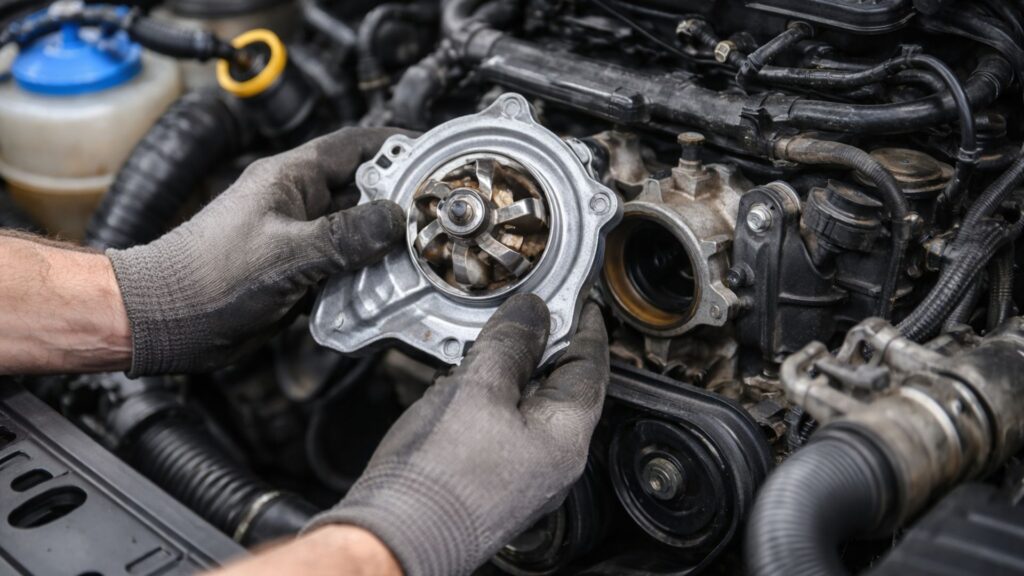
Your car’s engine generates an enormous amount of heat every time it runs. Without a working water pump, that heat has nowhere to go, and the results can be costly. The water pump is a vital part of your vehicle’s cooling system, and when it starts to fail, it rarely does so quietly. If you learn the signs early, you can avoid serious engine damage and expensive repairs down the road. What Does a Car Water Pump Actually Do? The car’s water pump is responsible for keeping coolant moving through your engine. More specifically, it circulates coolant from the radiator through the engine block, cylinder head, and back again, pulling heat from the engine with every pass. A properly functioning water pump keeps the temperature of the engine stable, prevents the engine from overheating, and protects critical engine components like the head gasket, thermostat, and heater core. When the water pump works as it should, your engine stays cool, and your car operates smoothly. The water pump is typically driven by the serpentine belt or, in some vehicles, the timing belt. This means pump wear can sometimes be tied to belt wear, so it helps to inspect both together. 7 Signs Your Water Pump May Be Failing Engine Overheating This is the most obvious and dangerous warning sign. When the water pump isn’t circulating coolant properly, heat builds up fast. If your temperature gauge climbs into the red zone or a warning light comes on, overheating is a serious problem that needs immediate attention. A failing water pump can cause the engine to overheat even during short drives. If you notice this happening, stop driving and have the vehicle inspected before permanent engine damage occurs. Coolant Leak Near the Front of the Engine A coolant leak around the water pump is a common early indicator of failure. The water pump’s gasket and seals can wear down over time, allowing coolant to seep out. You might notice a puddle of green, orange, or pink fluid under your car, especially toward the front of the engine. A small coolant leak may seem minor, but it can lead to a low coolant level that leaves your engine vulnerable to overheating. If you spot fluid pooling beneath your vehicle, it is time to check the water pump for signs of wear or damage. Whining or Grinding Noises Unusual sounds coming from the engine bay are never a good sign. A worn-out water pump with a failing bearing can produce a high-pitched whining or grinding noise. The water pump pulley may also wobble if the bearing is damaged, which creates additional noise and vibration. If you hear these sounds and they seem to be coming from the area around the water pump, do not ignore them. Bearing failure inside the pump can lead to a complete breakdown if left unaddressed. Steam or Smoke From Under the Hood Steam rising from under the hood is a clear sign that something is seriously wrong. It often means your coolant is boiling due to an overheated engine. A malfunctioning water pump that cannot circulate coolant throughout the engine is a likely culprit. If you see steam or smoke while driving, pull over safely and turn off the engine. Continuing to drive with an overheated engine can warp the cylinder head, destroy the head gasket, or crack the engine block entirely. Coolant Buildup or Rust Around the Pump Even without visible leaks, you may notice crusty buildup, rust, or corrosion forming around the water pump. This is often the result of a slow seep that dries before forming a puddle. Over time, mineral deposits from coolant and exposure to heat accelerate corrosion on the pump housing and gasket. This kind of buildup is a damaged water pump’s way of telling you that it is not sealing properly anymore. Check the water pump area during routine inspections to catch this early. Fluctuating Engine Temperature If your temperature gauge keeps moving up and down without a clear reason, it is possible that the water pump is struggling to keep up. A bad water pump may circulate coolant unevenly, causing the engine temperature to spike and drop unpredictably. This symptom can easily be confused with a faulty thermostat, but both issues affect the cooling system, and both deserve prompt attention. Understanding why your car is overheating even with full coolant, can help you and your technician narrow down the root cause. Heater Blowing Cold Air This one surprises most drivers. Your vehicle’s heater relies on hot coolant passing through the heater core to warm the air inside the cabin. When the water pump isn’t circulating coolant throughout the engine efficiently, the heater core does not receive enough hot coolant. If your heat suddenly stops working or blows cold air without visible leaks or other symptoms, it may be a sign that a failing water pump is disrupting coolant flow. It is one of the more subtle common symptoms, but it is worth investigating. What Are the Common Causes of Water Pump Failure? Understanding the causes of water pump failure can help you prevent it. The most common causes include: Normal wear and tear – Impeller blades corrode or wear down over time, reducing the pump’s ability to circulate coolant. Seal and gasket failure – The gasket between the pump and engine block degrades with heat and age. Bearing failure – The bearing inside the pump wears out, especially on high-mileage vehicles. Belt wear – A worn serpentine belt or timing belt can put extra stress on the pump, speeding up failure. Coolant contamination – Using the wrong coolant type or mixing types can lead to corrosion inside the pump. Catching a failing water pump early can save you from much larger repairs, including engine damage if not addressed in time. Why Replacing the Water Pump Promptly Matters A broken water pump does not just affect the cooling system. It can trigger a chain reaction of damage throughout your vehicle. It can

7 Car Water Pump Failure Signs You Shouldn’t Ignore Read More »

Why Does the Inside of My Car Smell Like Coolant? 4 Common Causes and How to Fix Them Fast

Why Does the Inside of My Car Smell Like Coolant? 4 Common Causes and How to Fix Them Fast

You climb into your car, turn the key, and something hits you right away, a strange, sweet smell that does not belong there. It is a little like syrup, a little chemical, and honestly kind of unsettling. If you have ever smelled antifreeze before, you already know what it is. But why is that odor inside your car in the first place? That sweet smell is almost always tied to coolant, and finding it inside the cabin is your vehicle trying to tell you something is wrong. Ignoring it is not a good idea. Here is what is likely going on and what you should do about it. What Makes Coolant Smell So Distinctive? Coolant, also called antifreeze, contains a chemical called ethylene glycol. This is what gives it that unmistakable sweet, almost candy-like scent. It is also why the smell is so easy to recognize once you have encountered it. Ethylene glycol is designed to keep your engine running at the right operating temperature, preventing it from freezing in cold weather and from overheating in the heat. It is typically a mix of water and glycol-based fluid, and it circulates through your engine, radiator, heater core, and hoses constantly while the engine runs. When everything is sealed tight, you should never be able to smell coolant inside the vehicle. If you can, there is a leak somewhere. Common Reasons You Smell Coolant Inside Your Car A Leaking Heater Core This is one of the most common reasons drivers notice a coolant smell inside the cabin. The heater core is a small radiator-like component located behind your dashboard on the passenger side, tucked behind the firewall. It uses hot engine coolant to warm the air that blows through your heating vents. When the heater core develops a crack or a leak, coolant can seep out in two ways. It might drip onto the carpet or floor, creating a damp, sweet-smelling puddle. Or it might evaporate and get pulled into the HVAC system, sending vapor straight through your vents every time you use your heater or AC or run the defrost. A leaking heater core is something that needs to be repaired as soon as possible. Coolant loss from a bad heater core can leave fog on your windshield, cause the odor inside to worsen over time, and eventually push your engine toward overheating if the coolant level drops too low. A Coolant Leak in the Engine Bay Not every leak starts inside the cabin. Sometimes coolant escapes from the engine bay, and the vapor works its way through the HVAC system into the interior. This is especially true if there is a small leak near the firewall or close to any air intake. Leaking antifreeze in the engine bay could come from a cracked hose, a loose radiator cap, or a failing gasket. If the coolant drips onto a hot engine surface, it will evaporate almost instantly, producing vapor that can easily find its way inside the vehicle. A Blown Head Gasket This one is more serious. The head gasket seals the inside of the engine, keeping combustion gases, oil, and coolant in their proper channels. When a head gasket fails, coolant can mix with oil or leak into the combustion chamber. You might notice white smoke coming from the exhaust, a milky residue on the dipstick, or the engine temperature climbing faster than normal. A blown head gasket is not a minor fix. If you suspect this is the issue, get to a repair shop quickly. Continuing to drive can cause serious engine damage. You can also read more about common causes of car overheating to understand what warning signs to watch for. Radiator or Hose Leaks A leak in the radiator or a cracked hose can allow coolant to escape under pressure. Sometimes this means you will see a puddle under the car. Other times, the coolant will evaporate before it ever hits the ground, especially on a hot engine. Either way, coolant loss can lead to a drop in the coolant reservoir level and eventually cause the engine to overheat. If your temperature gauge is creeping up or you are seeing warning lights on the dashboard, check your coolant reservoir right away. Low coolant is a red flag, even if you cannot pinpoint the source of the problem. How to Diagnose the Problem You do not need to be a mechanic to do a basic check. Start by looking under the hood for any visible leakage around the hose connections, radiator, and reservoir. Check the coolant reservoir level – if it is lower than it should be, you likely have a leak somewhere in the coolant system. Next, check the carpet on the passenger side floor. If it feels damp or smells like antifreeze, a leaking heater core is a strong possibility. Also take note of whether the smell inside the cabin gets stronger when you turn on your heater or run defrost. For anything beyond a basic visual inspection, a pressure test on the cooling system is the most reliable way to find hidden leaks. A qualified mechanic can also run advanced vehicle computer diagnostics service to catch issues that are not obvious from a visual check alone. Why You Should Not Wait to Get This Fixed A faint smell might seem like a minor annoyance, but the coolant or antifreeze system in your vehicle plays a critical role. Without it working properly, your engine cannot regulate its temperature and risks serious overheating. If you notice the smell inside the cabin, combined with a climbing temperature gauge, fogged windows, or visible steam from the hood, do not keep driving. Pull over safely and contact a professional. Some vehicles, like certain Subaru models, are particularly known for gasket leaks and coolant issues. But this is a common issue across many makes and models. No engine coolant system is immune to wear over time. You can also learn more about why your car is overheating even though

Why Does the Inside of My Car Smell Like Coolant? 4 Common Causes and How to Fix Them Fast Read More »