
You turned the key. Nothing happened. Or maybe you heard a click, saw the dashboard lights flicker, and sat there wondering what went wrong. If your battery is good but the car won’t start, it’s easy to feel stuck, literally and figuratively.
Here’s the thing: a working battery is just one piece of the puzzle. There are several other reasons why your car won’t turn over, and once you understand them, you’ll have a much better idea of what to do next.
Why Your Car Won’t Start Even With a Good Battery
A lot of drivers assume a dead battery is always the culprit. But when you’ve already confirmed the battery is good and the lights come on, you’re dealing with a different set of problems. Let’s walk through the 7 most common reasons why your car refuses to cooperate, and what you can actually do about it.
A Faulty Starter Motor
The starter is the component that cranks the engine when you turn the key. If it fails, the engine simply won’t turn over, no matter how charged your battery is.
A bad starter often announces itself with a loud click or a series of rapid clicking noises when you try to start the car. Sometimes the car makes a grinding or whirring sound instead. If you hear a single click when you try, that’s a strong signal pointing to a faulty starter motor or a failed starter solenoid.
A mechanic can test the starter directly using a multimeter to measure voltage at the starter terminals. Replacing a bad starter is one of the more common repairs shops handle.
Problems With the Starter Relay or Solenoid
The starter relay acts as a signal bridge between your ignition switch and the starter motor. When it fails, the starter never gets the command to fire up.
The starter solenoid, which is often built into the starter itself, can also fail independently. When either of these components goes bad, you may get no response at all or just a faint clicking sound when you turn the key.
If you’re comfortable under the hood, you can check the fuse box for a blown fuse related to the starter circuit. Otherwise, this is a job best left to a mechanic with the right diagnostic tools.
A Weak Battery or Bad Battery Connections
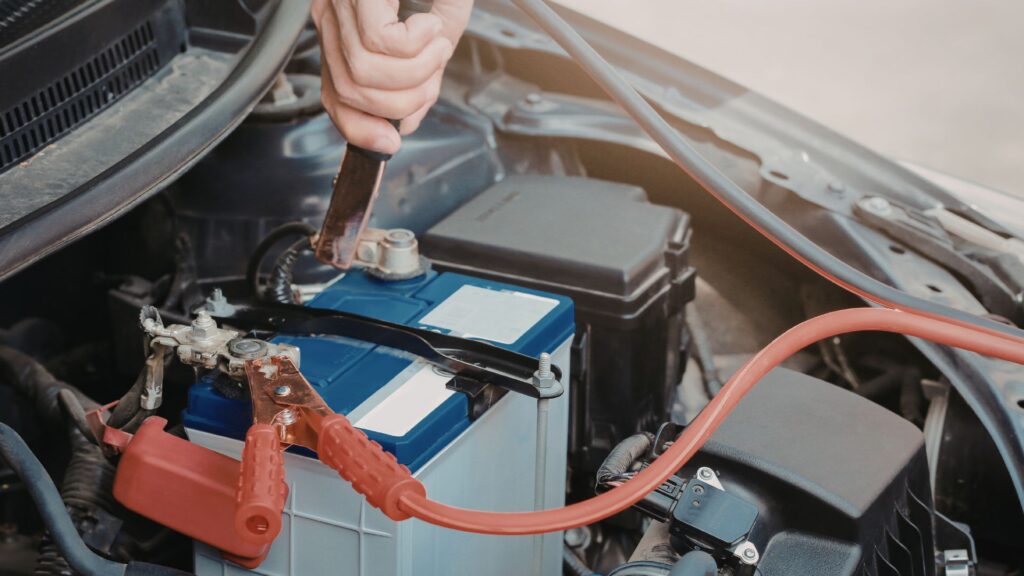
Wait, didn’t we say the battery is fine? Not so fast. A battery can show enough power to run your lights and radio, but still lack enough power to start the engine. That’s what makes a weak battery tricky to catch without proper testing.
Check the battery terminals for corrosion. Corroded battery terminals and loose battery connections create resistance that blocks the flow of electricity to the starter. Even a slightly loose cable or a corroded battery post can prevent the car from starting, even if the battery itself tests at full charge.
Use a voltmeter to check the battery voltage. A healthy automotive battery should read around 12.6 volts when the engine is off. If the voltage stays below 12 volts, it’s time to replace the battery.
You should also inspect the battery cables for damage and make sure the clamp on each battery terminal is secure. Sometimes simply tightening the battery clamps or cleaning a corroded connection is enough to get things moving again.
A Faulty Ignition Switch
When you turn the key or press the start button, the ignition switch sends a signal to trigger the starter. A faulty ignition switch can break that chain entirely.
Here’s a clue: if your dashboard lights work and your accessories power on, but nothing happens when you try to start the engine, the ignition switch could be the problem. The switch itself can wear out over time, especially on higher-mileage vehicles.
Some drivers also notice intermittent issues where the car starts fine sometimes and then refuses to start other times. That kind of inconsistency often points to a faulty ignition or a related electrical connector going bad.
A Bad Alternator
This one surprises a lot of people. A bad alternator doesn’t just affect the car while it’s running; it can prevent it from starting at all. The alternator charges the battery while the engine runs, so if it’s failing, your battery may drain overnight even if it was fully charged the day before.
Alternator problems can look exactly like a battery problem at first. You may be able to get a jump start and drive for a while, but if the alternator isn’t doing its job, the battery will drain, and the car won’t start again later.
If your car starts after a jump start but dies shortly after, that’s a classic sign the alternator is failing rather than a weak battery. Have a mechanic test both the battery and starter circuit, along with the alternator output to know for sure.
A Bad Fuel Pump or Clogged Fuel Filter
The fuel system plays a big role in starting your vehicle. If you have a good battery and starter but the engine cranks without firing, the problem might be fuel delivery. A bad fuel pump can’t push enough fuel to the engine, and low fuel pressure means the combustion process never gets started.
A clogged fuel filter can have the same effect. If the filter is restricted, fuel can’t flow freely to the engine, causing the car to sputter or simply refuse to start. You might even hear the engine turn over but fail to catch, a sign the starter is working fine but the fuel system isn’t delivering enough fuel.
Fuel pump diagnosis usually requires a fuel pressure test. Don’t wait for a warning light to investigate fuel system issues. How the engine behaves when you try to start it is often your best clue. If you’re also experiencing issues with misfires or rough idling, it’s worth reading up on common signs of bad spark plugs or even symptoms of a failing ignition coil.
A Safety Switch or Neutral Safety Issue
Modern vehicles are designed with safety switches that prevent the engine from starting under certain conditions. The neutral safety switch, for example, won’t allow the engine to start unless the vehicle is in park or neutral.
If your brake pedal switch isn’t working correctly, some vehicles won’t let you turn the key or press the start button at all. A faulty key fob on push-button start vehicles can also be the culprit, try using a spare key or holding the fob closer to the start button.
Issues with the body control module or a timing belt problem can also prevent the crankshaft from turning properly, stopping the engine before it starts. These kinds of issues often require advanced computer diagnostics for accurate vehicle troubleshooting to identify and confirm.
How to Narrow Down the Problem
Here’s a quick way to think through what you’re dealing with:
- Lights work but no crank: Look at the starter, starter relay, ignition switch, or battery connections.
- Rapid clicking: Usually a weak battery or corroded battery terminals, even if the battery seems okay.
- Engine cranks but won’t fire: Think fuel pump, clogged fuel filter, spark plugs, or ignition system.
- Works after a jump start but dies again: That’s a bad alternator in most cases.
- No response at all: Could be the starter, a blown fuse, a faulty relay, or a dead key fob.
If you’re not sure where to start, a voltmeter or multimeter can help you check the battery voltage and rule out an obvious battery problem first.
When to Call a Professional
Some of these fixes are simple enough to try at home, such as cleaning battery terminals, checking fuses, or getting a jump start to rule out a dead battery. But when the issue involves the starter motor, alternator, fuel system, or ignition switch, you’re better off having a trained mechanic take a look.
Grewal’s Automotive offers complete auto repair and maintenance services and professional engine repair services to handle exactly these kinds of issues. Their technicians are equipped to diagnose and fix both simple and complex starting problems the right way.
Conclusion
A car that won’t start with a good battery and starter is frustrating, but it’s usually fixable once you know where to look. From a faulty starter motor to a bad alternator or clogged fuel filter, the causes listed here cover most of what drivers run into.
If you’re in Indianapolis and can’t figure out what’s going on, call Grewal’s Automotive at 317-886-7501 or drop your vehicle off using their 24-hour option. Getting the right diagnosis early saves time, money, and a lot of stress.