
Most drivers assume a shuddering transmission means it is time to replace the whole unit. That assumption costs people thousands of dollars they did not need to spend. The real culprit is often the torque converter, a component that is easy to overlook but impossible to ignore once it starts failing.
Understanding what the torque converter actually does – and what it looks like when it stops doing its job – puts you in a much better position to make smart repair decisions.
What a Torque Converter Actually Does
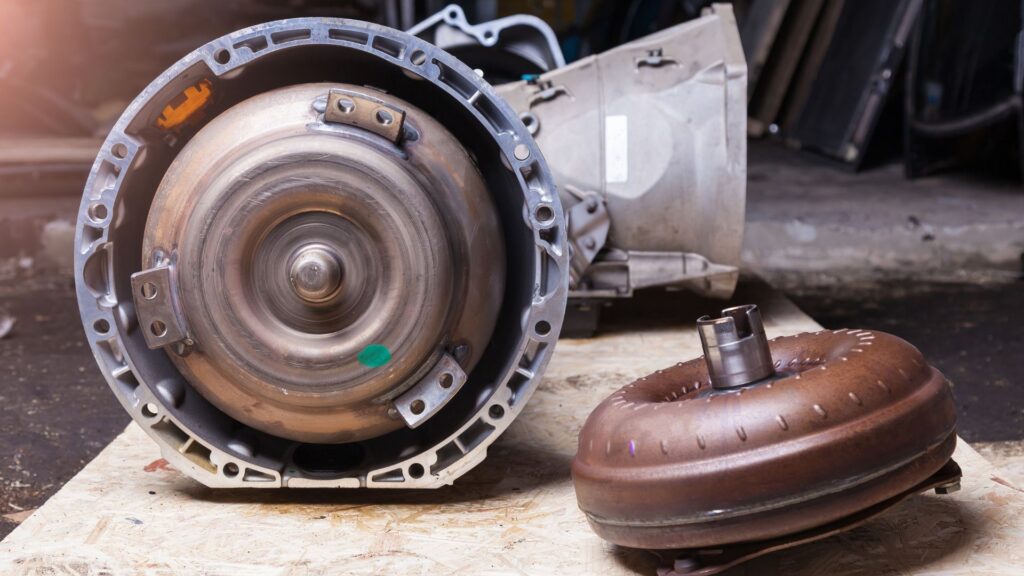
The torque converter sits between the engine and the automatic transmission. Its job is to transfer engine power to the transmission using hydraulic fluid, allowing your vehicle to stop without stalling and to accelerate smoothly from a standstill.
Inside the converter, you have an impeller, a turbine, and a stator. The impeller spins fluid toward the turbine, which drives the transmission. The stator redirects that fluid to multiply torque at low speeds. When any of these components wear out or fail, the effects show up throughout the drivetrain.
Unlike a manual transmission, which uses a physical clutch to engage and disengage power, an automatic transmission relies entirely on the torque converter and its fluid dynamics to manage power delivery.
Common Torque Converter Problems Symptoms You Should Not Ignore
Shuddering During Acceleration
This is the most frequently misdiagnosed sign. When the torque converter clutch lockup mechanism wears out or gets stuck, you will feel a shudder or vibration – usually between 40 and 50 mph – that feels like driving over rumble strips. It happens during light acceleration and disappears at higher speeds or when you brake.
This shudder is not a transmission gear problem. It is a torque converter lockup failure.
Slipping Between Gears
If your vehicle hesitates, surges, or loses power between gear changes, the converter may not be maintaining proper fluid pressure. Low fluid pressure inside the converter can cause the turbine to spin inconsistently, creating that unsettling slip feeling during acceleration.
Overheating Transmission
Heat is a transmission killer. A failing torque converter can cause hydraulic fluid to break down faster, raising transmission temperatures. When fluid overheats, it loses its ability to protect internal components, which leads to accelerated wear on bearings and seals.
Contaminated Transmission Fluid
Dark, burnt-smelling fluid is a serious warning sign. Torque converter problems often include debris and metal particles circulating through the fluid, which indicates internal damage to the impeller or turbine. Contamination like this spreads throughout the system if left unchecked.
Strange Noises at Low RPM
A rattling or whining noise at low revolutions per minute – especially when the vehicle is barely moving – often points to a worn bearing inside the converter. These unusual noises tend to disappear once the vehicle reaches higher speeds.
Why Getting the Diagnosis Right Matters
A proper inspection is the only way to confirm whether you have a torque converter issue or something else entirely. Shops that skip thorough diagnostics sometimes recommend a full transmission replacement when a converter service or replacement alone would solve the problem at a fraction of the cost.
Transmission fluid analysis, pressure testing, and road testing under specific conditions are all part of a reliable diagnosis. If an auto mechanic is recommending a major repair without performing these steps, ask questions before agreeing to anything.
Leaks around the converter housing, clutch failures, and bearing wear all have distinct diagnostic signatures. Matching symptoms to the right root cause is what separates a good repair from an expensive mistake.
How to Prevent Torque Converter Failure
Routine maintenance is the best defense. Keeping fresh, clean hydraulic fluid in your automatic transmission reduces heat buildup and prevents the kind of contamination that destroys converter components over time.
- Change transmission fluid at the intervals recommended for your specific car or truck
- Watch for early warning signs like shuddering, slipping, or unusual noises
- Do not ignore fluid leaks – small leaks become big failures quickly
- Have your transmission inspected if you notice any change in how your vehicle accelerates or shifts
Know the Signs of Torque Converter Trouble
Torque converter problem symptoms are specific, diagnosable, and in many cases fixable without replacing your entire transmission. The key is catching them early and working with technicians who take the diagnosis seriously.
If your vehicle is shuddering, slipping, or overheating, do not guess – get a professional inspection. Schedule your transmission service with the team at Grewal’s Automotive, or call us at 317-886-7501 to talk through what you are experiencing before it gets worse.