

If you drive a manual transmission vehicle, you’ve probably wondered at some point how long your clutch is going to hold up. It’s a fair question, and the honest answer is: it depends. But there are some solid benchmarks and warning signs worth knowing before you end up stranded.
The General Lifespan of a Clutch
Most clutches are built to last somewhere between 50,000 and 100,000 miles. Some drivers push well past that, while others burn through one in under 60,000 miles. Longevity really comes down to how the vehicle is driven and how much wear and tear the clutch system absorbs over time.
A well-maintained clutch on something like a Mazda MX-5 or Mazda MX-5 (NC) can easily exceed 100,000 miles with smooth, controlled driving habits. On the other hand, aggressive clutch control – like riding the pedal or slipping the clutch constantly in stop-and-go traffic – shortens its life significantly.
Does Every Car Have a Clutch?
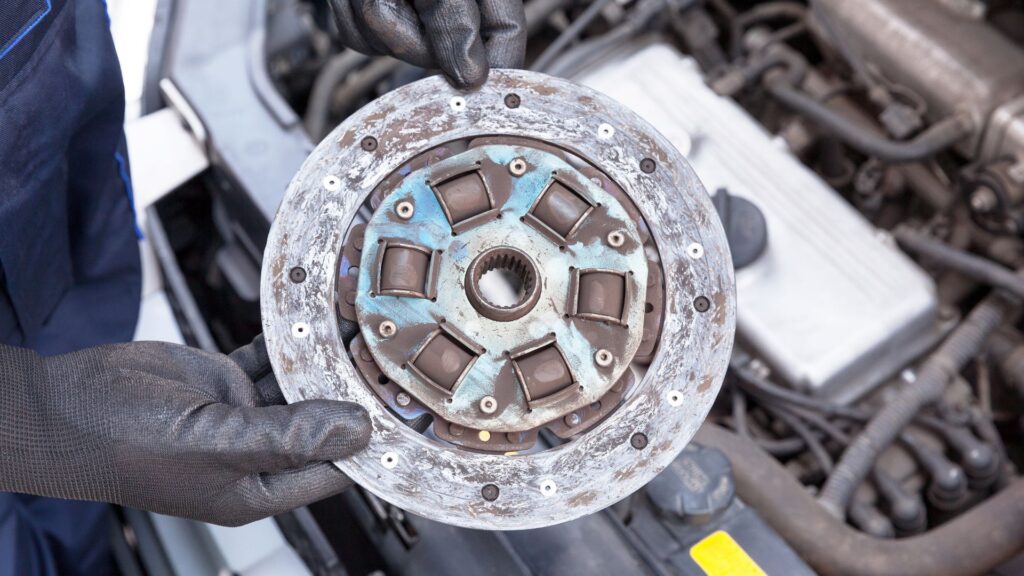
Not exactly, and the answer depends on the type of transmission. A traditional manual transmission uses a mechanical clutch disc and pressure plate, the type this article has been describing so far. Every time you press the clutch pedal, that disc disengages from the flywheel so you can shift gears.
Traditional automatic transmissions work differently. Instead of a friction clutch, they use a torque converter to transfer power, so there is no clutch disc wearing down the way a manual’s does. That said, automatics are not entirely clutch-free.
Many modern automatics, including CVTs and dual-clutch transmissions (DCTs), rely on internal clutch packs to manage gear changes, and those can wear down over time too, especially if fluid changes are skipped or the vehicle is driven hard.
If you are not sure what type of transmission your vehicle has, our technicians can take a look during a transmission inspection and let you know what to expect for wear and maintenance.
What Affects Clutch Wear the Most
Driving Habits
This is the biggest factor. Every time you engage or disengage the clutch, friction occurs between the clutch disc and the flywheel. That friction is what transfers power from the engine to the gear and transmission. The more abuse it takes, the faster it wears down.
Drivers who frequently tow heavy loads, drive in heavy traffic, or make quick, aggressive gear changes put extra pressure on clutch components. Smooth, deliberate driving is what keeps a clutch lasting longer.
Vehicle Type and Use
Smaller cars tend to be easier on clutches than trucks or performance vehicles. A daily commuter car used mostly on highways will naturally experience less clutch wear than one used for frequent city driving or towing.
Warning Signs Your Clutch May Be Failing
Clutch failure rarely happens without warning. Here are the signs to watch for:
- Slipping clutch – The engine revs rise, but the car does not accelerate properly
- Difficulty shifting gears – Grinding or resistance when moving between gears
- Spongy or soft pedal feel – The clutch pedal feels different than usual under foot pressure
- Burning smell – A sharp, acrid odor after driving, especially on hills
- Unusual noise – Squealing or rattling when the clutch pedal is pressed or released
If you notice any of these, it is time to have a technician take a look before the problem worsens.
How Much Does Clutch Replacement Cost?
Once you know the warning signs, the next question is usually about price. Nationally, clutch replacement typically runs between $800 and $2,500, with many drivers landing in the $1,200 to $1,800 range for a full clutch kit and labor.
Labor is the biggest piece of that cost. Because the transmission has to come out to access the clutch, the job usually takes four to eight hours of shop time, sometimes more on trucks, all-wheel-drive vehicles, or tightly packed engine bays.
Parts alone (the clutch disc, pressure plate, and release bearing) are relatively affordable, generally $300 to $800 for a quality kit. If the flywheel needs resurfacing or replacing, that adds to the total as well.
The exact number depends on your vehicle, the parts used, and local labor rates. The best way to know what to expect is a hands-on inspection with our clutch and transmission service team, so you get a real number instead of a guess.
How to Extend Your Clutch’s Life
Good news: extending clutch life is largely within your control, and it does not require anything drastic.
- Avoid resting your foot on the clutch pedal while driving. Even light pressure causes unnecessary wear on the release bearing.
- Do not use the clutch to hold the car on a hill. Use the parking brake or footbrake instead.
- Shift smoothly and match your revs when downshifting rather than riding the clutch.
- Avoid unnecessary idling in gear with the clutch partially engaged, especially in stop-and-go traffic.
If your vehicle is approaching 60,000 miles and has never had the clutch inspected, or if you are noticing any of the warning signs above, a professional diagnosis makes sense. Catching a clutch problem early can prevent more expensive transmission damage down the road.
How to Make Your Clutch Last Longer
If your vehicle is approaching 60,000 miles and you have never had the clutch inspected, or if you are noticing any signs of wear or failure, a professional diagnosis makes sense. Catching a clutch problem early can prevent more expensive transmission damage down the road.
Frequently Asked Questions About Clutch Lifespan
Can you still drive with a slipping clutch?
It is not a good idea to keep driving for long once you notice slipping. A slipping clutch continues to wear down and can leave you stranded or lead to more expensive damage to the flywheel and transmission. We recommend having it inspected as soon as possible.
How long does a clutch replacement take?
Most clutch replacements take four to eight hours of shop time, depending on the vehicle and whether other components like the flywheel or release bearing need attention. We will give you a firm time estimate after inspecting your vehicle.
Do clutches fail suddenly or give warning first?
Clutches almost always give warning signs before they fail completely, such as slipping, a burning smell, or a spongy pedal. Sudden, total failure is rare and usually follows weeks or months of gradual wear.
Is it worth repairing a clutch on an older vehicle?
It depends on the overall condition of the car and how much longer you plan to keep it. If the rest of the vehicle is in good shape, a clutch replacement is often a worthwhile investment. We can help you weigh the cost against the vehicle’s condition during an inspection.
Does regular maintenance help my clutch last longer?
Yes. A clutch is a wear item and will not last forever, but keeping up with fluid checks, avoiding aggressive driving habits, and having it inspected at the first sign of trouble all help it go the distance.
Conclusion
A clutch can last anywhere from 50,000 to well over 100,000 miles depending on driving habits, vehicle type, and how well the system is maintained. The key is paying attention to early warning signs and not ignoring changes in how the pedal or gear shifts feel.
If something feels off, do not wait. Schedule a transmission inspection with the team at Grewal’s Automotive, or call us at 317-886-7501 to talk through what you are experiencing.