
Your transmission is one of the hardest-working parts of your vehicle. It manages gear changes, controls speed, and keeps your drivetrain functioning the way it should. When it starts running too hot, everything downstream suffers – fast.
The problem is that most drivers never see it coming. An overheating automatic transmission rarely announces itself with a loud bang. It creeps in quietly through signs that are easy to brush off, until suddenly, you’re looking at a repair bill that could have been avoided.
Why Transmission Temperature Matters More Than You Think
Your automatic transmission depends on automatic transmission fluid (ATF) to do its job. This hydraulic fluid handles lubrication, cooling, and the pressure needed to shift gears smoothly. When the fluid gets too hot, it breaks down. Once that happens, metal parts grind against each other without proper lubrication, and damage sets in fast.
Think of it like motor oil in your engine – run it too hot for too long, and you’re not repairing it, you’re replacing it.
Vehicles like the Jeep Grand Cherokee, Ford Fusion, Ford Fusion Hybrid, Dodge Caliber, and similar models have all seen documented transmission overheating issues.
Transmission Overheating Symptoms You Should Never Ignore
Delayed or Slipping Gear Shifts
If your car hesitates before engaging a gear, or if it seems to slip out of gear while driving, that is a red flag. The torque converter and gear engagement both rely on properly conditioned fluid. When the fluid is degraded from heat, it cannot maintain the hydraulic pressure needed to hold gears in place.
A Burning Smell Coming From Underneath
That sharp, acrid smell is a warning sign. It is your automatic transmission fluid burning off. Once ATF starts to scorch, its ability to lubricate and protect internal components drops sharply. If you catch a burning odor after highway driving or towing, take it seriously.
The Temperature Warning Light Comes On
Modern vehicles are equipped with a transmission temperature sensor. When that sensor detects the fluid has exceeded safe operating levels – often around 203 degrees Fahrenheit – it triggers a warning light. Some drivers ignore this and keep going. That decision tends to be expensive.
Sluggish Response or Unusual Shaking
A transmission under thermal stress will sometimes cause the vehicle to shudder, jerk, or feel sluggish when accelerating. This is the drivetrain struggling to function correctly under compromised conditions. It is not a quirk. It is a symptom.
Fluid That Looks Dark or Smells Burnt
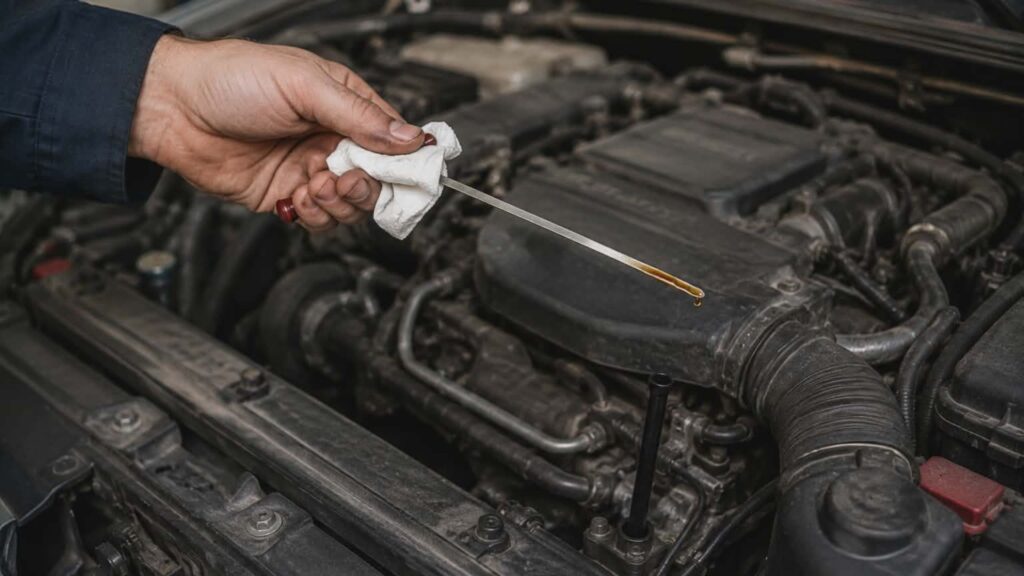
Healthy ATF is bright red and slightly sweet-smelling. If you check the dipstick and the fluid looks brown or black, or if it has a burnt odor, the fluid has been cooked. Dark fluid means the internal components have been running without adequate protection.
What Causes a Transmission to Overheat?
Several things can push a transmission past its safe temperature range. Low fluid levels are one of the most common causes – when there is not enough ATF circulating, heat builds up quickly. A failing transmission cooler is another frequent culprit, especially on older vehicles or those used for towing.
Heavy-duty use like towing, hauling, or stop-and-go city driving adds thermal load that some transmissions are not built to handle without proper maintenance. Vehicles like the Dodge Caliber are known for transmission sensitivity, and skipping fluid service intervals makes the problem worse.
An expert technician can run diagnostics to determine whether the issue is the fluid, the cooler, the sensor, or internal wear.
Do Not Wait Until It Is Too Late
Transmission repairs are not cheap. A full rebuild can cost thousands of dollars. Catching an overheating problem early – replacing fluid, fixing a cooler, or addressing a faulty sensor – costs a fraction of that.
If you are noticing any of these symptoms, the smartest move is to get your vehicle checked before the damage compounds.
Act on Transmission Overheating Symptoms Early
Transmission overheating is one of those problems that rewards quick action and punishes delay. The symptoms are real, the damage is progressive, and the repair costs only climb the longer you wait. If your car is showing any of these warning signs, do not guess – get answers from someone who knows transmissions inside and out. Schedule a transmission inspection with Grewal’s Automotive, or call 317-886-7501 to talk through what you are experiencing.