
Your brakes felt fine last week. Now your foot is sinking closer to the floor than it should, and something feels off. You might be dealing with a brake fluid leak, and that is not a problem you want to push to the back of your mind.
Brake fluid is what makes your entire braking system work. When you press the pedal, it is the fluid that transfers that force to the calipers, which then squeeze the brake pads against your rotors. Lose enough fluid, and your brakes can fail entirely.
This guide breaks down the most common brake fluid leak symptoms in plain terms so you know exactly what to watch for.
What Does Brake Fluid Actually Do?
Before diving into the symptoms, it helps to understand why this fluid matters so much. Brake fluid is a hydraulic fluid, meaning it carries pressure through your brake lines from the pedal to the wheels.
Unlike engine oil or coolant, brake fluid operates under intense heat and pressure. It has to maintain a consistent viscosity whether you are stopping quickly on the highway or easing to a halt at a traffic light. When the fluid level drops due to a leak, that hydraulic pressure drops too, and your stopping power goes with it.
The Most Common Brake Fluid Leak Symptoms
1. A Soft or Spongy Brake Pedal
This is the symptom most drivers notice first. If your brake pedal feels mushy, soft, or sinks further toward the floor than usual, that is a strong signal that air has entered your brake lines or fluid is leaking out of the system.
A properly functioning brake pedal should feel firm and responsive. Any unusual give or sponginess under your foot is worth taking seriously right away.
2. The Brake Warning Light Comes On
Your dashboard warning lights exist for a reason. If the brake warning light illuminates, it could indicate that the brake fluid level in your reservoir has dropped below the minimum threshold.
Some vehicles have a dedicated low fluid warning, while others use a general brake system light. Either way, do not assume it is just a sensor glitch. Get it checked before your next drive.
3. You Notice a Fluid Puddle Under Your Car
Brake fluid has a few distinctive qualities. It is typically clear to slightly yellowish when fresh, and it has a slightly oily texture. It does not look like oil, which tends to be darker and thicker, and it is not as watery as coolant.
If you find a small puddle forming near one of your wheels or beneath the center of your vehicle, check the color and consistency. Brake fluid will also have a faint chemical or glycol-like smell. If you are unsure what you are looking at, a quick inspection from a trained technician can confirm it.
4. Your Vehicle Pulls to One Side When Braking
Uneven braking is another symptom that often points to a leak. If brake fluid is escaping from the caliper or brake line on one side of your vehicle, that wheel will have less stopping force than the other.
This creates a pulling sensation when you apply the brakes, where the car drifts left or right instead of stopping straight. This is both a leak symptom and a safety hazard, since it affects your ability to control the vehicle under hard braking.
5. Longer Stopping Distances
Have you noticed it takes a little more road to bring your car to a stop? That is not always a tire issue. When brake fluid levels are low due to a leak, the hydraulic pressure in your system weakens, and your brakes simply cannot do their job as effectively.
You might not notice this gradually at first, but it becomes obvious when you need to stop quickly in traffic. If your stopping distance seems longer than it used to be, do not wait to have it inspected.
6. A Burning Smell After Hard Braking
This one is less obvious, but worth knowing. Brake fluid has a relatively low boiling point compared to the temperatures inside a brake caliper under heavy use. If fluid is leaking onto hot brake components, it can create a burning smell that lingers even after you stop driving.
This is different from the smell of worn brake pads, though those can also produce an odor. If the smell is sharp and chemical rather than dusty or metallic, leaked fluid may be the culprit.
Where Do Brake Fluid Leaks Actually Come From?
Understanding where leaks originate can help you describe the problem accurately when you bring your vehicle in. It also helps you understand why some leaks are more urgent than others.
- Brake calipers are a common source. The rubber seals inside calipers wear over time, especially in older vehicles. Once a seal fails, fluid escapes around the piston and can drip onto the rotor or wheel.
- Brake lines and hoses run from the master cylinder to each wheel. These can corrode, crack, or develop pinhole leaks, particularly in vehicles with a lot of mileage. A small leak in a brake line can become a complete line failure under pressure.
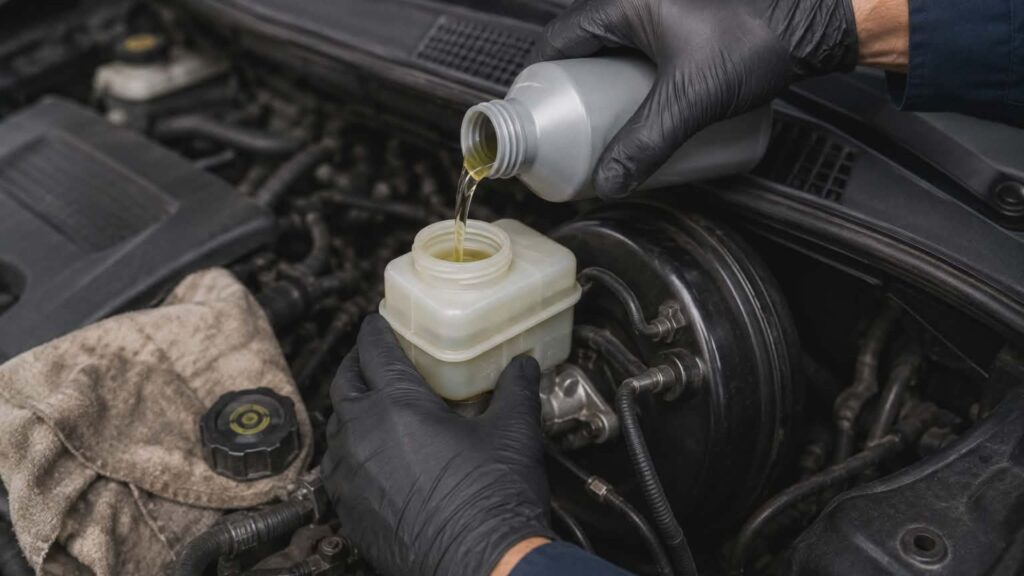
- The master cylinder sits in your engine bay and is the starting point for your entire braking circuit. A failing master cylinder can leak internally, which means fluid is bypassing the seals inside the unit rather than dripping visibly outside. This type of leak is especially tricky because you may not see any fluid on the ground, but your pedal will still feel soft.
- Wheel cylinders are found in vehicles with drum brakes at the rear. These can leak and cause brake fade on the affected wheel, often combined with a visible wet spot on the inside of the wheel.
Why You Should Not Ignore These Symptoms
Brake fluid leaks are not like a slow oil seep that you can monitor for a few weeks. Brakes are a life-safety system, and a leak can escalate quickly, especially if it is in a brake line under pressure or in a caliper that is already compromised.
Driving with a known brake fluid leak means you are one hard stop away from a potential brake failure. In city driving situations with frequent stops and starts, the risk compounds quickly.
Getting a brake inspection when you first notice symptoms is not an overreaction. It is the responsible call.
How Brake Fluid Leaks Are Diagnosed and Repaired
When a technician inspects your braking system, they will typically start by checking the fluid level in the master cylinder reservoir. From there, they will trace the brake lines and inspect each caliper, hose, and wheel cylinder for signs of seepage or damage.
A pressure test can help identify leaks that are not immediately visible. The technician will also check for internal master cylinder failure by monitoring how the pedal behaves when held down over time.
Depending on where the leak is and how severe it is, repairs may involve replacing a caliper, rebuilding or replacing the master cylinder, swapping out corroded brake lines or hoses, or replacing wheel cylinder seals. After any repair, the brake system will be bled to remove air and restore proper hydraulic pressure.
How Often Should Brake Fluid Be Checked?
This is a question a lot of drivers overlook because brake fluid does not get consumed the way engine oil does. But it does absorb moisture over time, which lowers its boiling point and can contribute to brake fade and internal corrosion.
Most manufacturers recommend inspecting brake fluid every one to two years and replacing it every 30,000 miles or as indicated by your vehicle’s maintenance schedule. Keeping up with this is one of the easier ways to catch a developing leak or degraded fluid before it causes bigger problems.
Brake Fluid vs. Other Fluid Leaks: How to Tell the Difference
Not every puddle under your car is brake fluid. Here is a simple way to distinguish it from other common fluid leaks.
- Engine oil is amber to dark brown and has a thicker, oily texture with a distinct petroleum smell.
- Coolant is often bright green, orange, or pink and has a sweet smell. It leaves a slimy residue.
- Power steering fluid is reddish or clear and has an oily feel similar to transmission fluid.
- Brake fluid is clear to light yellow, has a slightly slippery feel, and carries a faint chemical odor.
Location matters too. Brake fluid will typically appear near the wheels, under the engine bay near the master cylinder, or along the undercarriage where brake lines run.
Frequently Asked Questions About Brake Fluid Leaks
Can I drive with a brake fluid leak?
No. A brake fluid leak compromises your ability to stop safely. Even a small leak can worsen rapidly, especially under braking pressure. If you suspect a leak, avoid driving the vehicle until it has been inspected.
Is it normal for brake fluid to be low?
A small drop in brake fluid level over time can happen as brake pads wear down. However, a significant or sudden drop almost always points to a leak. It is worth having the system checked regardless of the cause.
How much does it cost to fix a brake fluid leak?
The cost varies significantly depending on what is leaking. A simple hose replacement might be straightforward, while a master cylinder or caliper replacement will cost more. Getting an accurate estimate upfront from your shop is always the right move before any work begins.
What type of brake fluid does my car use?
Most vehicles use DOT 3 or DOT 4 fluid, but some use DOT 5 or DOT 5.1 depending on the manufacturer. Using the wrong type can cause damage to brake seals and lines. Always check your owner’s manual or ask your technician.
What happens if brake fluid runs out completely?
If your brake fluid is fully depleted, you will have no hydraulic pressure and your brakes will not function. This is a complete brake failure scenario and is extremely dangerous. This is why acting on early symptoms is so important.
What to Do If You Suspect a Brake Fluid Leak in Indianapolis
If you are in Indianapolis and something about your brakes does not feel right, do not talk yourself out of getting it looked at. A soft pedal, a warning light, or a puddle near your wheel is not a minor inconvenience. They are your vehicle telling you something is wrong.
At Grewal’s Automotive, the team handles full brake inspections and repairs using the correct parts and tools for your specific vehicle. Whether it is a caliper seal, a brake line, or a master cylinder, every job comes with a clear estimate before any work starts. You can also use the 24-hour drop-off option if your schedule does not allow for a daytime appointment.
What to Do When You Notice Brake Fluid Leak Symptoms
Brake fluid leaks often start with something small – a slightly soft pedal, a warning light, a faint smell. Paying attention to these early brake fluid leak symptoms can be the difference between a straightforward repair and a dangerous situation on the road. If anything in this article sounds familiar, the right move is to get your brakes inspected by someone who knows what they are looking at.
Schedule a brake inspection at Grewal’s Automotive or call 317-886-7501 to talk through what you are experiencing.