
Your car can tell you a lot when something is wrong. Strange noises, odd smells, and warning lights are all ways your vehicle communicates that something needs attention. When it comes to your transmission, one of the most common and overlooked problems is simply being low on fluid.
The good news? If you catch the warning signs early, you can often prevent a small issue from turning into a very expensive one.
Why Transmission Fluid Matters More Than You Think
The transmission is one of the hardest-working systems in your vehicle. It is responsible for transferring power from your engine to your wheels, making sure your car shifts gears smoothly whether you are driving in stop-and-go traffic or cruising on the highway.
Transmission fluid helps make all of that possible. It acts as both a hydraulic fluid and a lubricant, reducing friction between moving transmission components and keeping pressure levels stable so gear changes happen the way they should. Without enough fluid, those internal parts grind against each other and wear down fast.
Low transmission fluid can cause serious mechanical damage in a surprisingly short amount of time. That is why knowing the symptoms of low transmission fluid is not just helpful – it is essential.
Common Symptoms of Low Transmission Fluid
Gears That Slip or Hesitate
Transmission slipping is one of the most obvious signs of low transmission fluid. You might notice your car hesitates before shifting, unexpectedly jumps between gears, or the engine revs higher than usual without a matching increase in speed.
This happens because the transmission system relies on hydraulic pressure to engage gears properly. When the fluid is too low, that pressure drops, and the system cannot do its job correctly. If you experience symptoms like slipping gears or delayed engagement, do not wait to have it checked.
Rough or Delayed Shifting
Does your car lurch or thud when it shifts? Does it feel like the transmission is fighting itself between gears? Rough shifting is a clear indicator that something is off, and low transmission fluid levels are a frequent cause.
This is especially noticeable in an automatic transmission, where smooth gear changes depend entirely on consistent fluid pressure. A manual transmission can also be affected, though the symptoms may feel slightly different – like a stiff gear stick or difficulty finding the right gear.
Unusual Noises When in Neutral
Strange noises coming from your car while it is sitting in neutral can indicate a transmission problem. Grinding, clunking, or humming sounds often point to insufficient lubrication inside the transmission.
When the fluid level is low, metal parts that should be cushioned by fluid start making direct contact with each other. That friction produces noise – and over time, it produces damage too.
Low fluid levels can cause this kind of wear to happen faster than most people expect.
Burning Smell Coming From Your Car
If you notice a sharp, burnt smell while driving, do not ignore it. Old or burnt fluid inside the transmission is a serious warning sign. It often means the fluid has broken down and is no longer protecting the transmission effectively.
Dark or burnt-smelling fluid is a sign that the fluid change is overdue or that the transmission is running too hot due to low fluid levels. Either way, it needs attention before it leads to complete transmission failure.
The Check Engine Light or Transmission Warning Light
Many drivers assume the check engine light only relates to the engine. In reality, the check engine light can come on when sensors detect transmission-related issues, including problems caused by low fluid.
Some vehicles also have a dedicated transmission warning light on the dashboard. If either of these lights comes on, it is worth having your transmission inspected sooner rather than later. Ignoring a warning light rarely leads anywhere good.
Visible Fluid Leak Under Your Car
One of the most obvious signs of low transmission fluid is a reddish or brownish puddle under your parked car. Transmission fluid is typically red when fresh and darkens as it ages.
Unlike engine oil, transmission fluid does not burn off over time. So if your fluid level is dropping, there is almost certainly a leak somewhere – whether from a worn transmission pan, damaged transmission seals, a cracked transmission cooler, or a loose connection. Leaking fluid should always be investigated promptly.
How to Check Your Transmission Fluid
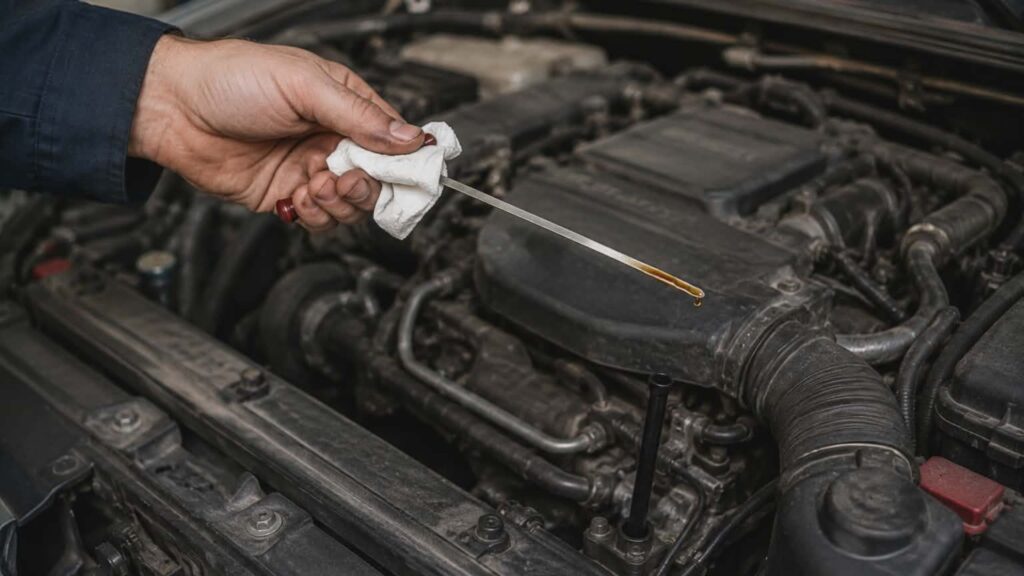
If you suspect your transmission fluid is low, checking it yourself is a reasonable first step. Many vehicles allow you to check transmission fluid using a dipstick under the hood, similar to checking engine oil.
To check the fluid level properly, your car typically needs to be warmed up and running. Pull out the dipstick, wipe it clean, reinsert it, and check the fluid level against the markings. Also take note of the color – healthy transmission fluid should be clear to red. If it looks dark or smells burnt, that is a red flag even if the level is not low.
Keep in mind that some modern vehicles, particularly those with a CVT transmission, do not have a traditional dipstick. In those cases, you will need a technician to check the fluid level for you.
If you are unsure which type of transmission your vehicle has or what specific fluid it requires, it is always better to ask a professional. Using the wrong fluid can cause just as many problems as having low fluid.
What Causes Low Transmission Fluid?
Understanding why transmission fluid needs to be topped off or replaced helps you stay ahead of future problems. The most common causes include:
- Leaks – A damaged transmission pan, worn seals, or a failing transmission cooler can all allow fluid to escape.
- Old or degraded fluid – Regular transmission fluid breaks down over time and needs to be replaced as part of routine transmission maintenance.
- Neglected service intervals – Skipping regular fluid checks or fluid changes allows problems to build up unnoticed.
- Using the wrong fluid – Not all transmission fluids are the same. The wrong fluid for your transmission type can degrade faster or fail to lubricate properly.
Catching low transmission fluid early can help you avoid repairs that cost far more than a simple fluid top-off or fluid change.
When to See a Transmission Shop
If you are experiencing any of the warning signs of low transmission fluid like slipping gears, rough shifts, burning smells, or visible leaks, it is time to have your car’s transmission looked at by a professional.
Continuing to drive with low fluid levels can cause irreversible transmission damage. What might start as a minor fix can quickly escalate to the point where you need transmission repair or, in worst-case scenarios, a full transmission replacement.
At Grewal’s Automotive in Indianapolis, the team handles transmission service with the same care and transparency they bring to every repair. Servicing your transmission on schedule and keeping your fluid levels in check is one of the most effective ways to protect your investment and keep your transmission running smoothly for the long haul.
If you are unsure whether your transmission fluid needs attention, it never hurts to have it checked. Regular transmission fluid checks are a small habit that pays off in a big way.
Conclusion
Low transmission fluid is easy to overlook but hard to recover from once it leads to serious damage. Catching the warning signs early – slipping gears, rough shifts, strange noises, or leaks – gives you the chance to address problems before they become costly.
If anything in this article sounds familiar, get your transmission fluid checked by a trusted technician. The team at Grewal’s Automotive in Indianapolis is ready to help. Call us at 317-886-7501 or stop by to keep your transmission running strong.