
Your car starts acting strange – stumbling at idle, losing power on the highway, or suddenly illuminating the dashboard warning lights. Before you panic, there’s a good chance the culprit is something most drivers overlook: the ignition coil.
Understanding ignition coil failure symptoms early can save you from costly repairs and keep your engine running the way it should.
What Does an Ignition Coil Actually Do?
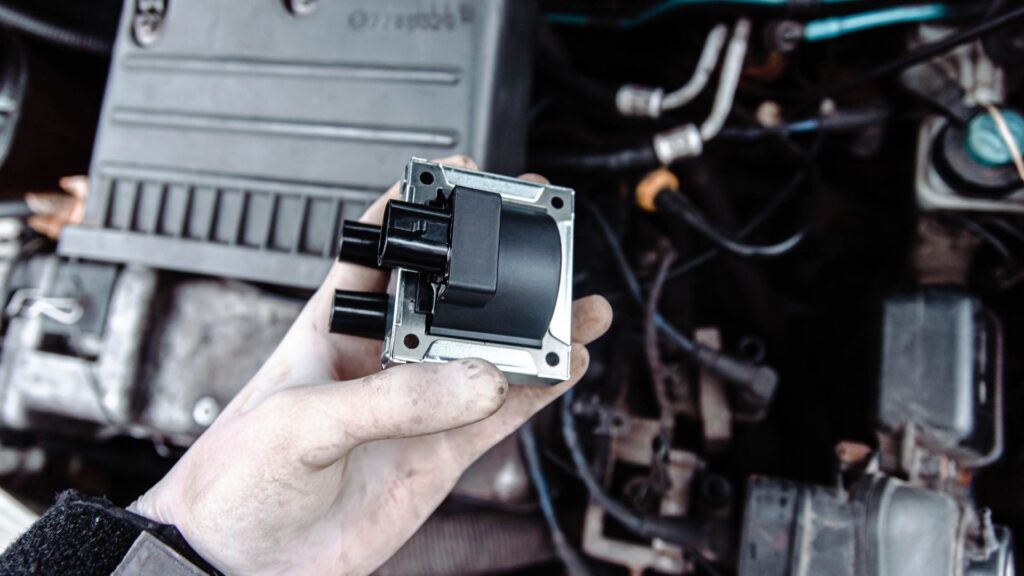
The ignition coil is part of your vehicle’s ignition system. Its job is to take the low voltage from your battery and transform it into the high voltage needed to fire a spark plug. That spark ignites the air-fuel mixture inside each cylinder, triggering combustion and keeping your engine moving.
Modern vehicles often use a coil-on-plug setup, meaning one ignition coil sits directly over each spark plug. When even one ignition coil fails, you feel it – sometimes immediately.
9 Signs of a Faulty Ignition Coil You Shouldn’t Overlook
Engine Misfiring
This is one of the most common ignition coil failure symptoms. A faulty ignition coil can’t deliver a consistent spark, which means the air-fuel mixture in that cylinder doesn’t fully combust. You’ll notice rough running, a stumble under load, or a popping sound from the engine.
The Check Engine Light Comes On
A bad coil triggers your onboard diagnostic system right away. An OBD-II scanner will pull diagnostic trouble codes pointing to a specific coil or cylinder misfire. Don’t ignore that check engine light – it’s your car telling you something is wrong before it gets worse.
Hard Starts and Jerky or Sputtery Starts
If your engine hesitates or gives you jerky or sputtery starts in the morning, a failing coil could be to blame. Weak spark means the engine struggles to ignite fuel consistently, especially when cold.
Poor Fuel Economy
When a coil can’t fire properly, unburned fuel passes through the engine and out the exhaust.
Your engine works harder, you burn more fuel, and your gas mileage drops noticeably. If your fuel economy has slipped without a change in your driving habits, it’s worth having your ignition coils checked.
Backfire
A faulty coil allows raw fuel to build up in the cylinder. When that fuel finally ignites – or exits through the exhaust system – you get a backfire. A loud pop from the tailpipe isn’t just annoying – it can damage your catalytic converter over time.
Rough Idle and Engine Vibration
A bad ignition coil causes the affected cylinder to misfire intermittently, which makes your engine vibrate. You may feel the car shake or vibrate at a stop, or notice an uneven idle that comes and goes.
Stalling
Coil failure can cause your engine to stall unexpectedly. If one ignition coil fails while you’re driving, the lack of power from that cylinder can cause the engine to sputter and stall – especially at low speeds or during deceleration.
Loss of Power When You Accelerate
Notice a hesitation when you try to accelerate? A bad coil reduces combustion efficiency, which means less power reaches the wheels. You may feel the car lurch or lack the power you’d normally expect.
Strong Smell of Fuel or Exhaust
When the coil can’t ignite fuel properly, it passes unburned through the exhaust. This produces a strong fuel smell from the tailpipe or unusual exhaust gas output. Over time, this can also damage other engine components and exhaust system parts prematurely.
What Causes a Coil to Go Bad?
Several factors contribute to coil failure. Heat and wear and tear are the biggest enemies.
Corrosion on the electrical connector, worn spark plugs forcing the coil to work harder, and oil leaking onto the coil can all shorten its lifespan. Even a damaged wiring harness or a failing alternator can put extra strain on your ignition system components.
How Technicians Diagnose a Bad Coil
An experienced technician will use an OBD-II scanner to check for diagnostic trouble codes, then test voltage output with a multimeter. They’ll isolate the specific coil causing the malfunction and inspect related parts like spark plugs and the electrical connector for damage or corrosion.
When replacing ignition coils and spark plugs, use OEM or quality replacement parts to ensure the repair holds and won’t cause other ignition-related issues down the road.
Conclusion
Ignition coil problems can start small but escalate quickly if ignored. Whether you’re dealing with engine misfiring, poor mileage, or a check engine light, getting a proper diagnostic check is the smart move. The experienced technicians at Grewal’s Automotive in Indianapolis are equipped to diagnose and fix ignition issues before they become major problems. Give us a call at 317-886-7501 or schedule your visit today – your engine will thank you.