

You glance in your rearview mirror and notice a thick cloud of white smoke billowing out of your tailpipe. It has an unusual smell, and it is not going away. That is not something you should brush off or chalk up to cold weather. White smoke from your exhaust is one of the clearest warning signs that something is seriously wrong inside your engine.
Most of the time, it means coolant is burning inside the combustion chamber. That is a problem that can spiral quickly if left alone.
What Causes White Smoke From Your Exhaust?
The short answer is this: when coolant leaks into areas of your engine where it does not belong – specifically the combustion chamber – it gets burned along with your fuel. The result is that thick, sweet-smelling white smoke you see coming from your exhaust pipe.
But how does coolant get there in the first place? That is where things get more specific.
A Blown Head Gasket Is the Most Common Culprit
The head gasket sits between your engine block and the cylinder head. Its job is to seal the combustion chamber and keep coolant and oil in their separate passages. When the head gasket fails, those boundaries break down.
Coolant can seep into the combustion chamber, get burned with the air and fuel mixture, and exit through your exhaust as white smoke. A blown head gasket is one of the more serious engine problems a vehicle can develop, and it rarely fixes itself.
Cracked Cylinder Head or Engine Block
If your engine has overheated – even once – there is a real chance the cylinder head or engine block developed a crack. These cracks create pathways for coolant to migrate where it should never go.
This type of damage can be harder to diagnose than a head gasket failure, but the symptom is often the same: persistent white smoke from the exhaust paired with a noticeable drop in coolant levels. An experienced technician with the right diagnostic tools can tell the difference.
A Faulty Coolant Reservoir or Cracked Coolant Line
Sometimes the issue is not as catastrophic as a blown gasket. A cracked coolant reservoir or damaged coolant line can cause an external leak and may produce steam when coolant contacts hot engine components, but it usually does not cause white smoke from the tailpipe.
The smoke in these cases may be intermittent or lighter in volume. But intermittent does not mean harmless. Any time coolant is being lost and burned, your engine is at risk.
How to Tell If It’s Really Coolant Burning
Not all white smoke means coolant. On a cold morning, a thin, light mist from your exhaust is usually just condensation burning off as the engine warms up. That is completely normal and disappears within a minute or two.
What you need to watch for is white smoke that is thick, persistent, and continues even after the engine is fully warmed up. That is the kind that signals a real problem.
A few other signs that point specifically to coolant burning include:
- A sweet, almost syrupy smell coming from the exhaust
- Your coolant reservoir level dropping without any visible external leak
- Your engine running hotter than usual or the temperature gauge climbing
- White or milky residue visible on the oil dipstick, which suggests coolant is mixing with your engine oil
If you are seeing more than one of these signs at once, do not wait. The longer you drive with coolant burning in your engine, the more damage you are likely to cause.
Why This Matters More Than You Think
Coolant exists to regulate your engine’s temperature. When it starts leaking internally and burning off, two things happen simultaneously. First, your engine loses the protection it needs to stay cool. Second, coolant mixing with oil degrades your lubrication system, which is what keeps moving metal parts from grinding against each other.
Running an engine in this condition is a fast path to needing a full engine repair or even an engine replacement. What might start as a head gasket issue can quickly turn into a much larger and more expensive problem.
This is not meant to alarm you unnecessarily. It is just the reality of how interconnected your engine’s systems are. Catching it early gives you options. Ignoring it removes them.
What a Mechanic Will Look For
When you bring your vehicle in for white smoke from the exhaust, a good technician will not just take a quick look and guess. A proper diagnosis involves a few key steps.
A combustion leak test – sometimes called a block test – checks whether exhaust gases are present in your coolant system. That is a strong indicator of a head gasket failure. The technician will also check for coolant in the oil, inspect coolant levels and condition, and may use a pressure test to find internal leaks that are not immediately visible.
From there, the repair path depends on what they find. A head gasket replacement is a significant job, but it is manageable when diagnosed and addressed before the damage spreads to the cylinder head itself.
Driving With White Exhaust Smoke – Is It Safe?
The honest answer is no, not really. If the smoke is thick and persistent, continuing to drive puts your engine under stress it cannot handle well. Coolant levels can drop fast, and an overheating engine can sustain damage in a short amount of time.
If you notice white smoke from your exhaust and your temperature gauge is climbing, pull over safely, turn the engine off, and call for help. Do not try to push through it.
If the smoke is light and the car is behaving normally otherwise, you may be able to get it to a shop without incident – but you should do so the same day, not next week.
Exhaust System Problems vs. Engine Problems
It is worth knowing that white smoke from the exhaust is almost always an engine issue rather than a problem with the exhaust system itself. The exhaust system – pipes, muffler, catalytic converter – is responsible for routing gases out of the vehicle, but it does not produce white smoke on its own.
That said, a failing catalytic converter can sometimes produce unusual smoke or smells. If a technician finds your exhaust system components are also worn or damaged, that is worth addressing at the same time. Keeping the full system in good working order matters for both performance and emissions.
How Grewal’s Automotive Handles This in Indianapolis
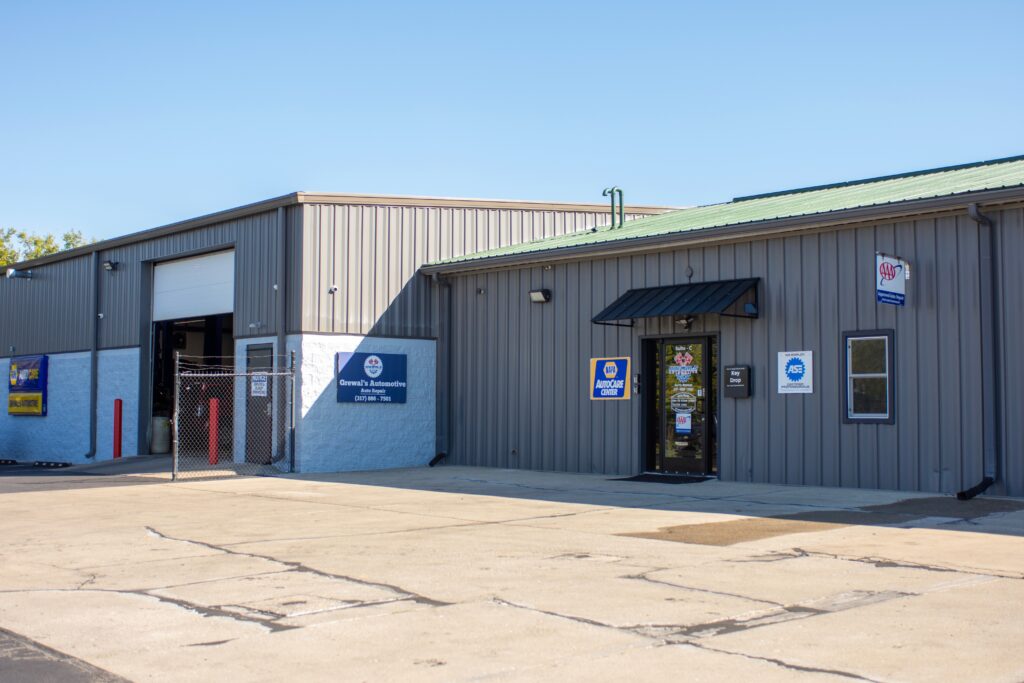
At Grewal’s Automotive in Indianapolis, IN, the approach to diagnosing white exhaust smoke is thorough and honest. Technicians here work with both modern vehicles and older models, using the correct parts and tools for each job.
Every repair starts with a proper diagnosis, and every estimate is given upfront before any work begins. If you are not sure what you are dealing with, you do not have to figure it out on your own. The team at Grewal’s will walk you through what they find and what your options are, in plain language.
For Indianapolis drivers who need to drop off their vehicle outside of normal hours, the 24-hour drop-off option makes it easier to get the car in without rearranging your entire schedule.
You can reach Grewal’s Automotive directly at 317-886-7501 to schedule a diagnostic appointment or ask questions about what you are seeing from your exhaust.
Frequently Asked Questions About White Smoke From Exhaust
Is white smoke always a sign of a blown head gasket?
Not always, but a blown head gasket is the most common cause of thick, persistent white smoke from the exhaust. Other causes include a cracked cylinder head, a cracked engine block, or internal coolant leaks. A proper combustion leak test can help pinpoint the source.
Can I add more coolant and keep driving?
Adding coolant might temporarily stabilize your levels, but it does not fix the underlying problem. If coolant is burning internally, it will continue to disappear regardless of how much you add. Driving without addressing the root cause risks serious engine damage.
How much does it cost to fix white exhaust smoke?
The cost depends entirely on the cause. A head gasket replacement is a labor-intensive repair that varies based on your vehicle’s make and model. A cracked cylinder head is typically more expensive. Getting a proper diagnosis first is the only way to know what you are actually dealing with.
Will the check engine light come on?
It might, but not always. Some internal coolant leaks can trigger codes related to misfires or cooling system performance. However, white smoke from coolant burning can occur without any warning lights, which is why paying attention to what you see and smell matters.
How long can I drive with white smoke from the exhaust?
Not long. Driving with coolant burning in your engine risks overheating, oil contamination, and long-term engine damage. If the smoke is heavy or your temperature gauge is rising, stop driving immediately and have the vehicle inspected as soon as possible.
Conclusion
White smoke from your exhaust is your engine asking for help. Most of the time, it means coolant is burning where it should not be, and that is a problem that gets worse the longer it goes unchecked. If you are seeing this in Indianapolis, the team at Grewal’s Automotive is ready to diagnose the issue accurately and explain your options clearly. Schedule your engine repair appointment with Grewal’s Automotive or call 317-886-7501 to get the right answers before a manageable problem becomes a major one.