
You’re driving down the road, maybe in the rain or just cruising through traffic, and suddenly a little light pops up on your dashboard. It looks like a car with squiggly lines underneath it. That’s your traction control light, and it just got your attention for a reason.
The good news is that it doesn’t always mean something is seriously wrong. The not-so-good news is that it’s not something you should ignore either. Understanding what this light is actually telling you can save you from a bigger headache down the road.
What Is Traction Control, Anyway?
Traction control is a safety system built into most modern vehicles. Its job is to prevent your wheels from spinning out when you accelerate, especially on slippery or uneven surfaces. Think of it as the system that keeps you from fishtailing when you hit a wet patch on the highway.
It works closely with your anti-lock braking system (ABS) and uses wheel speed sensors to detect when one or more wheels are losing grip. When it senses a problem, it can reduce engine power or apply the brakes to individual wheels to help you maintain control. It’s genuinely one of the smarter safety features in your vehicle.
What Does It Mean When the Traction Control Light Comes On?
This is where it gets a little nuanced. The light doesn’t always mean something is broken. Sometimes it’s doing exactly what it’s supposed to do.
The System Is Working Normally
If the traction control light flickers on briefly while you’re driving in rain, snow, or on a loose gravel surface, that’s actually the system activating. It detected wheel slippage and stepped in to correct it. Once your wheels regain traction, the light usually goes off on its own.
This kind of brief activation is normal, especially for drivers in Indianapolis dealing with wet roads or unpredictable weather conditions.
The System Has Been Turned Off
Most vehicles have a button that lets you manually disable traction control. If you accidentally pressed it, the light will stay on solid to let you know the system is off. Check your dashboard controls or consult your owner’s manual to turn it back on.
There’s an Actual Problem
If the traction control light stays on continuously while you’re driving on a normal, dry road, that’s your vehicle telling you something needs attention. There’s a difference between the light blinking briefly during a slick moment and it staying lit up with no obvious reason.
A steady traction control warning light often points to an underlying issue that the system has detected but can’t fix on its own.
Common Reasons the Traction Control Light Stays On
Several things can trigger a persistent traction control light. Here are the most common culprits:
- Faulty wheel speed sensors are one of the top causes. These sensors feed real-time data to the traction control system. If one of them fails or gets damaged, the system can’t accurately read what your wheels are doing, so it throws a warning.
- A failing ABS module can also be the issue. Since traction control and ABS share components, a problem with the ABS system often triggers the traction control light as well. You may notice both lights on at the same time.
- Steering angle sensor issues are another possibility. This sensor tells the system which direction you’re trying to steer. If it’s off or malfunctioning, the traction control system may not be able to do its job correctly.
- Low tire pressure or uneven tires can confuse wheel speed sensors because tires with different levels of inflation rotate at slightly different rates. If your tires are significantly underinflated or have noticeably uneven wear, the system may flag an issue.
- Software or electrical glitches can also cause the light to come on without an obvious mechanical problem. A simple diagnostic scan is usually the fastest way to identify whether it’s a true hardware issue or a communication fault within the vehicle’s computer system.
Should You Keep Driving With the Traction Control Light On?
It depends on the situation. If the light came on briefly during slippery conditions and then turned off, you’re likely fine. The system did its job.
But if the light is on continuously, you’re driving without a fully functional traction control system. Your vehicle won’t suddenly become undrivable, but you’ve lost a safety net. In wet or slippery road conditions, that matters more than most people realize.
The bigger concern is when the traction control light comes on alongside other warning lights, particularly the ABS light or the check engine light. That combination suggests something more significant is going on with your vehicle’s safety systems, and getting a professional diagnosis quickly is the smart move.
Can You Drive Without Traction Control?
Technically, yes. Vehicles operated just fine before traction control existed. But it’s a safety feature you don’t want to go without, especially in unpredictable driving conditions.
Without traction control active, you’re more vulnerable to losing control during sudden acceleration on wet pavement, navigating turns at speed, or recovering from a skid. If your system is disabled due to a fault, getting it repaired is worth the effort, not just for your own safety but for everyone else on the road.
How the Traction Control System Connects to Other Systems
One thing that surprises a lot of drivers is how interconnected modern vehicle safety systems are. Traction control doesn’t operate in isolation. It shares data and components with several other systems in your car.
Traction Control and ABS
Your anti-lock braking system and traction control system are deeply linked. They often share the same control module and use the same wheel speed sensors. This is why a problem in one system frequently shows up as a warning in the other. If both lights are on, a technician needs to run a full diagnostic to determine the root cause rather than guessing.
Traction Control and the Stability Control System
Electronic stability control (ESC) is the broader system that includes traction control. While traction control focuses on preventing wheel spin during acceleration, stability control also helps during cornering and evasive maneuvers. A fault in one area can affect how the entire stability system behaves.
Traction Control and Suspension
Your suspension system plays a role here too. If something in your suspension is worn or misaligned, it can affect how your wheels make contact with the road. That changes what the sensors read, and it can indirectly trigger traction control issues. If your vehicle is pulling to one side or handling differently than usual, it’s worth having your suspension checked alongside any traction control diagnosis.
What a Diagnostic Check Actually Involves
When a technician hooks up a scan tool to your vehicle, they’re pulling trouble codes from the vehicle’s onboard computer. These codes point to specific systems or components that are flagging errors.
For traction control issues, common codes will reference wheel speed sensors, the ABS module, or the stability control system. The technician then uses that information to physically inspect the relevant components, test electrical connections, and determine whether the part needs to be cleaned, recalibrated, or replaced.
This process is straightforward for an experienced shop. It doesn’t take long, and it gives you real answers instead of guesswork.
What About Your Tires?
It’s worth mentioning that your tires are directly connected to how well your traction control system works. The sensors monitoring wheel speed are essentially monitoring your tires. If your tires are worn unevenly, significantly different in size, or running at incorrect pressure, the system’s readings get thrown off.
A basic tire inspection can sometimes resolve a traction control warning, or at least rule out the simplest causes first. It’s also a reminder that tire maintenance isn’t just about fuel efficiency or ride comfort. It directly affects how your safety systems function.
If your tires haven’t been checked recently, a tire inspection is a quick and sensible starting point before assuming you have a major electrical or sensor problem.
The Role of Your Electrical System
Modern traction control systems are deeply tied to your vehicle’s electrical architecture. The sensors, control modules, and communication networks that make traction control work are all part of a larger electrical system. If there’s a weak battery, a corroded connection, or a failing module, it can cause false warnings or real system failures.
Electrical issues are sometimes overlooked because they don’t always cause obvious symptoms like a rough idle or strange noise. But they absolutely show up as dashboard warning lights. If your traction control light came on and a scan didn’t reveal a clear mechanical cause, your electrical system is worth inspecting as part of the diagnostic process.
How to Respond When the Light Comes On
If your traction control light turns on, here’s a practical way to think through it:
First, pay attention to the conditions. Were you on a slippery surface? Did the light come on briefly and then go off? If so, the system likely activated normally.
Second, check whether you’ve accidentally disabled the system. Look for a traction control button on your center console or dashboard and make sure it hasn’t been switched off.
Third, check your tire pressure. Low pressure in one or more tires can trigger sensor issues. Inflate your tires to the correct level and see if the light clears.
Fourth, if the light stays on without a clear reason, or if it’s accompanied by other warning lights, schedule a diagnostic appointment. Don’t wait until the problem gets worse or affects other systems.
Why Getting It Checked Matters More Than You Might Think
A lot of drivers see a warning light and think they have time to deal with it later. Sometimes that’s true. But with traction control, you’re talking about a system that exists specifically to keep you stable during the moments when driving gets dangerous.
Ignoring a persistent traction control light means driving without a safety buffer on wet roads, during emergency maneuvers, or in stop-and-go traffic where sudden braking is unpredictable. For most people, that’s a risk that isn’t worth taking when a diagnostic check is relatively simple and affordable.
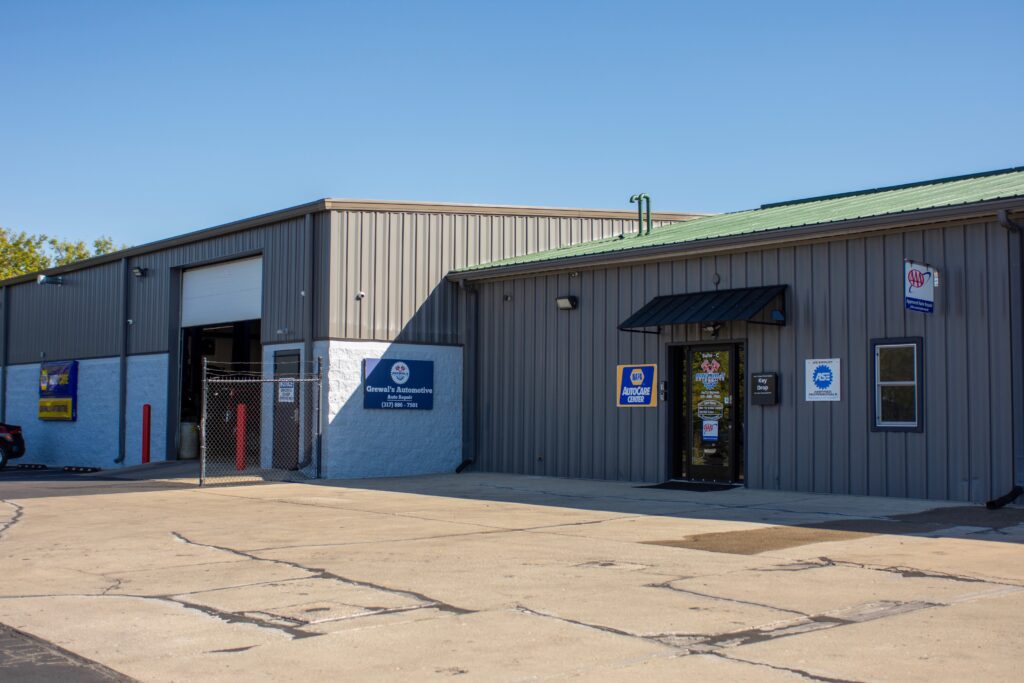
The technicians at Grewal’s Automotive in Indianapolis are experienced in diagnosing traction control and ABS issues across a wide range of vehicles. Whether the problem is a sensor, a module, an electrical fault, or something tied to your suspension or tires, the diagnostic process is thorough, and the answers are explained clearly before any work begins.
Frequently Asked Questions About the Traction Control Light
Is it safe to drive with the traction control light on?
It depends. If the light came on briefly during slippery conditions and went off, you’re fine. If it’s staying on continuously, your traction control system may be disabled or malfunctioning. You can still drive, but you’ve lost an important safety feature, particularly in wet or unpredictable conditions.
Will the traction control light reset on its own?
Sometimes. If the light was triggered by a temporary condition like wheel spin on a slick surface, it may go off once the situation resolves. But if there’s a fault code stored in the system, the light will stay on until the underlying problem is diagnosed and repaired.
Can low tire pressure cause the traction control light to come on?
Yes. Low or uneven tire pressure affects how wheel speed sensors read your tires, which can trigger a traction control warning. Always check your tire pressure as a first step when this light appears.
How much does it cost to fix a traction control issue?
It varies depending on the root cause. Replacing a wheel speed sensor is generally less expensive than replacing an ABS module. Getting a proper diagnosis first ensures you’re only paying for what actually needs to be fixed.
Does the traction control light affect my ability to pass an emissions inspection?
If the light indicates a stored fault code, it could affect a smog or emissions inspection. Most inspection systems check for active fault codes, and a traction control fault may flag during that process.
What to Do When Your Traction Control Light Stays On
A traction control light on your dashboard is your vehicle asking for attention. It might be nothing more than the system doing its job on a slippery road, or it could be pointing to a sensor, electrical, or ABS issue that needs a proper fix. Either way, understanding what it means puts you in control. If the light is staying on and you’re not sure why, schedule a diagnostic check with the team at Grewal’s Automotive. Call us at 317-886-7501 or book your appointment to get started.