

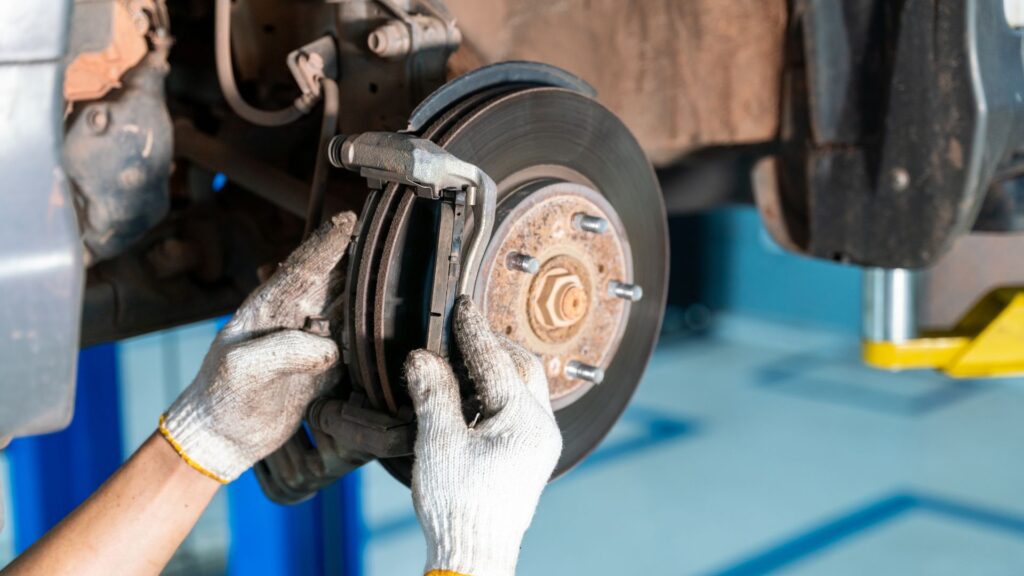
That sharp, acrid smell hitting your nose after a hard stop or a long drive? Your sense of smell is doing you a favor. A burning odor coming from your brakes is one of those warning signs that your car is practically begging you to pay attention to.
The good news is that not every burning brake smell means disaster. The bad news is that some of them do. Knowing the difference can save you money, and more importantly, keep you safe on the road.
Why Brakes Smell Like Burning in the First Place
Brakes work by converting kinetic energy into heat through friction. When your brake pad presses against the disc brake rotor, that contact slows your wheel and brings your vehicle to a stop. It is a violent physical process happening hundreds of times during a single drive.
When the system is working correctly, that heat dissipates quickly. When something is off, the heat builds up, materials start to break down, and that is when you get the odor.
New Brakes Can Smell – And That Is Normal
If you just had your brakes replaced and you are noticing a faint burning smell during the first few days of driving, relax. New brake pads go through a curing process where resins in the pad material burn off. This is expected and will fade on its own.
The Burning Smells You Should Not Ignore
Not all burning brake smells are harmless. Here are the situations where you need to take action:
Overheated brakes from heavy use
If you have been driving downhill for a long stretch and riding your brakes the whole way, the heat buildup can be extreme. You might notice smoke rising from your wheels, which is a clear sign your brakes are being pushed past their limits. The fix here is to give them time to cool down, but if this happens regularly during normal driving, something is wrong.
A seized or stuck brake caliper
A brake caliper that does not release properly keeps the brake pad pressed against the disc brake even when you are not stopping. The constant friction generates heat and a burning smell that does not go away. Your car might also pull to one side while driving, which is a dead giveaway.
Worn brake pads grinding metal on metal
When brake pads wear down completely, the metal backing plate starts making contact with the rotor. At this point, you are past the burning smell stage and into grinding sounds. Your stopping power drops significantly, and the damage to your brakes gets expensive fast.
Low or leaking brake fluid
Brake fluid plays a critical role in transferring pressure from the master cylinder to your calipers. If the fluid is low, contaminated, or leaking, your brakes will not perform correctly and may overheat more easily. A burning smell combined with a soft or spongy brake pedal is a serious red flag.
A forgotten parking brake
It happens to the best of us. Driving with the parking brake still engaged will absolutely create heat, odor, and potential damage. If the smell goes away once you release it and the brakes cool down, you may be fine. But if the parking brake was on for a long drive, get an inspection done anyway.
What Happens If You Keep Ignoring It
Ignoring a burning smell from your brakes is the kind of decision that tends to get expensive. Brake pads that are left too long can damage the rotors, turning a simple pad replacement into a full rotor replacement job. A stuck caliper that goes unaddressed will destroy the pad and rotor on that wheel, and may also cause uneven tire wear from the drag.
More critically, brakes are not optional equipment. They are the primary safety system on your vehicle. If your stopping power is compromised, the risk to you and everyone else on the road increases with every mile you drive.
When to Get Your Brakes Inspected
You should get a brake inspection if you notice any of the following:
- A burning smell that does not fade after a few minutes of normal driving
- Smoke coming from one or more wheels
- A grinding or squealing sound when you apply the brakes
- Your car pulling to one side during braking
- A soft, spongy, or low brake pedal
- The brake warning light showing up on your dashboard
These are not minor inconveniences. They are your car sending signals that the brake system needs attention before it fails.
Why You Should Not Ignore a Burning Brake Smell
A burning smell from your brakes is your vehicle’s way of asking for help. Whether it is worn brake pads, a stuck caliper, low brake fluid, or overheated rotors, the underlying problem will not fix itself. The longer it goes unaddressed, the more damage builds up and the less safe your car becomes. If something smells off, trust that instinct.
Schedule a brake inspection with Grewal’s Automotive in Indianapolis and get a clear answer from technicians who will explain exactly what is going on. You can also reach them directly at 317-886-7501 to set up an appointment.