

That soft, spongy feeling under your foot is not normal. If your clutch pedal suddenly feels like you are pressing into a wet sponge, your vehicle is trying to tell you something important. More often than not, the culprit is a failing clutch slave cylinder.
What Does the Clutch Slave Cylinder Actually Do?
The clutch slave cylinder is a hydraulic component that works alongside the clutch master cylinder to engage and disengage the clutch. When you press the pedal, brake fluid travels from the master cylinder to the slave cylinder, creating the hydraulic pressure needed to operate the clutch smoothly.
Think of it as the middle link in a chain. Without it doing its job, the connection between your engine and transmission breaks down fast.
Bad Clutch Slave Cylinder Symptoms You Should Not Ignore
Catching the problem early can save you from a much bigger repair bill. A failing slave cylinder rarely fixes itself, and the damage can spread to other clutch components the longer you wait. Here are the most common warning signs:
- Mushy or spongy clutch pedal: This is usually the first thing drivers notice. The pedal feels soft or lacks the firm resistance it used to have, often because air or fluid loss is affecting the hydraulic system.
- Clutch pedal sinking to the floor: If the pedal drops to the floor or is slow to return, hydraulic pressure has likely been lost. In some cases, the pedal may stay down until you pull it back up with your foot.
- Difficulty shifting gears: When the clutch is not fully disengaging, shifting becomes hard, especially into first or reverse. You may also hear grinding as the transmission struggles to change gears.
- Visible brake fluid leak: Clutch hydraulic systems commonly use brake fluid, so look for wet spots or fresh fluid near the transmission bell housing. A clutch fluid reservoir that keeps running low is another red flag.
- Burning smell: This may indicate clutch slippage, although it is not a definitive sign of slave cylinder failure on its own.
Any one of these symptoms is worth taking seriously. A combination of them means you should not wait. Driving with a failing slave cylinder can leave you unable to shift at all, which is a safety risk in traffic, so have a qualified mechanic inspect the clutch system as soon as possible.
How Brake Fluid Connects to the Problem
Brake fluid is the lifeblood of your clutch hydraulic system. When the slave cylinder begins to fail, it often develops an internal or external leak. Low fluid levels reduce hydraulic pressure, which is why the pedal loses its firm feel.
Contaminated or old brake fluid can also accelerate wear on the cylinder’s rubber seals, making failure more likely over time.
Why Indianapolis Drivers Should Act Quickly
Driving around Indianapolis with a failing clutch slave cylinder puts unnecessary stress on the entire clutch system. What starts as a mushy pedal can turn into a completely non-functional clutch, leaving you stranded.
Changes in temperature, including summer heat, can worsen existing leaks and push a struggling cylinder over the edge.
Frequently Asked Questions About Bad Clutch Slave Cylinders
Can I keep driving with a bad clutch slave cylinder?
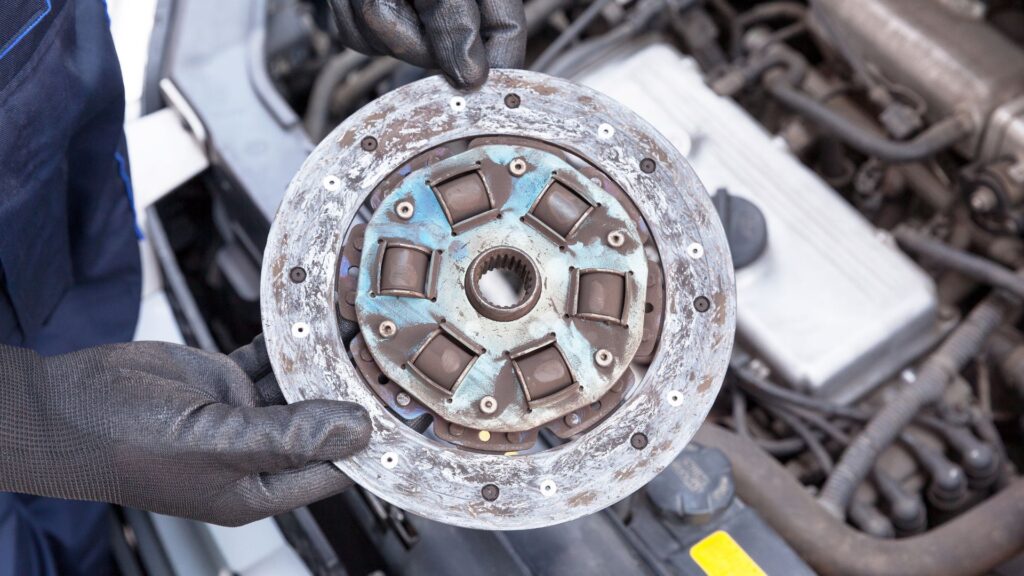
It is not a good idea. A failing slave cylinder can lose pressure without warning, and you may suddenly be unable to disengage the clutch or shift gears. Getting stuck in traffic or at an intersection is a real safety risk. Continued driving can also damage the clutch disc, pressure plate, and transmission components, so a quick inspection is the safer and cheaper choice.
How do I know if the problem is the slave cylinder or the master cylinder?
The symptoms are very similar, since both cause a soft pedal and trouble shifting. Where the fluid leak shows up is often the biggest clue. A leak near the transmission bell housing points to the slave cylinder, while fluid around the pedal or on the driver’s side firewall points to the master cylinder. Because the two work as a pair, a technician can confirm which one has failed with a proper hydraulic inspection.
How long does it take to replace a clutch slave cylinder?
It depends on the vehicle. On some models, the slave cylinder mounts on the outside of the transmission and can be swapped fairly quickly. On others, it sits inside the bell housing, which means the transmission has to come out. In that case, many shops recommend replacing the slave cylinder at the same time as the clutch to avoid paying for the same labor twice. A technician can tell you which applies to your vehicle after an inspection.
What to Do About Bad Clutch Slave Cylinder Symptoms
A mushy clutch pedal is not something to push through. The clutch slave cylinder and master cylinder work together as a team, and when one fails, the whole system suffers. If you are noticing any of these bad clutch slave cylinder symptoms, bring your vehicle to Grewal’s Automotive in Indianapolis before a small fix becomes an expensive repair.
Call us at 317-886-7501 to schedule a transmission inspection with our team today.