
You glance at your dashboard, notice a strange light, and think, “I’ll deal with it later.” Sound familiar? That small decision could cost you thousands of dollars and leave you stranded on the side of the road with steam pouring out from under your hood. Engine coolant over temperature is not a warning you can afford to ignore.
What Does “Engine Coolant Over Temperature” Actually Mean?
Your car’s engine generates an enormous amount of heat every time it runs. The cooling system in an internal combustion engine exists specifically to manage that heat and keep your engine block operating within a safe temperature range.
When your coolant – also called antifreeze – fails to do its job, the engine temperature climbs past what it should be. A sensor picks up that change and triggers the warning light on your dashboard. That light is your vehicle telling you something is seriously wrong.
Why Engines Overheat in the First Place
Overheating rarely happens out of nowhere. There is almost always an underlying cause, and identifying it early is what separates a minor repair from a major engine repair.
Low Coolant or a Coolant Leak
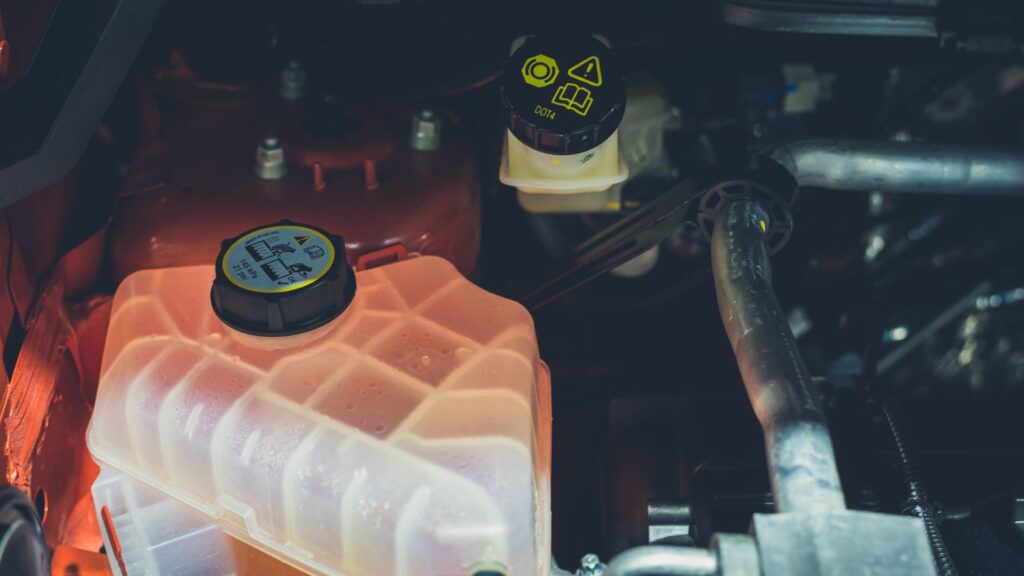
The most common culprit is low coolant. This can happen because of a slow leak in a hose, a crack in the reservoir or tank, or even a failing head gasket. If coolant is escaping the system, there simply is not enough fluid left to absorb and move heat away from the engine.
A leaking hose may seem minor, but it can drain your coolant reservoir faster than you expect. If you notice a sweet smell near your car or see a puddle of greenish or orange fluid on the ground, that is a leak worth investigating immediately.
A Failing Thermostat
The thermostat acts like a gatekeeper inside your cooling system. It opens and closes to regulate how much coolant flows through the radiator based on engine temperature. When the thermostat sticks closed, coolant cannot circulate properly, and heat builds up fast.
A stuck thermostat is a relatively affordable fix – but only if you catch it before it causes more damage.
Radiator Problems
Your radiator is responsible for pulling heat out of the coolant before sending it back through the engine. If the radiator is clogged, damaged, or not getting enough airflow, it cannot do its job. Bent fins, debris buildup, or a malfunctioning fan can all reduce the radiator’s ability to cool the fluid.
Water Pump Failure
The pump is what keeps coolant moving through the entire system. If it fails, circulation stops and your engine temperature rises quickly. You might hear a whining noise or notice coolant leaking near the front of the engine if your water pump is on its way out.
What Happens If You Keep Driving
This is where things get serious. Driving with an overheated engine is like pushing through hyperthermia – your body, or in this case your engine, reaches a point where it cannot recover on its own.
The cylinder walls can warp. The head gasket can blow. Motor oil breaks down under extreme heat, losing its ability to lubricate moving parts. All of that can mean a complete engine failure, which is a very expensive problem to find yourself facing.
Even a vehicle like a Ford Fusion – a car known for solid reliability and one Ford Motor Company designed with modern cooling systems – can suffer catastrophic damage if an overheating warning is ignored long enough.
The pressure inside an overheated cooling system also builds dangerously high. If you open the radiator cap while the engine is hot, you risk serious burns from escaping steam and pressurized coolant. Never do this.
What You Should Do the Moment That Warning Light Appears
Do not panic, but do act immediately. Here is what to do:
- Pull over safely as soon as possible.
- Turn off the air conditioning to reduce load on the engine.
- If it is safe to do so, turn the heat on full blast – it draws heat away from the engine.
- Once stopped, turn the engine off and let it cool down for at least 30 minutes.
- Check the coolant reservoir for visible fluid levels – do not open the radiator cap yet.
- Call for help rather than risking further engine damage by driving on.
Staying Ahead of Overheating With Regular Maintenance
The best way to avoid this situation is consistent maintenance. Having your radiator system inspected regularly, checking coolant levels, and replacing old hoses before they crack are all part of keeping your car running the way it should.
A routine check of your cooling system – including the thermostat, pump, radiator, and coolant – can catch small problems before they become serious ones. Think of it the same way you think about oil changes. It is not glamorous, but skipping it always costs more in the long run.
Don’t Ignore an Engine Coolant Over Temperature Warning
If your engine coolant over temperature warning light comes on, that is not the moment to hope for the best. It is the moment to act. The team at Grewal’s Automotive in Indianapolis is experienced with full cooling system diagnostics and repairs.
Whether it is a leak, a failing thermostat, or a damaged radiator, they can identify the problem and fix it right. Schedule your radiator system service today or call 317-886-7501 before a warning light turns into a much bigger repair bill.