
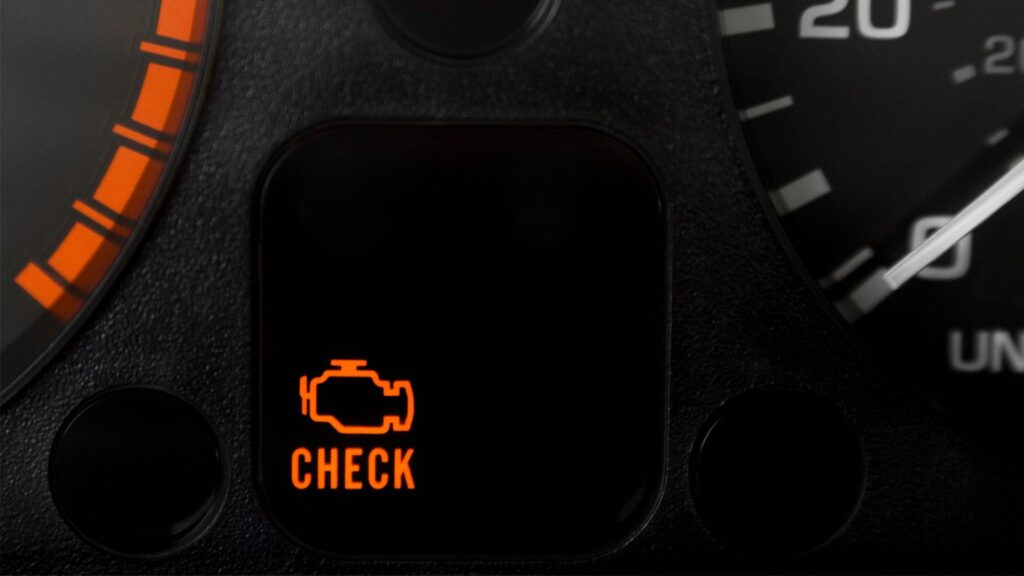
You’re driving along, everything feels fine, and then it happens – that little amber glow shows up on your dashboard. The check engine light (also called the MIL, or malfunction indicator light) is on, but your car sounds normal, drives normally, and nothing seems off. So what gives?
The honest answer is: yes, a check engine light can sometimes come on without an obvious problem. But “no reason” is a bit misleading. There’s almost always a reason – it just might not be what you’d expect.
What Actually Triggers the Check Engine Light?
Your vehicle’s on-board diagnostics system (commonly called OBD-II) is constantly monitoring dozens of sensors and systems. The engine control unit (ECU) processes data from components like the oxygen sensor, mass flow sensor, spark plugs, and the catalytic converter.
When something reads outside of its normal range, the ECU flags it and turns on the light.
The tricky part is that a sensor can report a bad reading without the underlying component actually being broken. That means the light can come on due to a faulty sensor, a loose connection, or even a software glitch – not necessarily a mechanical failure.
Common “Low-Stakes” Reasons the Light Comes On
Some triggers are surprisingly minor. Here are a few that often catch drivers off guard:
- A loose or missing gas cap – Fuel vapor can escape from the fuel tank, which disrupts the vehicle emissions control system and sets off the light.
- A failing oxygen sensor – The oxygen sensor monitors the air-fuel ratio and exhaust gas composition. If it’s reading incorrectly, it can trigger the CEL without causing noticeable driving problems right away.
- A worn spark plug or ignition coil – These can cause minor misfires that affect combustion efficiency and fuel economy without feeling dramatic from the driver’s seat.
- EGR valve issues – The exhaust gas recirculation (EGR) valve helps reduce nitrogen and carbon monoxide emissions by recirculating exhaust gas back into the engine. A stuck or dirty EGR valve can trigger the light and affect engine performance over time.
When the Light Really Might Mean Nothing Serious
Sometimes the light comes on after a recent repair, a battery disconnect, or even a change in temperature. The ECU can occasionally store an old fault code that hasn’t fully cleared yet. In these cases, the light may go off on its own after a few drive cycles.
However, this is not a reason to ignore it. Even when the cause seems minor, leaving the light unaddressed can lead to bigger issues – like reduced airflow, a clogged catalytic converter, or unburned fuel damaging the exhaust system over time.
Why You Should Still Get It Diagnosed
Here’s the thing: you cannot tell from looking at the light whether it’s a loose gas cap or something more serious like engine knocking, a failing catalytic converter, or an issue affecting your vehicle’s emissions output. The United States Environmental Protection Agency mandates that the OBD-II system flag anything that could increase pollution, so even a small deviation gets reported.
A proper diagnosis using an OBD-II scan tool reads the stored fault codes and gives a technician real data to work with. Without that step, you’re just guessing.
What Happens During a Diagnosis
A technician connects a scan tool to your vehicle’s OBD-II port, reads the trouble codes, and cross-references them with live sensor data – including airflow, temperature, oxygen levels, and more. From there, they can determine whether the issue is with a sensor itself or the system it’s monitoring.
This is not a complicated process, but it requires the right tools and experience to interpret correctly. A code reader from an auto parts store gives you a code number, but it doesn’t tell you what’s actually wrong or what needs to be fixed.
Should You Keep Driving With the Light On?
If the light is steady (not flashing), you’re likely okay to drive for a short period while you arrange an inspection. A flashing check engine light, however, usually indicates a more urgent issue – often related to misfires that can damage the catalytic converter or exhaust system. In that case, reduce speed and get it checked as soon as possible.
What to Do When Your Check Engine Light Comes On
A check engine light that seems to come on for no reason is still your car trying to tell you something. It might be minor, or it might not be – but the only way to know for sure is to have it properly diagnosed. At Grewal’s Automotive in Indianapolis, the team provides thorough engine diagnostics to get to the bottom of what your vehicle is actually telling you. Call 317-886-7501 to schedule your diagnostic appointment today.