
If your car has started making a clicking or popping noise when you turn, or you feel a strange vibration through the steering wheel, there’s a good chance something is wrong with your CV axle. It’s one of those problems that’s easy to ignore at first – but that would be a mistake.
So, how long can you actually drive with a bad CV axle? The honest answer is: not long, and not safely.
What Is a CV Axle and What Does It Do?
A CV axle – short for constant-velocity joint axle – is a drive shaft that transfers power from your engine and differential to the wheels. It allows the wheels to receive power smoothly even as the suspension moves up and down and the steering turns side to side.
Each CV axle is protected by a rubber boot filled with grease. That grease keeps the constant-velocity joint lubricated and running without excessive wear. When the boot cracks or tears, the grease leaks out, and that’s usually where the trouble starts.
How Does a CV Axle Go Bad?
Most CV axle failures begin with a torn or cracked boot. Once grease leaks out, dirt and moisture get in, and the joint starts to wear down quickly. Without proper lubrication, the bearing surfaces inside the joint grind against each other, causing rapid deterioration.
In some cases, the axle itself can bend or crack due to impact damage or years of heavy use.
Either way, the result is the same – a CV axle that can no longer do its job properly.
Signs and Symptoms of a Bad CV Axle
Knowing what to look for can help you catch this problem before it gets worse. Here are the most common signs and symptoms:
- Clicking or popping noise when turning, especially during slow turns or while accelerating
- Vibration in the steering wheel or through the floor at highway speeds
- Grease splattered on the inside of the wheel or under the vehicle – a sign of a leaking boot
- Clunking sounds when shifting from drive to reverse
- Car pulling to one side while driving or accelerating
If you notice any of these warning signs, it is time to take them seriously.
How Long Can You Drive With a Bad CV Axle?
This is where most drivers want a simple number. The truth is, it depends on how far along the damage is.
Early Stage – Torn Boot, Joint Still Functional
If your CV boot is just starting to crack and grease has recently begun to leak, you might still have a short window – possibly a few weeks – before the constant-velocity joint itself fails.
However, every mile you drive accelerates the wear. Delaying repair at this stage is risky.
Mid Stage – Joint Worn But Still Turning
Once the joint itself starts to wear and you hear clicking or feel vibration, you are already in dangerous territory. Driving at this stage risks complete axle failure, which can happen without much warning.
Late Stage – Severe Failure Imminent
At this point, the axle could separate entirely while you are driving. That means losing the ability to accelerate and potentially losing steering or braking control. Driving with a CV axle in this condition is genuinely dangerous – not just to your vehicle, but to you and everyone else on the road.
The general rule: do not drive more than a few days once you notice clear symptoms. And if the symptoms are severe, stop driving and get it inspected immediately.
Can a Bad CV Axle Damage Other Parts of Your Car?
Yes – and this is another reason not to delay. A failing CV axle puts stress on the transmission, differential, and wheel bearings. In worst-case scenarios, a broken axle can damage the brake system and car suspension components, turning a relatively straightforward repair into a much more expensive one.
Catching it early almost always saves you money.
What the Repair Involves
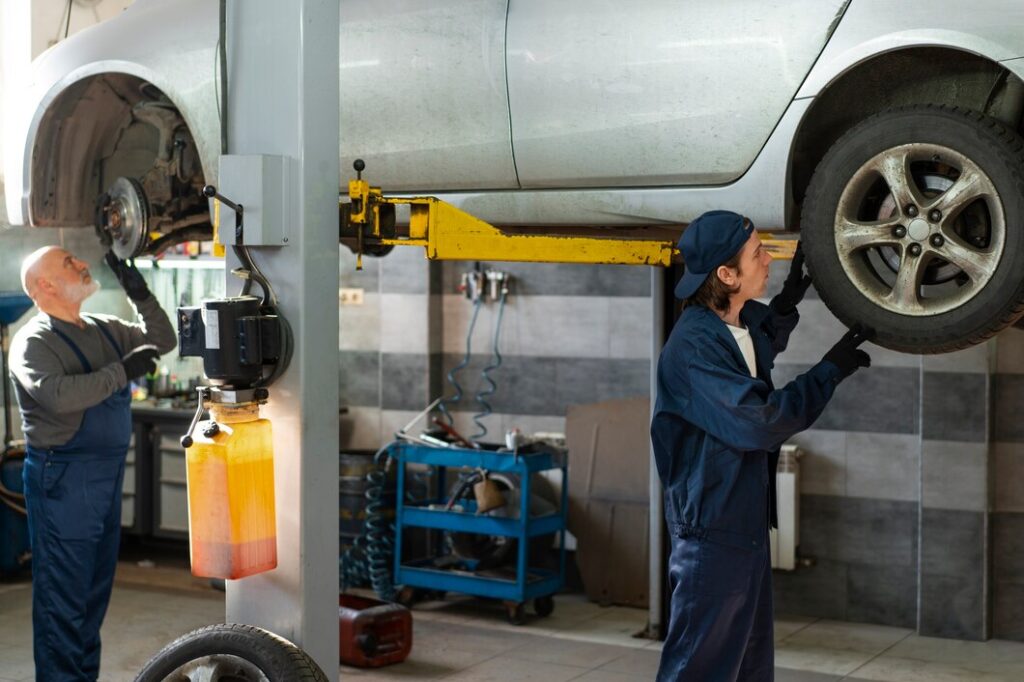
Replacing a CV axle typically means removing the wheel, disconnecting the brake caliper and rotor, and pulling the old axle out of the transmission or differential. A new axle – pre-packed with fresh grease and a new boot – is then installed.
It is not a simple DIY job for most people to handle. It requires the right tools, lifting equipment, and mechanical knowledge to do it safely.
How Soon Should You Replace a Bad CV Axle?
A bad CV axle is not something to put off. Once you notice clicking, vibration, or a grease leak, the clock is ticking. Driving on a failing axle risks full axle separation, suspension damage, and a loss of vehicle control. The team at Grewal’s Automotive in Indianapolis can inspect your axle, walk you through exactly what needs to be done, and get you back on the road safely. To schedule your inspection, call 317-886-7501 today.