
If your vehicle has been leaving mystery puddles in your driveway or if you’ve noticed a grinding sound coming from the wheel area, your front axle seal might be trying to tell you something.
Axle seals are small but critical components, and when they fail, the consequences can ripple through your entire drivetrain.
Here’s what to watch for before a small leak becomes a much bigger problem.
What Does a Front Axle Seal Actually Do?
The front axle seal keeps gear oil inside the differential and axle housing where it belongs.
Without proper lubrication, the bearings and gears that make four-wheel drive systems work would grind themselves apart in a surprisingly short amount of time.
Think of it like this: the seal is the gatekeeper. When it wears out or cracks, fluid escapes, and metal parts start running dry.
Common Front Axle Seal Leak Symptoms
Oil Spots or Puddles Under the Vehicle
This is usually the first sign people notice. A reddish or brownish fluid pooling near the front wheel or under the axle area is a red flag. It may look similar to transmission fluid, so don’t assume it’s harmless.
If you’re seeing consistent spots in the same location after parking, get it checked. A fluid leak that’s ignored long enough can lead to full differential failure.
Grinding or Humming Noises Near the Wheel
When gear oil leaks out and lubrication drops, the bearings inside the axle housing begin to wear unevenly. This often produces a low humming, grinding, or even a clicking sound, especially during turns or acceleration.
Vehicles with four-wheel drive systems, like a Jeep Wrangler or similar trucks, are particularly vulnerable to this kind of wear because their front axles see more stress than standard two-wheel drive setups.
Vibration Through the Steering Wheel or Floorboard
A failing axle seal can allow the lubricant level inside the axle to drop low enough that the entire drivetrain starts to vibrate. You might feel it in the steering wheel, the seat, or even through the brake pedal under certain conditions.
This symptom is easy to misread as a tire or car suspension issue. That’s why a proper diagnosis matters – not just a visual inspection.
Visible Grease or Residue Around the Axle or Wheel Area
Pop the hood or take a look at the inside of your front wheel. If you see a dark, oily residue coating the axle shaft, the gasket or seal is likely leaking. In some cases, the buildup can contaminate your brake components, which creates a serious safety hazard.
Contaminated brakes don’t just wear faster – they can fail. That’s not a risk worth taking.
Burning Smell After Driving
When a lubricant leaks onto a hot surface, like an exhaust component, it burns off and creates a noticeable smell. If you catch a faint burning odor after a drive and can’t find an obvious source, axle fluid hitting the exhaust is one possibility worth ruling out.
Why You Shouldn’t Wait on This Repair
An axle seal is a relatively inexpensive part. The labor to replace it, while not trivial, is still far less costly than replacing a differential, axle shaft, or set of bearings that have been running dry.
Ignoring the symptoms above doesn’t make the leak stop – it just gives it more time to damage surrounding components in your car’s drivetrain, including the transmission and suspension.
What a Technician Will Check
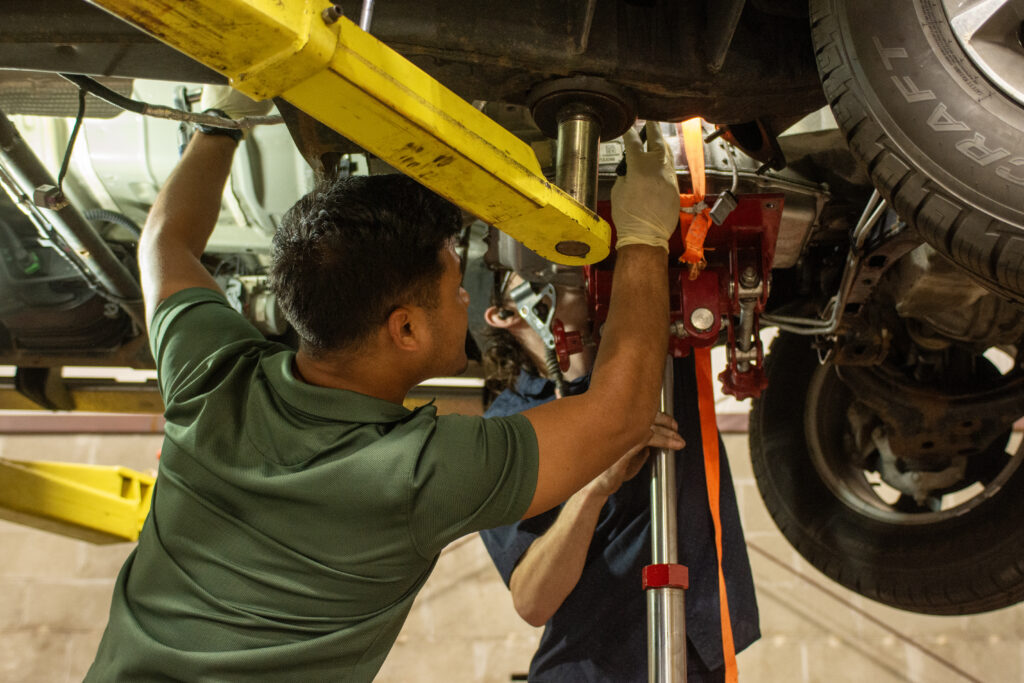
A proper inspection involves checking the fluid level in the differential, examining the axle seal and gasket for cracks or wear, and testing the bearings for play or roughness. The right tool in the right hands makes all the difference when diagnosing whether the seal itself is the source or whether there’s a deeper issue with the pinion or axle bearing.
How to Respond to Front Axle Seal Leak Symptoms
Front axle seal leaks are easy to overlook but hard to recover from if left unaddressed. The symptoms – fluid puddles, grinding noises, vibrations, brake contamination, and burning smells – are your vehicle’s way of asking for help. If any of these sound familiar, do not wait. Reach out to the team at Grewal’s Automotive by calling 317-886-7501 to schedule an inspection and get an honest, upfront estimate before the damage spreads.