
Most drivers stay on top of oil changes and tire rotations, but brake fluid often gets overlooked until something goes wrong. That’s a mistake you don’t want to make, because your brake system depends on clean, properly functioning fluid to keep you safe every time you press the pedal.
If you’ve ever wondered how often to change brake fluid or whether your vehicle is overdue, this guide will walk you through everything you need to know.
What Brake Fluid Actually Does
Brake fluid is a hydraulic fluid that transfers the pressure from your brake pedal through the brake line, into the caliper, and ultimately stops your wheels. Without it, your brakes simply wouldn’t work. It operates under extreme heat and pressure, which is why its condition matters so much.
The problem is that brake fluid is hygroscopic – meaning it can absorb moisture from the air over time. That moisture is in the fluid before you even realize it, and it lowers the boiling point of the fluid significantly. When the boiling point drops too low, the fluid can boil under hard braking, leading to brake failure at the worst possible moment.
How Often Should You Change Your Brake Fluid?
Here’s the honest answer: it depends on your vehicle and how you drive, but there are some solid general guidelines to follow.
Most mechanics recommend you change your brake fluid every two years or every 30,000 miles. Some manufacturers extend that interval to every three years, and brands like Toyota may have their own specific schedules. The safest approach is to check your owner’s manual for your manufacturer’s recommendation.
The fluid should be changed every time it shows signs of contamination or degradation – even if you’re not at the two-year mark yet. Brake fluid should be changed on a consistent schedule, not just when problems appear.
Why Your Maintenance Schedule Matters
Sticking to a regular maintenance schedule is one of the simplest ways to avoid expensive repairs. Contaminated fluid can cause internal corrosion throughout the brake system, damaging the master cylinder, brake line seals, and other components. Rust and corrosion don’t show up overnight, but they build up quietly until something fails.
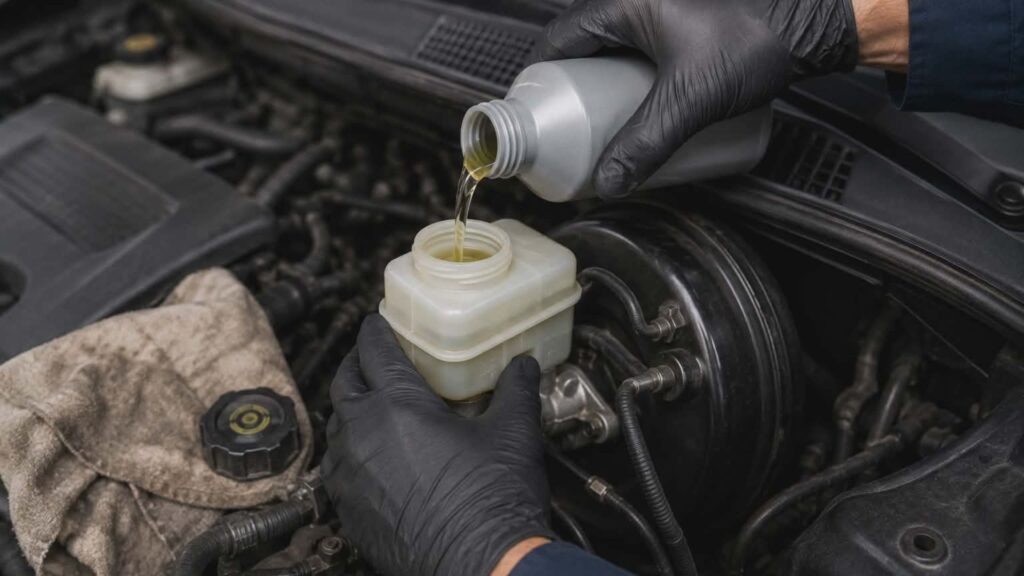
Periodically checking your brake fluid reservoir under the hood only takes a minute. The reservoir is usually a small, translucent container near the firewall. If the fluid looks dark or murky instead of clear or light yellow, that’s a signal your fluid needs attention.
Warning Signs That Tell You to Act Now
Don’t wait for a mechanic to tell you something is wrong. Your vehicle will often give you warning signs before a serious problem develops.
Watch for these warning signs:
- A spongy or soft brake pedal when you press the pedal down
- Brakes feel less responsive than usual, especially under hard stopping
- The brake pedal sinks closer to the floor than normal
- A burning smell after heavy braking – this can mean fluid is boiling
- The ABS (anti-lock braking system) warning light comes on
Pedal feel is one of the clearest indicators of brake fluid health. If something feels off, don’t delay getting an inspection.
How Mechanics Test Brake Fluid
A good technician won’t just guess whether your fluid needs replacing. They’ll use a brake fluid tester, which measures how much water is in the fluid by testing its boiling point or copper content. Copper contamination is another sign of breakdown, as it comes from corroding brake line components over time.
If the tester shows elevated moisture or copper levels, a brake fluid flush is the next step. During a flush, old fluid is removed through the bleeder valve at each wheel, and fresh fluid is pushed through the entire system – front and rear. This process clears out contaminated fluid and helps prevent damage to seals, the master cylinder, and other hydraulic components.
Brake Fluid Can Also Damage Rubber Components
Here’s something most people don’t know: old, contaminated brake fluid can also degrade the natural rubber seals and hoses inside your brake system. Moisture and corrosion don’t just lower your boiling point – they can make seals brittle and cause fluid lines to weaken over time.
Humidity plays a real role here, especially if your vehicle sits for extended periods.
This is another reason why a brake fluid change isn’t just about performance – it’s about preventing long-term damage to expensive components like the caliper and master cylinder.
When to Check Your Brake Fluid Between Services
You don’t need to wait for your scheduled oil change or a pad replacement to check in on your brake fluid. Pop the hood every few months, take a look at the reservoir, and note the color. If you’re unsure whether what you’re seeing is normal, bring it in and let a technician take a look.
Keep Your Brakes in Top Shape with Grewal’s Automotive
Brake fluid is a small detail that carries serious consequences when ignored. Whether you’re due for a routine inspection or you’ve noticed changes in how your brakes feel, the team at Grewal’s Automotive in Indianapolis is here to help. Call us at 317-886-7501 or schedule your visit online – your safety is always worth the effort.