

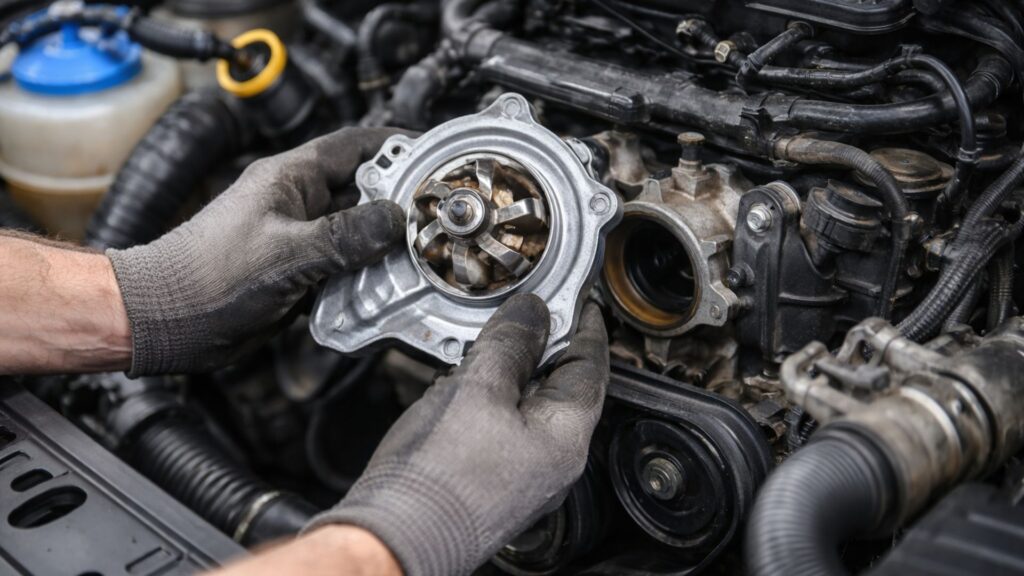
Your car’s engine generates an enormous amount of heat every time it runs. Without a working water pump, that heat has nowhere to go, and the results can be costly. The water pump is a vital part of your vehicle’s cooling system, and when it starts to fail, it rarely does so quietly.
If you learn the signs early, you can avoid serious engine damage and expensive repairs down the road.
What Does a Car Water Pump Actually Do?
The car’s water pump is responsible for keeping coolant moving through your engine. More specifically, it circulates coolant from the radiator through the engine block, cylinder head, and back again, pulling heat from the engine with every pass.
A properly functioning water pump keeps the temperature of the engine stable, prevents the engine from overheating, and protects critical engine components like the head gasket, thermostat, and heater core. When the water pump works as it should, your engine stays cool, and your car operates smoothly.
The water pump is typically driven by the serpentine belt or, in some vehicles, the timing belt.
This means pump wear can sometimes be tied to belt wear, so it helps to inspect both together.
7 Signs Your Water Pump May Be Failing
Engine Overheating
This is the most obvious and dangerous warning sign. When the water pump isn’t circulating coolant properly, heat builds up fast. If your temperature gauge climbs into the red zone or a warning light comes on, overheating is a serious problem that needs immediate attention.
A failing water pump can cause the engine to overheat even during short drives. If you notice this happening, stop driving and have the vehicle inspected before permanent engine damage occurs.
Coolant Leak Near the Front of the Engine
A coolant leak around the water pump is a common early indicator of failure. The water pump’s gasket and seals can wear down over time, allowing coolant to seep out. You might notice a puddle of green, orange, or pink fluid under your car, especially toward the front of the engine.
A small coolant leak may seem minor, but it can lead to a low coolant level that leaves your engine vulnerable to overheating. If you spot fluid pooling beneath your vehicle, it is time to check the water pump for signs of wear or damage.
Whining or Grinding Noises
Unusual sounds coming from the engine bay are never a good sign. A worn-out water pump with a failing bearing can produce a high-pitched whining or grinding noise. The water pump pulley may also wobble if the bearing is damaged, which creates additional noise and vibration.
If you hear these sounds and they seem to be coming from the area around the water pump, do not ignore them. Bearing failure inside the pump can lead to a complete breakdown if left unaddressed.
Steam or Smoke From Under the Hood
Steam rising from under the hood is a clear sign that something is seriously wrong. It often means your coolant is boiling due to an overheated engine. A malfunctioning water pump that cannot circulate coolant throughout the engine is a likely culprit.
If you see steam or smoke while driving, pull over safely and turn off the engine. Continuing to drive with an overheated engine can warp the cylinder head, destroy the head gasket, or crack the engine block entirely.
Coolant Buildup or Rust Around the Pump
Even without visible leaks, you may notice crusty buildup, rust, or corrosion forming around the water pump. This is often the result of a slow seep that dries before forming a puddle. Over time, mineral deposits from coolant and exposure to heat accelerate corrosion on the pump housing and gasket.
This kind of buildup is a damaged water pump’s way of telling you that it is not sealing properly anymore. Check the water pump area during routine inspections to catch this early.
Fluctuating Engine Temperature
If your temperature gauge keeps moving up and down without a clear reason, it is possible that the water pump is struggling to keep up. A bad water pump may circulate coolant unevenly, causing the engine temperature to spike and drop unpredictably.
This symptom can easily be confused with a faulty thermostat, but both issues affect the cooling system, and both deserve prompt attention. Understanding why your car is overheating even with full coolant, can help you and your technician narrow down the root cause.
Heater Blowing Cold Air
This one surprises most drivers. Your vehicle’s heater relies on hot coolant passing through the heater core to warm the air inside the cabin. When the water pump isn’t circulating coolant throughout the engine efficiently, the heater core does not receive enough hot coolant.
If your heat suddenly stops working or blows cold air without visible leaks or other symptoms, it may be a sign that a failing water pump is disrupting coolant flow. It is one of the more subtle common symptoms, but it is worth investigating.
What Are the Common Causes of Water Pump Failure?
Understanding the causes of water pump failure can help you prevent it. The most common causes include:
- Normal wear and tear – Impeller blades corrode or wear down over time, reducing the pump’s ability to circulate coolant.
- Seal and gasket failure – The gasket between the pump and engine block degrades with heat and age.
- Bearing failure – The bearing inside the pump wears out, especially on high-mileage vehicles.
- Belt wear – A worn serpentine belt or timing belt can put extra stress on the pump, speeding up failure.
- Coolant contamination – Using the wrong coolant type or mixing types can lead to corrosion inside the pump.
Catching a failing water pump early can save you from much larger repairs, including engine damage if not addressed in time.
Why Replacing the Water Pump Promptly Matters
A broken water pump does not just affect the cooling system. It can trigger a chain reaction of damage throughout your vehicle. It can cause the engine to overheat, which in turn can blow the head gasket, crack the cylinder head, or seize the engine block.
Replacing it when symptoms first appear is far more affordable than dealing with the fallout of a fully overheated engine. If your water pump is bad and you are already experiencing symptoms like engine overheating, grinding noises, or coolant loss, do not wait.
For drivers in Indianapolis, IN dealing with these water pump issues, our team at Grewal’s Automotive can diagnose and repair the problem quickly. We offer automotive heating and cooling system repair as well as professional engine repair services to get your car running smoothly again.
It also helps to understand the broader picture of what stresses your cooling system. Learn more about the common causes of car overheating and stay on top of routine preventative maintenance services to extend the life of your water pump and other engine components.
Frequently Asked Questions
What are the symptoms of a failing water pump?
The most common water pump symptoms include engine overheating, coolant leaks near the front of the engine, grinding or whining noises, steam from under the hood, rust buildup around the pump, fluctuating engine temperature, and cold air from the heater. These are the symptoms to look for before the problem gets worse.
How do I know if my water pump is failing?
Signs of a failing water pump often show up gradually. You may notice the temperature gauge behaving erratically, hear unusual noises near the pump, or find coolant under your car. The signs of a broken water pump can sometimes resemble other cooling system issues, so a professional inspection is the most reliable way to confirm the problem.
Can I drive with a bad water pump?
It is not recommended. The water pump is critical to keeping your engine cool. A water pump cannot do its job once it has significantly failed, and driving with a bad water pump risks causing the engine to overheat and sustaining serious, expensive damage.
What causes water pump failure?
The most common causes are wear and tear on the bearing and impeller, gasket degradation, corrosion from coolant contamination, and stress placed on the pump is driven by a worn belt.
Regular maintenance and using the correct coolant can help slow pump wear significantly.
How long does a water pump last?
Most water pumps last between 60,000 and 100,000 miles, though this varies by vehicle make, model, and maintenance history. If your pump is driven by the timing belt, it is often replaced at the same interval. Checking with a trusted mechanic during routine service is the best way to stay ahead of failure.
Are signs of a bad water pump the same as a thermostat problem?
Not exactly, but the signs of failure can overlap. Both a faulty thermostat and a failing water pump can cause engine overheating and temperature fluctuations. A diagnostic inspection is the best way to tell the two apart. If you are unsure, it may also help to read about why your car is overheating even with full coolant.
Do Not Wait Until It Gets Worse
If you have spotted any of these 6 signs, or all 7, do not put off getting your vehicle checked.
The water pump plays a central role in keeping your engine safe, and ignoring early warning signs often turns a simple repair into a major one. At Grewal’s Automotive in Indianapolis, IN, our technicians are ready to inspect your cooling system, diagnose the issue accurately, and get you back on the road with confidence. Call us at 317-886-7501 or schedule your appointment online today.