

Your car is trying to tell you something. If your vehicle has been shifting oddly, hesitating, or triggering the check engine light, the problem might be smaller than you think – but just as serious. A failing transmission solenoid can cause a surprising range of issues, and catching them early can save you from a much bigger repair bill down the road.
Here’s what you need to know about transmission solenoid symptoms, why they happen, and when it’s time to call in a professional inspection.
What Is a Transmission Solenoid?
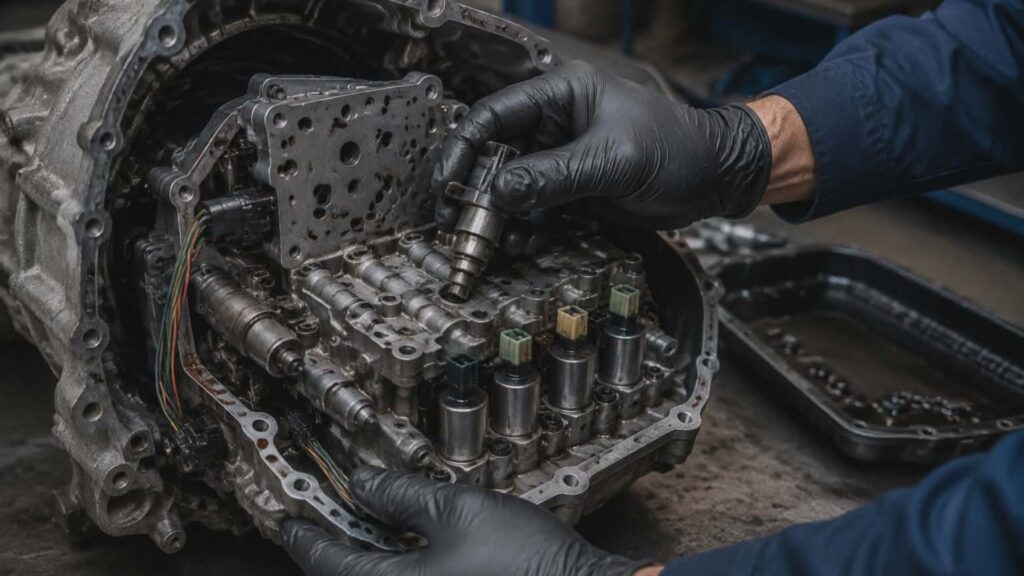
A shift solenoid is an electro-hydraulic valve that controls the flow of transmission fluid inside the transmission. Think of it as a gatekeeper – it receives electrical signals from the transmission control module and opens or closes to regulate hydraulic fluid pressure, which tells your automatic transmission when and how to shift gears.
Most modern vehicles have multiple solenoids working together as part of a solenoid pack.
When even one solenoid is not functioning correctly, it can throw off the entire transmission system and lead to noticeable driving problems.
A solenoid is responsible for regulating transmission fluid, meaning that when it fails the pressure needed to shift smoothly simply isn’t there. That’s when drivers start noticing something is off.
Why Do Solenoids Fail?
Understanding what causes transmission solenoid failure helps you spot problems before they get worse. The most common culprits include:
- Dirty or low transmission fluid – Contamination or debris in the fluid can clog solenoid valves and prevent them from operating properly.
- Electrical issues – Damaged electrical wiring or a drop in voltage can prevent the solenoid from receiving proper signals from the transmission control unit.
- Wear and age – Like any mechanical component, solenoids wear down over time.
- Overheating – Excessive heat causes transmission damage and accelerates solenoid wear.
Solenoid failure is often the result of neglected maintenance rather than a sudden breakdown.
Regular fluid checks and timely service go a long way toward protecting the transmission.
10 Common Transmission Solenoid Symptoms
Delayed or Rough Shifting
One of the most noticeable shift solenoid symptoms is a delay when shifting gears. You press the gas, the engine revs, but the transmission hesitates before actually changing gears. This happens because a malfunctioning solenoid is disrupting the hydraulic fluid pressure needed to complete the shift.
Rough, jerky shifts are another version of this problem. Instead of smooth transitions between gears, you feel a noticeable clunk or jolt – a clear sign something is wrong within the transmission system.
The Vehicle Gets Stuck in a Gear
When a solenoid is stuck or fails entirely, the transmission may lock into a single gear and refuse to shift out of it. This is sometimes called “limp mode,” a safety feature designed to prevent further damage to your vehicle’s transmission.
If your car is stuck in first gear or won’t move out of a low gear, a failing solenoid may be to blame. This situation makes normal driving difficult and should be addressed as soon as possible.
Failure to Shift When Expected
A bad transmission shift solenoid can cause your vehicle to fail to shift at the right time. The transmission shifts based on signals from the transmission control module, and if the solenoid isn’t responding correctly, the timing gets thrown off.
You might notice the transmission refuses to shift into a higher gear during normal acceleration or skips gears unexpectedly. This inconsistency in transmission performance points strongly toward solenoid issues.
Transmission Slipping
Transmission slipping is a common symptom that gets confused with other problems. Slipping occurs when the transmission unexpectedly jumps out of gear or feels like it’s struggling to stay in the correct gear during acceleration.
A faulty solenoid disrupts the flow of transmission fluid that keeps the transmission engaged properly. If you experience this, it’s crucial to have your transmission inspected before the problem progresses.
Check Engine Light Comes On
Your vehicle’s on-board diagnostics system monitors everything, including solenoid performance.
When a solenoid malfunction is detected, the computer often triggers the check engine light and stores a diagnostic trouble code.
Common codes related to solenoid problems include P0700, P0740, and others in the P07xx range. A scan of your vehicle’s computer diagnostics at a trusted shop can quickly help diagnose a faulty transmission solenoid and identify exactly which solenoid is the root cause.
Unusual Noises Coming From Your Transmission
Noises coming from your transmission are never a good sign. Whining, buzzing, or clunking sounds during shifting can indicate that the solenoid is failing and disrupting normal fluid pressure.
These sounds happen because the transmission isn’t receiving the proper hydraulic pressure to operate smoothly. Over time, ignoring these noises can lead to more serious damage to the transmission and surrounding components.
Poor Fuel Economy
This one surprises a lot of drivers. When the transmission isn’t shifting efficiently due to a faulty shift solenoid, the engine is forced to work harder than necessary. That extra effort burns more fuel.
If you’ve noticed your gas mileage dropping without an obvious reason, transmission solenoid issues could be worth investigating. It’s not the first thing most people think of, but it’s a real connection.
Loss of Transmission Responsiveness
A failing transmission solenoid can cause a sluggish response when you accelerate. You press the throttle, but the car doesn’t respond as it should. The torque converter and gear train rely on proper solenoid function to deliver power from the engine to the wheels efficiently.
This loss of transmission responsiveness is different from an engine performance issue. If the engine sounds normal but the vehicle feels slow to respond, the solenoid may be the culprit.
Erratic or Unpredictable Shifting
Signs of a failing shift solenoid sometimes show up as completely unpredictable behavior. The transmission may shift at odd speeds, shift multiple times in a short distance, or behave differently on each drive.
This erratic behavior is a sign that the solenoid is receiving inconsistent signals from the transmission control unit or is intermittently malfunctioning. Intermittent problems like this can be harder to diagnose, but they shouldn’t be ignored.
Transmission Fluid Leaks or Discoloration
While not always directly caused by a solenoid, leaking or dirty transmission fluid can accelerate solenoid wear and make existing solenoid issues worse. Healthy transmission fluid is typically bright red and clear. Dark, burnt-smelling fluid is a warning sign.
A solenoid relies on clean fluid to operate correctly. Controlling the flow of transmission fluid is its primary function, and contamination or low fluid levels prevent it from doing so. Flushing the transmission fluid regularly is one of the easiest ways to prevent even complete transmission failure.
How to Diagnose a Faulty Transmission Solenoid
To properly diagnose a faulty transmission solenoid, a technician will typically connect an OBD-II scanner to read stored fault codes, then perform electrical tests to check voltage and resistance in each solenoid circuit. They may also drop the transmission pan to inspect the solenoid pack for wear, debris, or contamination.
Signs of a bad transmission are often confirmed through a combination of test drive observations and scanner data. Skipping the diagnostic step and guessing can lead to replacing parts that didn’t need replacing.
Should You Fix or Replace a Transmission Solenoid?
The good news is that in many cases, you don’t need to replace a transmission entirely. If the solenoid is caught early and the surrounding components aren’t damaged, replacing just the affected solenoid or solenoid pack is often enough.
When solenoid failure has gone unaddressed for too long, it can cause broader transmission repair issues that are far more expensive to fix. The symptoms of a bad solenoid are your early warning system – use them.
To replace a shift solenoid properly requires the right tools, technical knowledge, and access to the transmission pan. This is not a typical DIY repair; a professional inspection ensures the correct part is identified and properly installed.
Conclusion
Transmission solenoid symptoms rarely appear all at once, but they tend to get worse over time.
Whether you’re dealing with rough shifts, a stuck gear, or a check engine light, don’t wait to get it checked. The skilled team at Grewal’s Automotive in Indianapolis is ready to help you diagnose and address any transmission concern with honest, straightforward service. Give us a call at 317-886-7501 or stop by to keep your vehicle shifting smoothly for miles to come.