

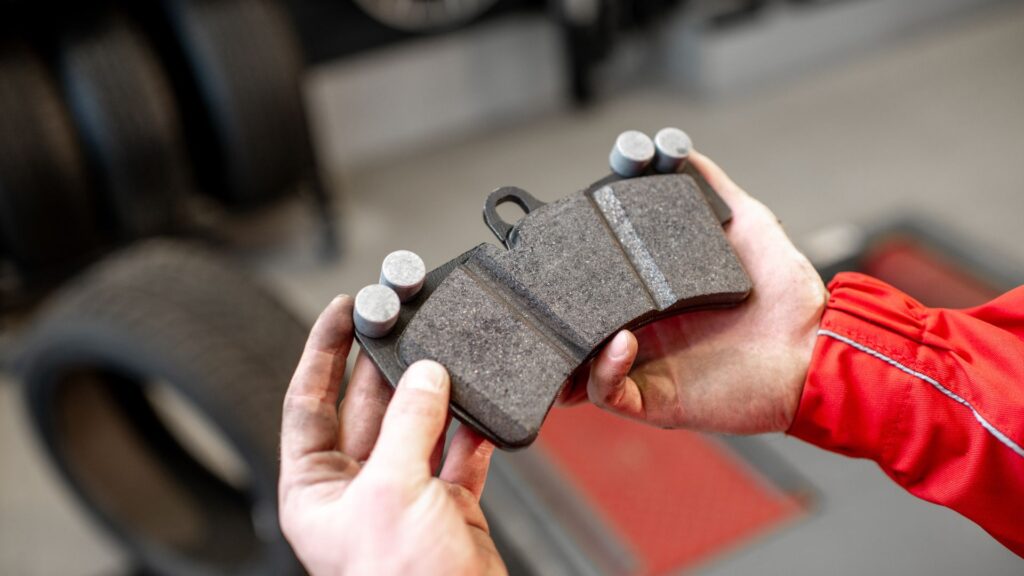
If you have ever wondered whether your brake pads are still good or quietly wearing down to nothing, you are not alone. It is one of the most common questions car owners have, and the honest answer is: it depends. There is no single number that fits every vehicle, every driver, or every road.
But there are real patterns worth knowing, and understanding them could save you from a much bigger repair bill down the road.
The General Lifespan of Brake Pads
Most brake pads last somewhere between 30,000 and 70,000 miles. That is a wide range, and it exists for a good reason. Driving habits, vehicle weight, brake pad material, and even traffic patterns all play a role in how quickly friction wears the pad down.
A car driven mostly on highways will almost always get more life out of its brake pads than the same vehicle stuck in stop-and-go city traffic every day. The more you brake, the faster the wear.
What the Automotive Industry Generally Recommends
The automotive industry commonly points to 50,000 miles as a rough midpoint for brake pad lifespan. Some manufacturers suggest inspecting pads at every oil change, while others recommend a dedicated brake inspection every 12 months or 12,000 miles – whichever comes first.
Various shops have long emphasized routine brake inspections as part of standard vehicle maintenance. Lee Myles, in particular, built a reputation around preventive care that catches brake wear before it becomes a safety issue.
Factors That Affect How Long Brake Pads Last Driving Habits
Aggressive driving shortens brake pad life significantly. Frequent hard stops heat up the brake system fast, and that heat accelerates wear. Smooth, gradual braking extends pad life by reducing the intensity of friction on every stop.
Driving in hilly terrain also adds stress to your brakes. Even if you are not driving aggressively, constantly using your brakes to control speed on downhill stretches adds up over time.
Brake Pad Material
Not all brake pads are built the same. The three main types are organic, semi-metallic, and ceramic. Ceramic brake pads tend to last longer and produce less noise than the other two, though they typically cost more upfront.
Semi-metallic pads offer strong performance and durability, but they can be harder on rotors over time. Organic pads are quieter and gentler on rotors but tend to wear faster, especially under heavy use.
Vehicle Type and Weight
Heavier vehicles put more demand on the brake system. A full-size truck stops harder and requires more braking force than a compact car. That added force speeds up wear on both the pad and the disc brake rotor.
If you are regularly towing or hauling loads, expect to replace your brake pads more often than the average estimate.
Disc Brakes vs. Drum Brakes
Most modern vehicles use disc brakes on the front wheels and sometimes the rear. Drum brakes, which use a brake shoe instead of a pad, are still found on the rear axles of some older or economy vehicles.
Disc brake pads typically need more frequent replacement than drum brake shoes, but disc brakes generally perform better in wet conditions and under heavy stopping loads.
Signs Your Brake Pads Are Wearing Out
The most obvious sign is noise – specifically a high-pitched squealing sound when you apply the brakes. That sound usually comes from a small metal indicator built into the pad specifically to alert you when the material is getting low.
If you ignore that noise long enough, it turns into grinding. At that point, metal is contacting metal, which means damage to your rotors and a much more expensive repair.
Other signs to watch for include:
- A pulsing or vibrating sensation in the brake pedal
- The vehicle pulling to one side when braking
- A longer stopping distance than usual
- A warning light on your dashboard labeled “BRAKE”
Do Not Ignore Brake Fluid Either
Brake fluid plays a direct role in how your brakes perform. Old or low brake fluid can affect the pressure your system generates, which changes how effectively your pads clamp onto the rotor. If your brake pedal feels soft or spongy, that is a signal worth acting on quickly.
Manual Transmission and Brake Wear
Drivers with a manual transmission often get more life out of their brake pads. Engine braking, which means downshifting to slow the vehicle instead of relying only on the brakes, reduces how often the pads engage.
It is not a dramatic difference, but over time and miles, it adds up. If you drive a manual and use engine braking regularly, you may find your pads outlast what most estimates suggest.
How Volkswagen Designs for Brake Awareness
Volkswagen is one manufacturer that has put considerable attention into brake pad wear indicators and monitoring systems. Their vehicles often include electronic wear sensors that alert the driver through the dashboard before the pad reaches a critical level.
This kind of built-in feedback reflects a broader shift in the automotive industry toward helping drivers stay ahead of maintenance rather than reacting to problems after they start.
When to Schedule a Brake Inspection
A basic rule: if you are approaching 30,000 miles since your last brake service, or if you notice any of the warning signs mentioned above, get an inspection. Do not wait for grinding or a dashboard warning light to take action.
A qualified auto mechanic can measure remaining pad thickness during a visual inspection and give you a clear picture of how much life is left. That information is worth having before a long trip or before winter driving conditions arrive in Indianapolis.
When to Check Your Brake Pads
Brake pads typically last between 30,000 and 70,000 miles, but real-world results vary based on how you drive, what you drive, and how well you maintain your brake system. Catching wear early is always cheaper than waiting for damage.
If you are due for a brake check, the team at Grewal’s Automotive is ready to help. Schedule your brake inspection today or call us at 317-886-7501 to talk through any concerns.