

You press the gas, the engine revs climb, and yet your car barely moves. It feels like something is disconnected between your foot on the throttle and the wheels on the pavement. If that sounds familiar, there is a good chance your clutch is slipping – and ignoring it will only make things worse.
This guide is for anyone driving a vehicle with a manual transmission who suspects something is off. We will walk you through exactly what a slipping clutch feels like, why it happens, and how to know when it is time to get it looked at by a professional.
What Does a Clutch Actually Do?
Before diving into the symptoms, it helps to understand the basics. In a car with a manual transmission, the clutch is the mechanical link between your engine and your gearbox. When you press the clutch pedal, you are temporarily breaking that connection so you can shift gears smoothly.
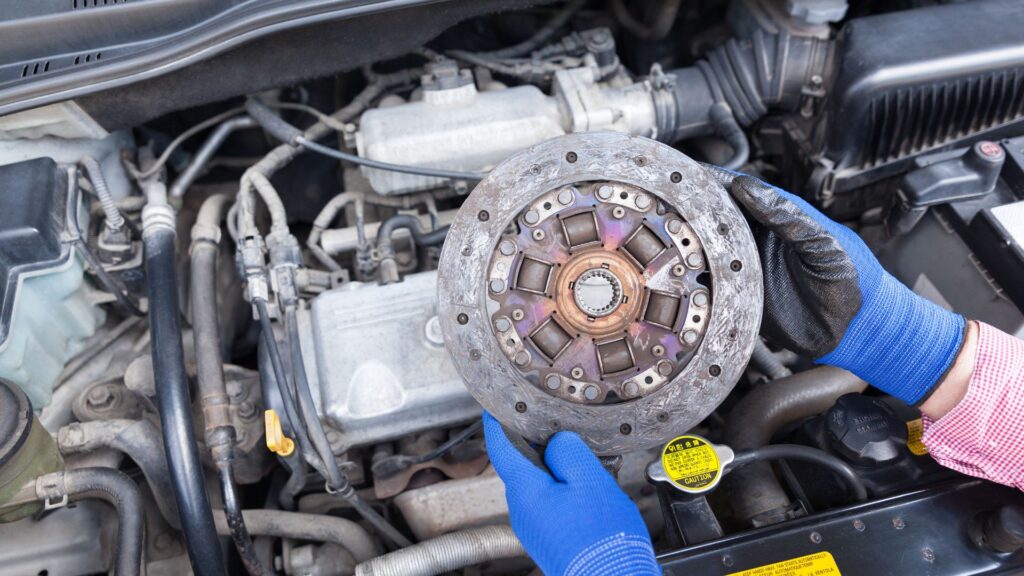
The clutch works through friction. It has a disc that presses against a flywheel, and that contact is what transfers torque from the engine to the drivetrain. When you release the pedal, the disc engages and power flows. When it works correctly, the whole process feels seamless.
What Does “Clutch Slipping” Actually Mean?
Clutch slipping happens when the disc fails to grip the flywheel firmly enough. Instead of transferring torque cleanly, the connection is partial – meaning the engine revs increase, but not enough power reaches the wheels. Think of it like a tire spinning on ice. The engine is doing its job, but the energy is getting lost somewhere in the middle.
Over time, the friction material on the clutch disc wears down. Once it gets thin enough, it cannot maintain solid contact with the flywheel, and that is when slipping starts. The problem can also come from oil contamination, a worn pressure plate, or a failing release bearing (also called a throwout bearing).
Signs Your Clutch Is Slipping – What to Watch For
1. RPMs Spike but Your Speed Does Not Match
This is the most telling sign. Revolutions per minute, or RPMs, are a measure of how fast your engine is spinning. When you accelerate in a healthy car, your speed and your RPMs rise together in a predictable way.
When the clutch is slipping, the RPMs jump sharply when you press the gas, but your actual vehicle speed lags noticeably behind. It is as if the engine is working hard and getting nowhere. Many drivers describe it as the car feeling “loose” or “disconnected” during acceleration.
2. Difficulty Getting the Car Moving from a Stop
A healthy clutch engages smoothly when you release the pedal. If you notice that your car is sluggish to move forward even when you release the clutch fully and press the throttle, the disc may not be gripping as it should.
This is especially noticeable when starting from a complete stop, going uphill, or carrying extra weight. Situations that demand more torque expose a slipping clutch quickly.
3. A Burning Smell
One of the more unpleasant signs of clutch trouble is odor. If you start noticing a sharp, acrid burning smell – similar to burnt toast or overheated brakes – it is likely coming from the friction material on the clutch disc overheating.
This odor can appear after driving in stop-and-go traffic, climbing hills, or towing. The heat builds up because the disc is slipping instead of grabbing cleanly, and the friction material essentially starts burning off. Do not ignore this smell. It is a clear signal that something is wrong.
4. The Clutch Pedal Feels Different
Pay attention to how the pedal feels under your foot. A slipping clutch often changes the engagement point – the spot where you feel the clutch start to catch when you slowly release the pedal.
If the engagement point has crept higher than usual, or if the pedal feels spongy, too easy to press, or inconsistent from one shift to the next, something is off. A worn release bearing can also cause a grinding or chirping noise when the pedal is pressed, which is a separate but related issue worth mentioning to a mechanic.
5. Trouble Holding Speed on an Incline
Driving uphill puts more demand on the drivetrain. A worn clutch that seems fine on flat roads may slip badly when the engine needs to work harder. If your car struggles to maintain speed going uphill even when you are in the correct gear and the engine sounds like it is straining, the clutch is likely the culprit.
This can feel alarming, especially if the problem appears suddenly. Keep in mind that clutch wear is usually gradual, so the issue may have been building for a while before it becomes obvious.
What Causes a Clutch to Slip?
Most clutch slipping comes down to wear. Over thousands of miles of driving, the friction material on the clutch disc naturally thins out. There is no avoiding it – it is a wear item, much like brake pads or tires. How long a clutch lasts depends heavily on driving habits. Riding the clutch, frequent stop-and-go driving, and aggressive acceleration all speed up wear.
Oil or fluid contamination is another common cause. If the rear main seal or transmission input shaft seal is leaking, oil can coat the clutch disc and reduce its ability to grip the flywheel. This kind of slipping can happen even on a relatively new clutch.
A faulty pressure plate can also prevent the disc from pressing firmly against the flywheel. And in some cases, a worn or damaged release bearing affects how the clutch engages and disengages, leading to inconsistent performance.
Can You Keep Driving on a Slipping Clutch?
Technically, you might be able to drive for a short time, but it is not something we would recommend. A slipping clutch only gets worse with use. Each time the disc slips against the flywheel, more friction material wears away. What starts as minor slipping can quickly turn into a clutch that will not engage at all, leaving you stranded.
There is also the risk of damaging other components. A clutch that slips under load can overheat and cause secondary damage to the flywheel or pressure plate, turning what might have been a simpler repair into a more extensive and expensive job.
How a Mechanic Will Diagnose It
A trained technician will start by listening to your description of the problem and performing a physical inspection of the clutch system. In many cases, they can confirm slipping through a controlled acceleration test – revving the engine in a higher gear while monitoring how the vehicle responds.
If access to the clutch is needed, the technician will inspect the disc for wear, check the pressure plate, and look for signs of contamination or heat damage. The flywheel surface will also be examined, since a scored or warped flywheel can affect clutch performance even if the disc itself is not fully worn.
Clutch Repair vs. Clutch Replacement
In most situations, a slipping clutch means the entire clutch assembly will need to be replaced rather than repaired. The disc, pressure plate, and release bearing are typically replaced together as a set, and the flywheel is resurfaced or replaced if needed.
This is not a small job – it requires removing the transmission to access the clutch components. But when done correctly, a full clutch replacement restores the feel and performance of the car controls to like-new condition. Skimping on the job usually leads to repeat problems.
Frequently Asked Questions
How long does a clutch last?
Most clutches last between 50,000 and 100,000 miles, but driving habits play a huge role. Aggressive driving, frequent city traffic, and improper clutch use can shorten that lifespan considerably.
Is clutch slipping the same as clutch chatter?
Not quite. Clutch chatter is a shuddering or vibrating sensation during engagement, often caused by contamination or a worn disc. Slipping is more about the disc failing to grip, causing RPMs to rise without a matching increase in speed. Both are signs of clutch trouble.
Can low fluid cause clutch slipping?
In vehicles with a hydraulic clutch system, low hydraulic fluid can cause engagement problems, though true slipping is usually a mechanical issue with the disc itself.
What does a slipping clutch smell like?
The odor is usually sharp and acrid, similar to burning rubber or overheated brake pads. Some people compare it to burnt toast or a campfire smell inside the cabin.
What to Do If Your Clutch Is Slipping
A slipping clutch does not fix itself, and the longer you wait, the more damage it can cause to surrounding components. If your RPMs are climbing but your car is not keeping pace, or if you are noticing a burning odor, a changing pedal feel, or trouble on inclines, it is time to have your transmission system inspected. The team at Grewal’s Automotive in Indianapolis is experienced with manual transmission diagnostics and repair. Call 317-886-7501 to schedule an inspection, or learn more about our transmission services to see how we can help.