

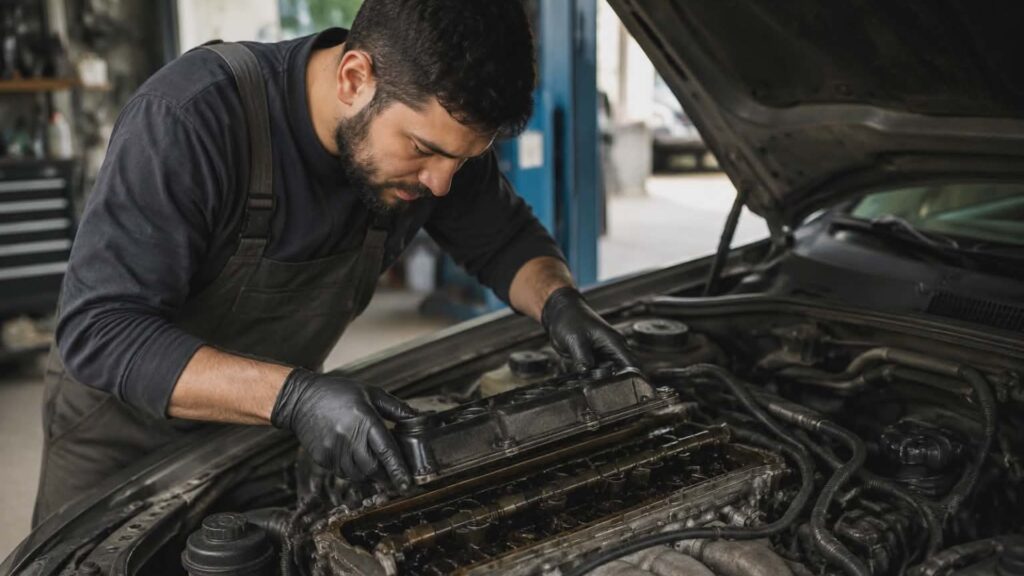
You notice a faint burning smell after parking. Maybe there is a small puddle forming under your car, or your engine oil is dropping faster than usual. These are not things to ignore. In many cases, the culprit is a failing valve cover gasket, and catching it early can save you from a much bigger repair bill.
What Is a Valve Cover Gasket and Why Does It Matter?
The valve cover sits on top of your engine, protecting internal components like the camshaft, rocker arms, and poppet valves that control the flow of intake and exhaust gases. The gasket acts as a seal between the valve cover and the cylinder head, keeping engine oil contained while preventing debris from getting in.
When that gasket starts to fail, oil can escape. It may drip down the side of the engine block, pool near the exhaust manifold, or find its way to other components. Left unchecked, a valve cover leak can lead to low oil levels, engine damage, and even fire risk if oil contacts a hot surface.
Common Signs of a Valve Cover Gasket Leak
You do not always need to look under the hood first. Some signs are easy to spot from the outside.
- Burning smell from the engine bay. If oil can leak onto the exhaust manifold or nearby hot components, it will burn off and produce a noticeable fume. This is often the first clue that something is wrong.
- Visible oil around the valve covers. Take a look at the top of your engine. If you see oil pooling or streaking along the perimeter of the valve cover, that is a strong indicator of a gasket problem.
- Low engine oil between changes. If you are topping off your oil more frequently than expected or noticing a drop before your next oil change, a slow leak from the gasket could be to blame. This is also worth reading about if you are wondering why your car is leaking oil when parked.
- Oil on the spark plug. A leaking gasket can allow oil to seep into the spark plug tubes. This can cause misfires, rough idling, and poor performance. If you are already dealing with those symptoms, check out the common causes of engine misfires and possible causes of a rough idle.
- Visible cracks or deterioration. If you visually inspect the gasket and see it is cracked, rotten, or that the rubber appears dry and brittle, replacement is overdue.
What Causes a Valve Cover Gasket to Fail?
Gaskets do not last forever. The most common reasons they fail include:
- Age and heat exposure. Over time, the rubber material hardens, shrinks, and loses its ability to seal properly. The gasket could be shrunken from years of heat cycling.
- Improper installation. If the valve cover bolts were not torqued to spec during a previous repair, the gasket may not compress evenly. An unevenly compressed gasket can cause slow leaks.
- Over-tightened or stripped bolts. Using too much force without a torque wrench can crack the cover or damage the groove where the gasket sits.
- Crankcase ventilation system issues. A blocked crankcase ventilation system builds pressure inside the engine, which can force oil past seals and cause a leak at weak points like the valve cover gasket.
How to Fix a Valve Cover Gasket Leak
Step 1 – Assess the Situation
Start with a valve cover inspection. Wipe the area clean with brake cleaner and a clean rag, then run the engine briefly and recheck. This helps you confirm where the oil is actually coming from, since it can migrate and look like it is coming from the oil pan or oil filter area.
Step 2 – Gather Your Tools and Parts
You will need a new gasket, a torque wrench, basic hand tools, and access to your service manual. Some jobs also call for a silicone sealer or gasket maker at specific points, especially near the cam towers or where the intake meets the cylinder.
Step 3 – Remove and Replace
Remove the valve covers carefully after disconnecting any hoses connected to the throttle body or crankcase ventilation system. Clean the engine head surface thoroughly before you install the new valve cover gasket. Any old residue left behind can cause a new leak almost immediately.
Step 4 – Reinstall Correctly
Use a torque wrench and follow the factory-recommended setting in your service manual.
Torque the bolts in a cross pattern to distribute pressure evenly, working on one valve cover at a time. Do not rely on feeling alone. Overtightening is a common mistake that cracks covers.
Should You Use an Oil Leak Sealant?
Products like oil stop-leak additives or oil-leak sealants can slow the problem in the short term, but they are not a permanent fix. If your vehicle is still leaking after using a spray or additive, the underlying issue needs to be addressed. At that point, proper replacement is the only reliable solution.
For anything beyond a basic DIY fix, getting professional engine repair services or comprehensive auto repair services from a trained mechanic is the smarter move.
Conclusion
A failing valve cover gasket is one of the more common engine oil issues drivers face, but it does not have to turn into a major problem. Spot the signs early, understand what is causing the leak, and take action before it gets worse. If you are in Indianapolis and not sure where to start, the team at Grewal’s Automotive is ready to help. Call 317-886-7501 or schedule a visit today.